
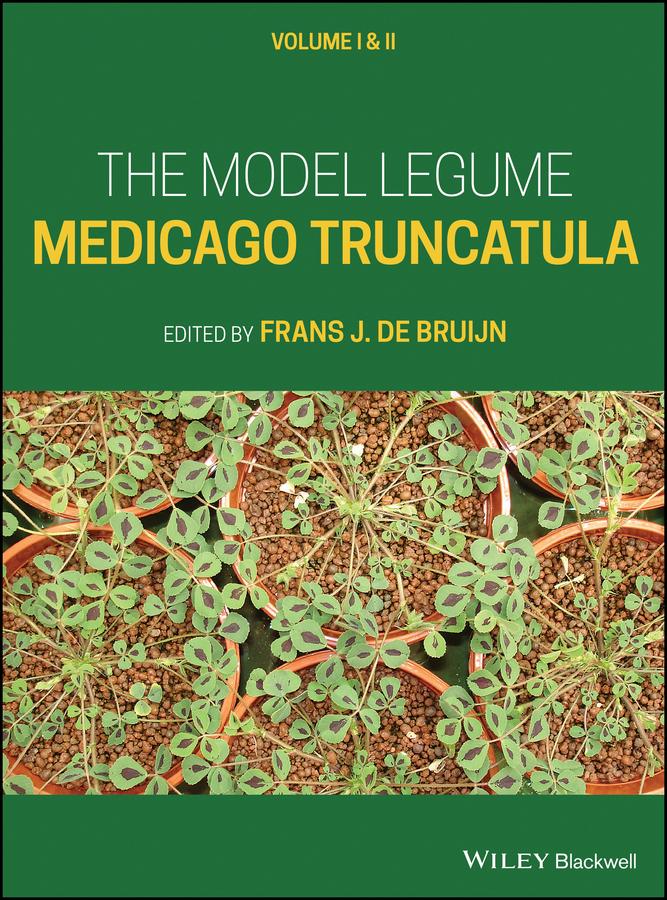
Fully covers the biology, biochemistry, genetics, and genomics of Medicago truncatula
Model plant species are valuable not only because they lead to discoveries in basic biology, but also because they provide resources that facilitate translational biology to improve crops of economic importance. Plant scientists are drawn to models because of their ease of manipulation, simple genome organization, rapid life cycles, and the availability of multiple genetic and genomic tools. This reference provides comprehensive coverage of the Model Legume Medicago truncatula. It features review chapters as well as research chapters describing experiments carried out by the authors with clear materials and methods. Most of the chapters utilize advanced molecular techniques and biochemical analyses to approach a variety of aspects of the Model.
The Model Legume Medicago truncatula starts with an examination of M. truncatula plant development; biosynthesis of natural products; stress and M. truncatula; and the M. truncatula-Sinorhizobium meliloti symbiosis. Symbiosis of Medicago truncatula with arbuscular mycorrhiza comes next, followed by chapters on the common symbiotic signaling pathway (CSSP or SYM) and infection events in the Rhizobium-legume symbiosis. Other sections look at hormones and the rhizobial and mycorrhizal symbioses; autoregulation of nodule numbers (AON) in M. truncatula; Medicago truncatula databases and computer programs; and more.
- Contains reviews, original research chapters, and methods
- Covers most aspects of the M. truncatula Model System, including basic biology, biochemistry, genetics, and genomics of this system
- Offers molecular techniques and advanced biochemical analyses for approaching a variety of aspects of the Model Legume Medicago truncatula
- Includes introductions by the editor to each section, presenting the summary of selected chapters in the section
- Features an extensive index, to facilitate the search for key terms
The Model Legume Medicago truncatula is an excellent book for researchers and upper level graduate students in microbial ecology, environmental microbiology, plant genetics and biochemistry. It will also benefit legume biologists, plant molecular biologists, agrobiologists, plant breeders, bioinformaticians, and evolutionary biologists.
Betal enkelt med kort, Klarna, Apple Pay eller Google Pay. Ikke fornøyd? Du har alltid 14 dagers angrerett. Les mer i våre vilkår. Har du spørsmål, send oss en e-post på hello@memmo.org.
Memmo gjør det enklere å studere – uansett hvor du er i verden. Hos oss samler du pensumbøker og smarte studieverktøy på ett og samme sted: sammendrag, quizer, podkaster og flashcards. Og så Ted, din studiekompis som svarer på alt du lurer på. Over 50 000 studenter studerer allerede her – bygget for at du skal lære raskere og stresse mindre.