
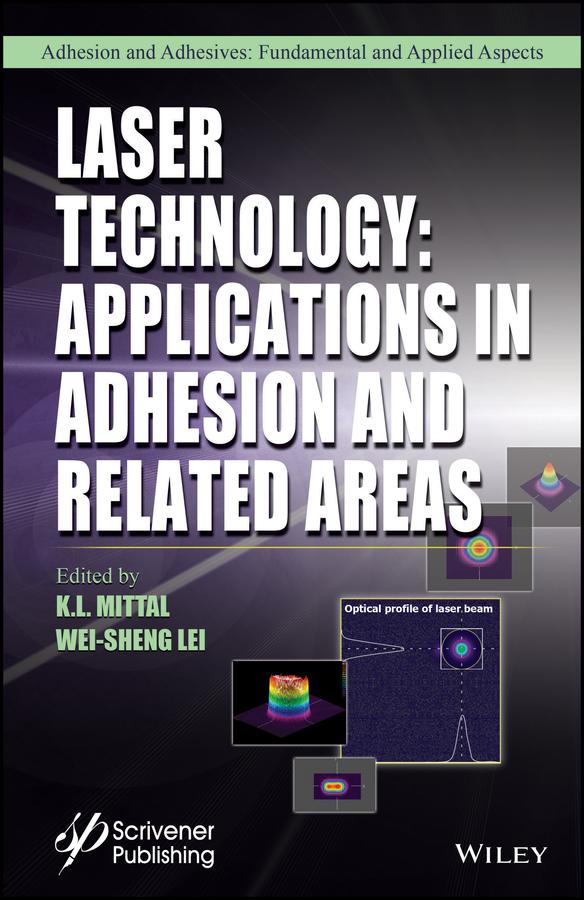
The acronym Laser is derived from Light Amplification by Stimulated Emission of Radiation. With the advent of the ruby laser in 1960, there has been tremendous research activity in developing novel, more versatile and more efficient laser sources or devices, as lasers applications are ubiquitous. Today, lasers are used in many areas of human endeavor and are routinely employed in a host of diverse fields: various branches of engineering, microelectronics, biomedical, medicine, dentistry, surgery, surface modification, to name just a few.
In this book (containing 10 chapters) we have focused on application of lasers in adhesion and related areas. The topics covered include:
- Topographical modification of polymers and metals by laser ablation to create superhydrophobic surfaces.
- Non-ablative laser surface modification.
- Laser surface modification to enhance adhesion.
- Laser surface engineering of materials to modulate their wetting behavior.
- Laser surface modification in dentistry.
- Laser polymer welding.
- Laser based adhesion testing technique to measure thin film-substrate interface toughness.
- Laser surface removal of hard thin ceramic coatings.
- Laser removal of particles from surfaces.
- Laser induced thin film debonding for micro-device fabrication applications.
Betal enkelt med kort, Klarna, Apple Pay eller Google Pay. Ikke fornøyd? Du har alltid 14 dagers angrerett. Les mer i våre vilkår. Har du spørsmål, send oss en e-post på hello@memmo.org.
Memmo gjør det enklere å studere – uansett hvor du er i verden. Hos oss samler du pensumbøker og smarte studieverktøy på ett og samme sted: sammendrag, quizer, podkaster og flashcards. Og så Ted, din studiekompis som svarer på alt du lurer på. Over 50 000 studenter studerer allerede her – bygget for at du skal lære raskere og stresse mindre.