
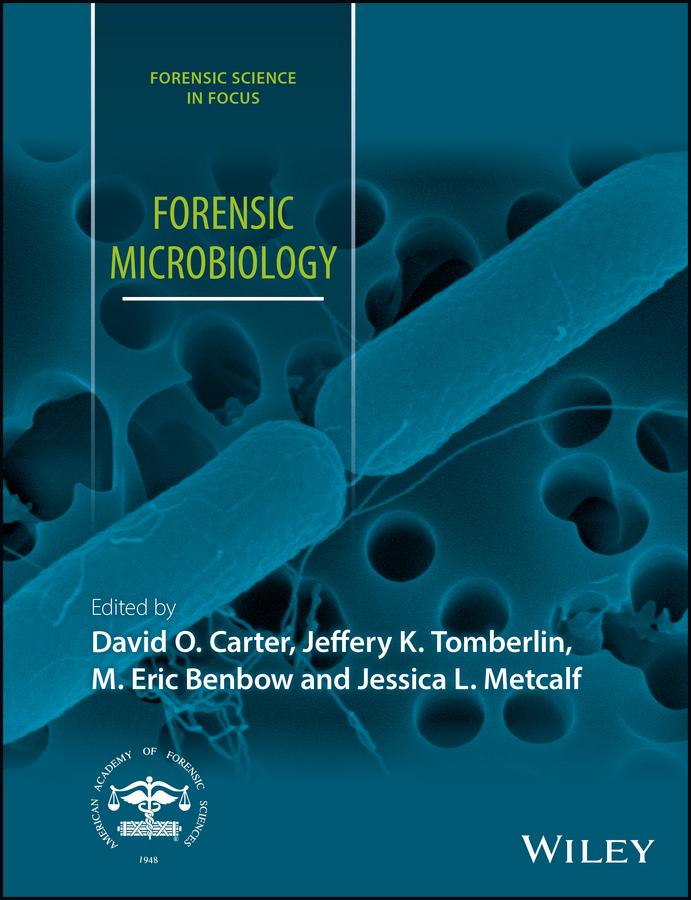
Forensic Microbiology focuses on newly emerging areas of microbiology relevant to medicolegal and criminal investigations: postmortem changes, establishing cause of death, estimating postmortem interval, and trace evidence analysis. Recent developments in sequencing technology allow researchers, and potentially practitioners, to examine microbial communities at unprecedented resolution and in multidisciplinary contexts. This detailed study of microbes facilitates the development of new forensic tools that use the structure and function of microbial communities as physical evidence.
Chapters cover:
- Experiment design
- Data analysis
- Sample preservation
- The influence of microbes on results from autopsy, toxicology, and histology
- Decomposition ecology
- Trace evidence
This diverse, rapidly evolving field of study has the potential to provide high quality microbial evidence which can be replicated across laboratories, providing spatial and temporal evidence which could be crucial in a broad range of investigative contexts. This book is intended as a resource for students, microbiologists, investigators, pathologists, and other forensic science professionals.
Betal enkelt med kort, Klarna, Apple Pay eller Google Pay. Ikke fornøyd? Du har alltid 14 dagers angrerett. Les mer i våre vilkår. Har du spørsmål, send oss en e-post på hello@memmo.org.
Memmo gjør det enklere å studere – uansett hvor du er i verden. Hos oss samler du pensumbøker og smarte studieverktøy på ett og samme sted: sammendrag, quizer, podkaster og flashcards. Og så Ted, din studiekompis som svarer på alt du lurer på. Over 50 000 studenter studerer allerede her – bygget for at du skal lære raskere og stresse mindre.