
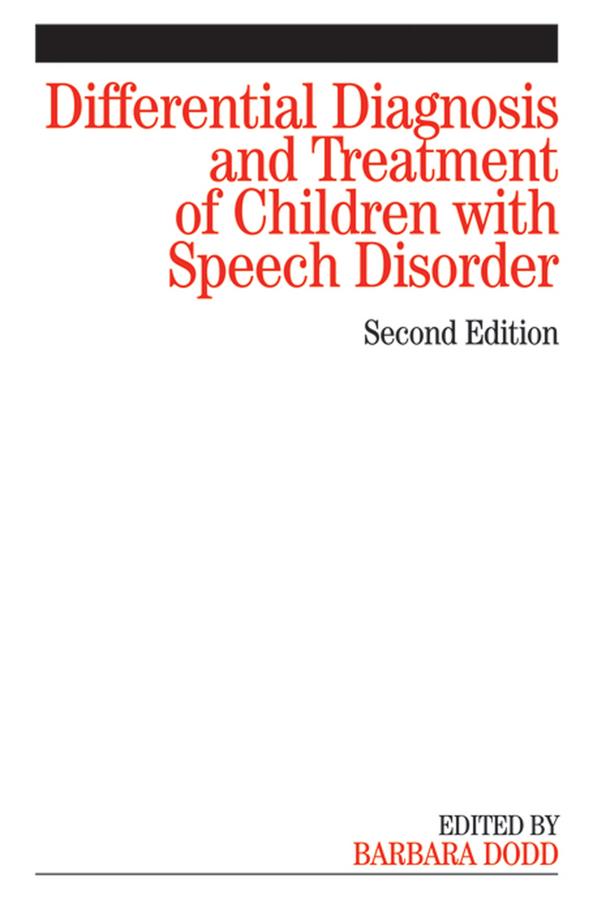
The efficacy of service provision is evaluated to show that differential diagnosis and treatment is effective for children with disordered speech. Exploration of that data provides implications for prioritising case loads. The relationship between speech and language disorders is examined in the context of clinical decisions about what to target in therapy.
New chapters provide detailed intervention programmes for subgroups of speech disorder: delayed development, use of atypical error patterns, inconsistent errors and development verbal dyspraxia.
The final section of the book deals with special populations: children with cognitive impairment, hearing and auditory processing difficulties. The needs of clinicians working with bilingual populations are discussed and ways of intervention described. The final chapter examines the relationship between spoken and written disorders of phonology.
Betal enkelt med kort, Klarna, Apple Pay eller Google Pay. Ikke fornøyd? Du har alltid 14 dagers angrerett. Les mer i våre vilkår. Har du spørsmål, send oss en e-post på hello@memmo.org.
Memmo gjør det enklere å studere – uansett hvor du er i verden. Hos oss samler du pensumbøker og smarte studieverktøy på ett og samme sted: sammendrag, quizer, podkaster og flashcards. Og så Ted, din studiekompis som svarer på alt du lurer på. Over 50 000 studenter studerer allerede her – bygget for at du skal lære raskere og stresse mindre.