
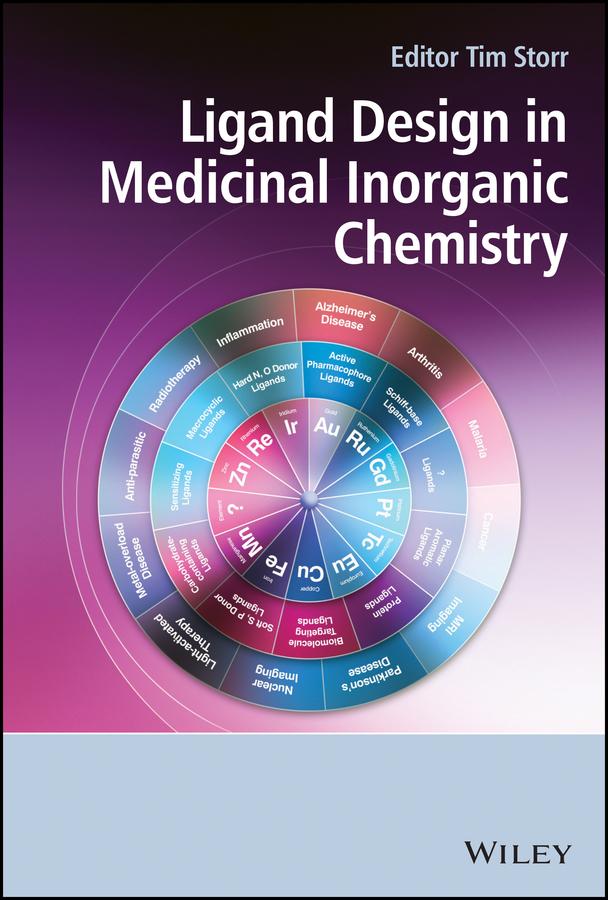
Increasing the potency of therapeutic compounds, while limiting side-effects, is a common goal in medicinal chemistry. Ligands that effectively bind metal ions and also include specific features to enhance targeting, reporting, and overall efficacy are driving innovation in areas of disease diagnosis and therapy.
Ligand Design in Medicinal Inorganic Chemistry presents the state-of-the-art in ligand design for medicinal inorganic chemistry applications. Each individual chapter describes and explores the application of compounds that either target a disease site, or are activated by a disease-specific biological process.
Ligand design is discussed in the following areas:
- Platinum, Ruthenium, and Gold-containing anticancer agents
- Emissive metal-based optical probes
- Metal-based antimalarial agents
- Metal overload disorders
- Modulation of metal-protein interactions in neurodegenerative diseases
- Photoactivatable metal complexes and their use in biology and medicine
- Radiodiagnostic agents and Magnetic Resonance Imaging (MRI) agents
- Carbohydrate-containing ligands and Schiff-base ligands in Medicinal Inorganic Chemistry
- Metalloprotein inhibitors
Ligand Design in Medicinal Inorganic Chemistry provides graduate students, industrial chemists and academic researchers with a launching pad for new research in medicinal chemistry.
Betal enkelt med kort, Klarna, Apple Pay eller Google Pay. Ikke fornøyd? Du har alltid 14 dagers angrerett. Les mer i våre vilkår. Har du spørsmål, send oss en e-post på hello@memmo.org.
Memmo gjør det enklere å studere – uansett hvor du er i verden. Hos oss samler du pensumbøker og smarte studieverktøy på ett og samme sted: sammendrag, quizer, podkaster og flashcards. Og så Ted, din studiekompis som svarer på alt du lurer på. Over 50 000 studenter studerer allerede her – bygget for at du skal lære raskere og stresse mindre.