
“Crossing continents, historical periods and cultural genres, Jonathan Harris skilfully traces the evolution of utopian ideals from early modernism to the spectacularised and biennialised (or banalised as some would say) contemporary art world of today.”
Michael Asbury, University of the Arts, London
The Utopian Globalists is the second in a trilogy of books by Jonathan Harris examining the contours, forces, materials and meanings of the global art world, along with its contexts of emergence since the early twentieth century. The first of the three studies, Globalization and Contemporary Art (Wiley-Blackwell, 2011), anatomized the global art system through an extensive anthology of over 30 essays contextualized through multiple thematic introductions. The final book in the series, Contemporary Art in a Globalized World (forthcoming, Wiley-Blackwell), combines the historical and contemporary perspectives of the first and second books in an account focused on the ‘mediatizations’ shaping and representing contemporary art and its circuits of global production, dissemination and consumption.
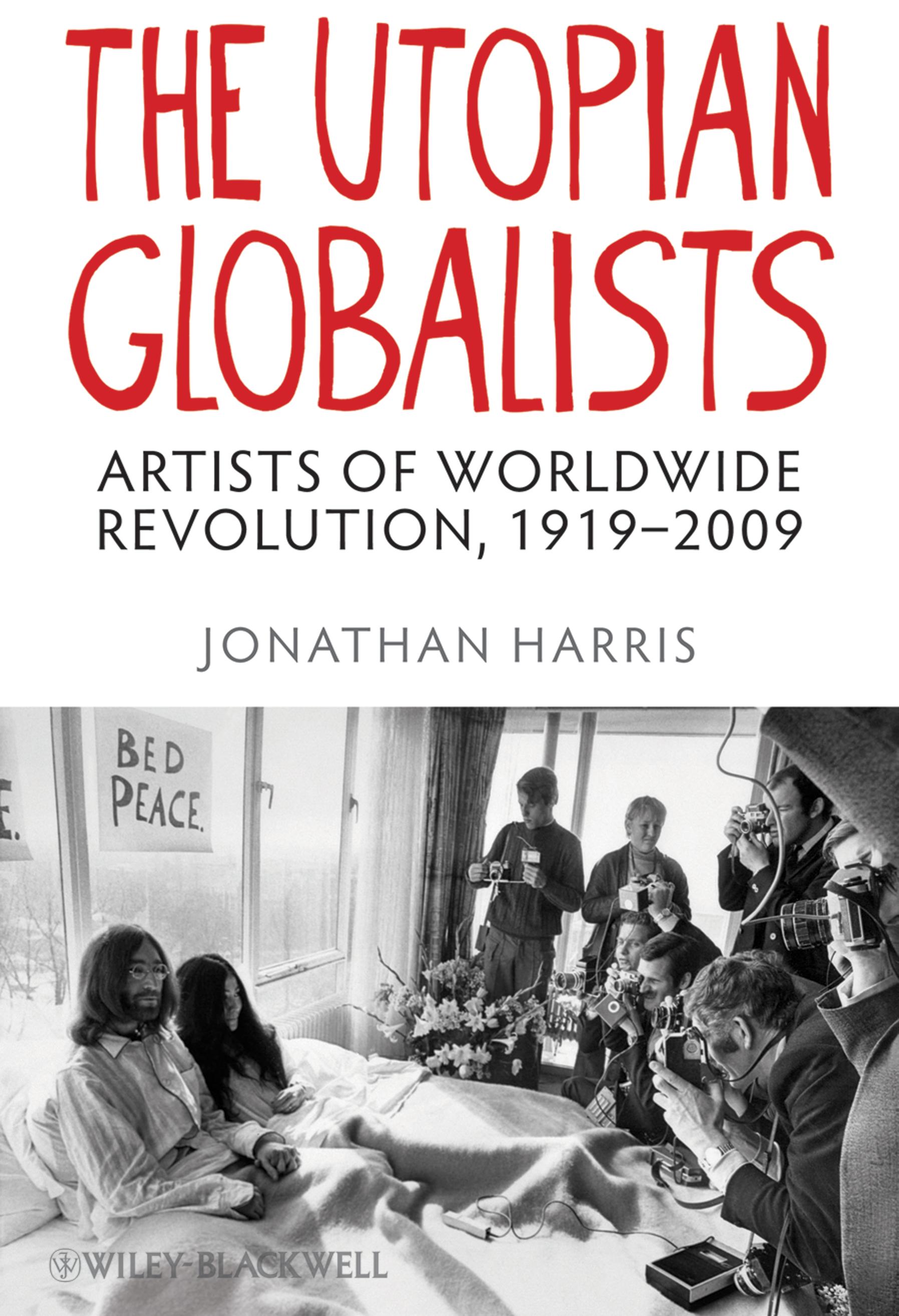
This innovative and revealing history examines artists whose work embodies notions of revolution and human social transformation. The clearly structured historical narrative takes the reader on a cultural odyssey that begins with Vladimir Tatlin’s constructivist model for a ‘Monument to the Third International’ (1919), a statement of utopian globalist intent, via Picasso’s 1940s commitment to Soviet communism and John and Yoko’s Montreal ‘Bedin’, to what the author calls the ‘late globalism’ of the Unilever Series at London’s Tate Modern.
The book maps the ways artists and their work engaged with, and offered commentary on, modern spectacle in both capitalist and socialist modernism, throughout the eras of the Russian Revolution, the Cold War and the increasingly globalized world of the past 20 years. In doing so, Harris explores the idea that the utopian -globalist lineage in art remains torn between its yearning for freedom and a deepening identification with spectacle as a media commodity to be traded and consumed.
Betal enkelt med kort, Klarna, Apple Pay eller Google Pay. Ikke fornøyd? Du har alltid 14 dagers angrerett. Les mer i våre vilkår. Har du spørsmål, send oss en e-post på hello@memmo.org.
Memmo gjør det enklere å studere – uansett hvor du er i verden. Hos oss samler du pensumbøker og smarte studieverktøy på ett og samme sted: sammendrag, quizer, podkaster og flashcards. Og så Ted, din studiekompis som svarer på alt du lurer på. Over 50 000 studenter studerer allerede her – bygget for at du skal lære raskere og stresse mindre.