
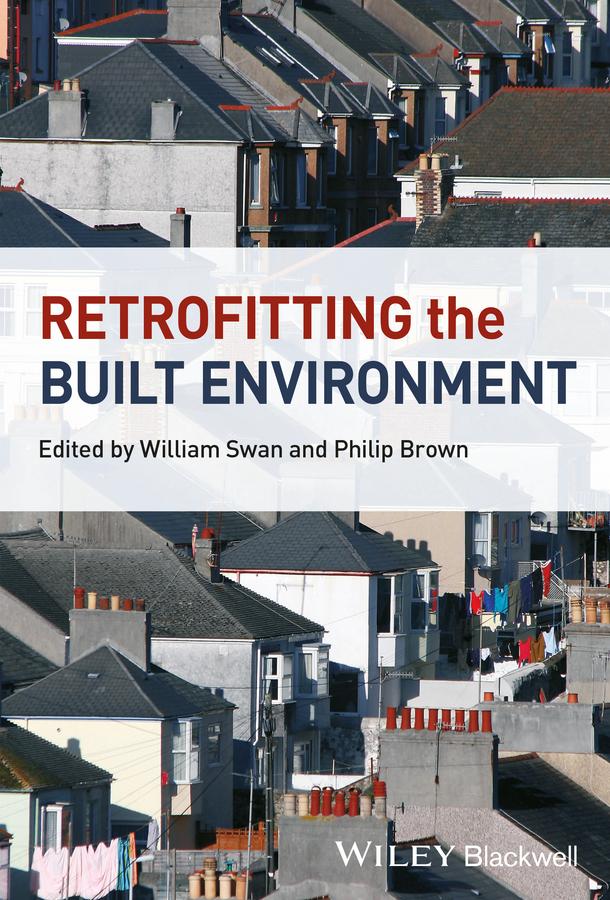
The physical upgrading of the existing domestic and industrial building stock to improve energy performance is an essential part of a transition to a low carbon society. Successfully retrofitting buildings to improve energy performance is not simply a technological challenge, it is a complex socio-technical problem that needs to be addressed in a co-ordinated way, utilising skills and knowledge from a range of industrial and academic backgrounds.
Within both the academic and practitioner communities there is a growing understanding of the scale and nature of the problem, one which encompasses issues such as policy and regulation, people and behaviour, supply chain and process, as well as issues of technology. Retrofitting the Built Environment discusses the factors that impact on the retrofit problem, providing a clear analysis of the main issues that the academic and industrial communities must engage with to resolve the problems of domestic energy and retrofit. The book is divided into four broad sections:
- Understanding the Problem
- Policy and Regulation
- Implementing and Evaluating Retrofit
- People and Communities
Academic and industrial researchers, policy makers and industry practitioners will find each section covers a mix of policy, technical and social science issues, presented by both academic and industry authors, giving a wide and detailed perspective of the issue.
The Editors
Will Swan is a Senior Lecturer in Buildings Retrofit in the School of the Built Environment at the University of Salford. He leads a number of projects in the field of sustainable retrofit, covering a number of topics including monitoring, behaviour and retrofit project delivery, as part of Salford’s Applied Energy and Buildings Research Group. He sits on the Greater Manchester Buildings Group and also is Chair of the Retrofit Innovation Group.
Philip Brown is Director and Senior Research Fellow at the Salford Housing & Urban Studies Unit (SHUSU) at the University of Salford. He is the lead academic on end-use energy demand within the Applied Energy and Buildings Research Group, and sits on Greater Manchester’s Low Carbon Economic Area group for Customer Engagement.
Betal enkelt med kort, Klarna, Apple Pay eller Google Pay. Ikke fornøyd? Du har alltid 14 dagers angrerett. Les mer i våre vilkår. Har du spørsmål, send oss en e-post på hello@memmo.org.
Memmo gjør det enklere å studere – uansett hvor du er i verden. Hos oss samler du pensumbøker og smarte studieverktøy på ett og samme sted: sammendrag, quizer, podkaster og flashcards. Og så Ted, din studiekompis som svarer på alt du lurer på. Over 50 000 studenter studerer allerede her – bygget for at du skal lære raskere og stresse mindre.