
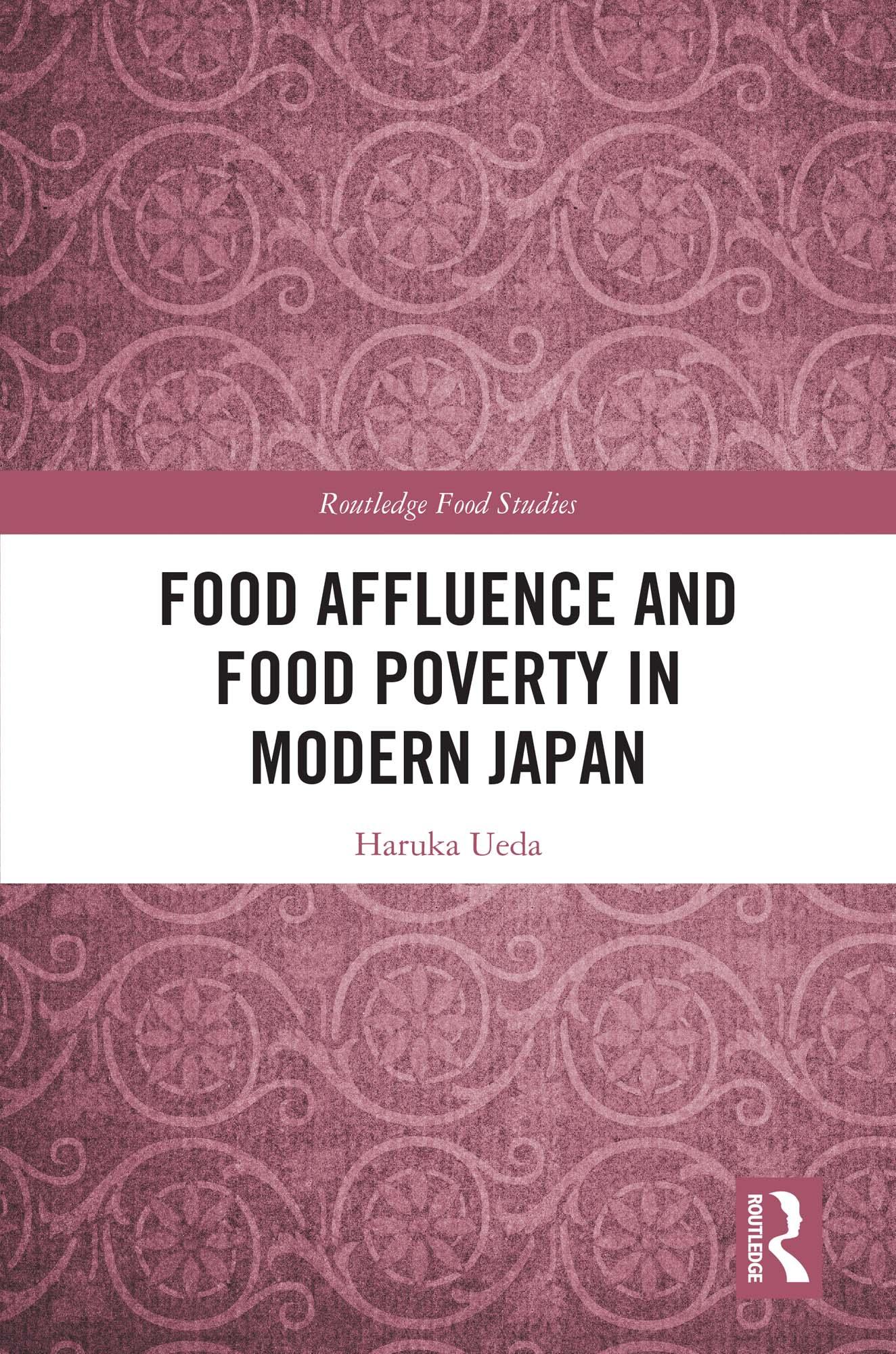
This book explores how food modernisation is a dynamic process, where dietary habits are constantly changing and adapting to shifts in society. Combining historical, sociological, and real-world research, it examines the development of modern Japanese food culture and the contrasting realities of food abundance and food poverty in today’s Japan.
Using newly uncovered archival materials, this book challenges the idea that Japanese nutrition simply copied Western science. Instead, it shows how Japan developed its own unique dietary model after World War II, entering a phase of reflexive modernisation where food practices were shaped by reflection and adaptation. The focus then moves to contemporary Japan, where these changes have accelerated. Drawing on a nationwide survey and interviews with urban single-mother households—many of whom face poverty—this book reveals how inequality and family changes influence everyday food choices. It introduces new ideas like food affluence, food poverty, and food capability, looking beyond income and nutrition to explore how time, space, relationships, and cultural meaning affect eating habits. By blending history, sociology, and research, this book highlights Japan as a key example for understanding food, inequality, and daily life in modern industrial societies.
This book will be of interest to scholars and students in food studies, food policy, sociology, Asian studies and Japanese studies, as well as readers concerned with food inequality and everyday life in contemporary societies.
Betal enkelt med kort, Klarna, Apple Pay eller Google Pay. Ikke fornøyd? Du har alltid 14 dagers angrerett. Les mer i våre vilkår. Har du spørsmål, send oss en e-post på hello@memmo.org.
Memmo gjør det enklere å studere – uansett hvor du er i verden. Hos oss samler du pensumbøker og smarte studieverktøy på ett og samme sted: sammendrag, quizer, podkaster og flashcards. Og så Ted, din studiekompis som svarer på alt du lurer på. Over 50 000 studenter studerer allerede her – bygget for at du skal lære raskere og stresse mindre.