
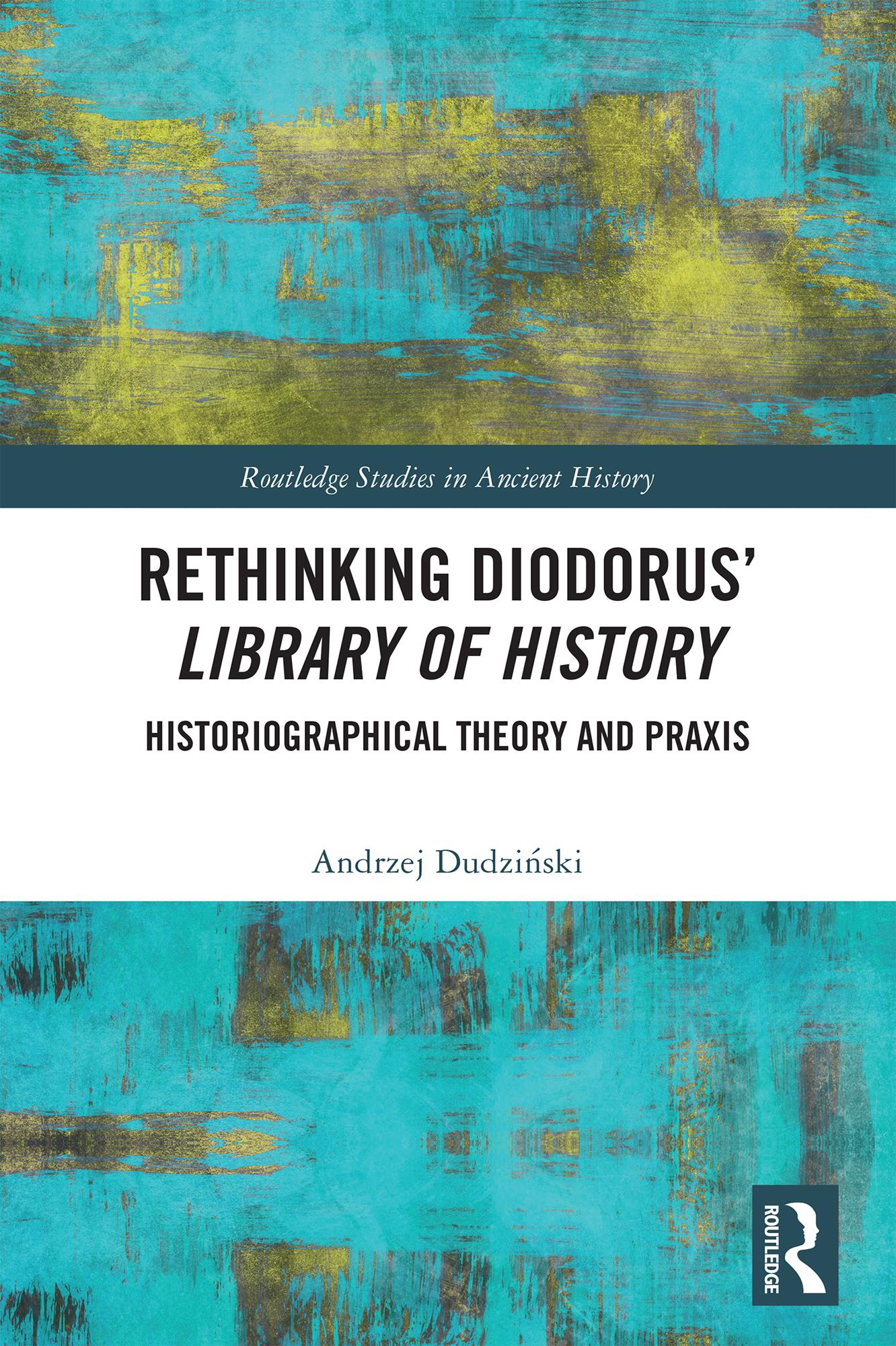
The book offers a reassessment of Diodorus Siculus' historiographical principles and their application in the Bibliotheke Historike, approached through systematic analysis of the text rather than assumptions about its author as a passive compiler.
Readers will gain a rigorous re-evaluation of how Diodorus conceived, organised and executed his universal history, including its genre, programme, polemical method, use of speeches, structural principles, and moral framework. Rather than relying on presumptions about the author to explain the text, the book analyses the Bibliotheke on its own terms across five thematic chapters before synthesising the findings into a revised portrait of Diodorus as a historian. By uniting philological precision with interpretive moderation, this study aims to bridge a long-standing divide in scholarship between the two sides of the modern debate on the author.
The book is intended for scholars and students of ancient Greek historiography, Hellenistic history, and classical studies, as well as for those working on ancient literature. It will also be of interest to historians who rely on the Bibliotheke Historike as a source of information or are concerned with the broader questions of how universal histories were conceived and written in the ancient world.
Betal enkelt med kort, Klarna, Apple Pay eller Google Pay. Ikke fornøyd? Du har alltid 14 dagers angrerett. Les mer i våre vilkår. Har du spørsmål, send oss en e-post på hello@memmo.org.
Memmo gjør det enklere å studere – uansett hvor du er i verden. Hos oss samler du pensumbøker og smarte studieverktøy på ett og samme sted: sammendrag, quizer, podkaster og flashcards. Og så Ted, din studiekompis som svarer på alt du lurer på. Over 50 000 studenter studerer allerede her – bygget for at du skal lære raskere og stresse mindre.