
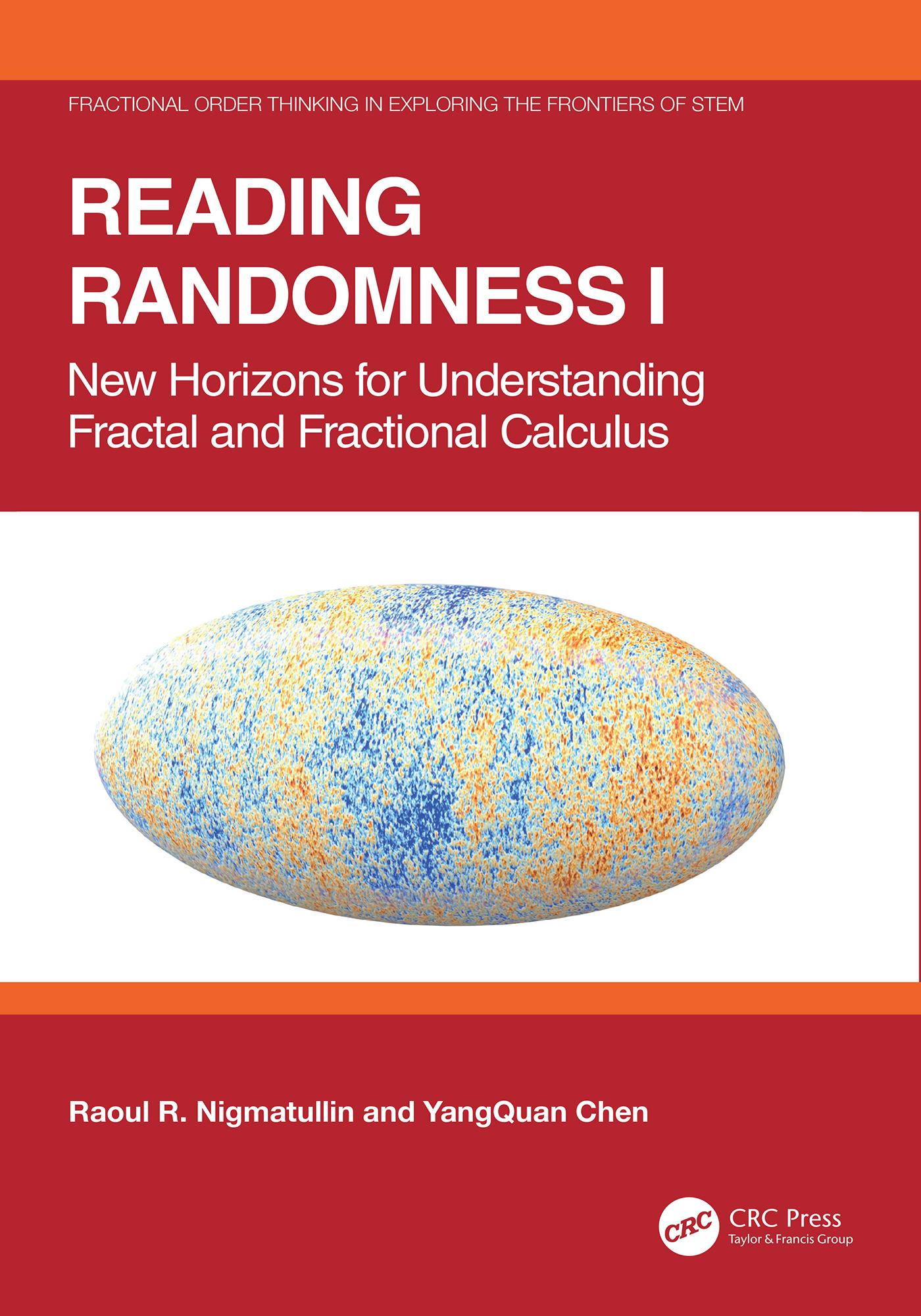
Reading Randomness I: New Horizons for Understanding Fractal and Fractional Calculus shows readers how to understand and analyze seemingly “noisy” and irregular data. It offers practical methods for comparing and labeling fluctuations, ensuring reproducible results across laboratories, industries, and research fields.
The book begins with a narrative tour of how people have understood chance, from ancient divination and games to modern probability, information theory, and computing. In seven chapters, the authors provide step-by-step instructions for extracting reliable patterns from raw measurements. These instructions include removing trends, checking whether a signal has long-term memory, and identifying stable patterns hidden inside apparent randomness. The book also presents new tools for analyzing “trendless” sequences, extending Fourier-style analysis to complicated, multi-period data, and measuring correlations in a way that distinguishes between contributions from the system itself and the environment. Using a reader-friendly approach, the authors explain how “memory” kernels capture slow, history-dependent behavior. Throughout the book, the authors emphasize independent checks, surrogate tests, and instrument-path corrections to ensure that conclusions can be reliably and safely transferred across place and time.
With case studies ranging from transcendental numbers and electrical circuits to earthquake records and precious metal price data, this valuable guidebook will appeal to students, researchers, and professionals working with complex data in science, engineering, and finance.
Betal enkelt med kort, Klarna, Apple Pay eller Google Pay. Ikke fornøyd? Du har alltid 14 dagers angrerett. Les mer i våre vilkår. Har du spørsmål, send oss en e-post på hello@memmo.org.
Memmo gjør det enklere å studere – uansett hvor du er i verden. Hos oss samler du pensumbøker og smarte studieverktøy på ett og samme sted: sammendrag, quizer, podkaster og flashcards. Og så Ted, din studiekompis som svarer på alt du lurer på. Over 50 000 studenter studerer allerede her – bygget for at du skal lære raskere og stresse mindre.