
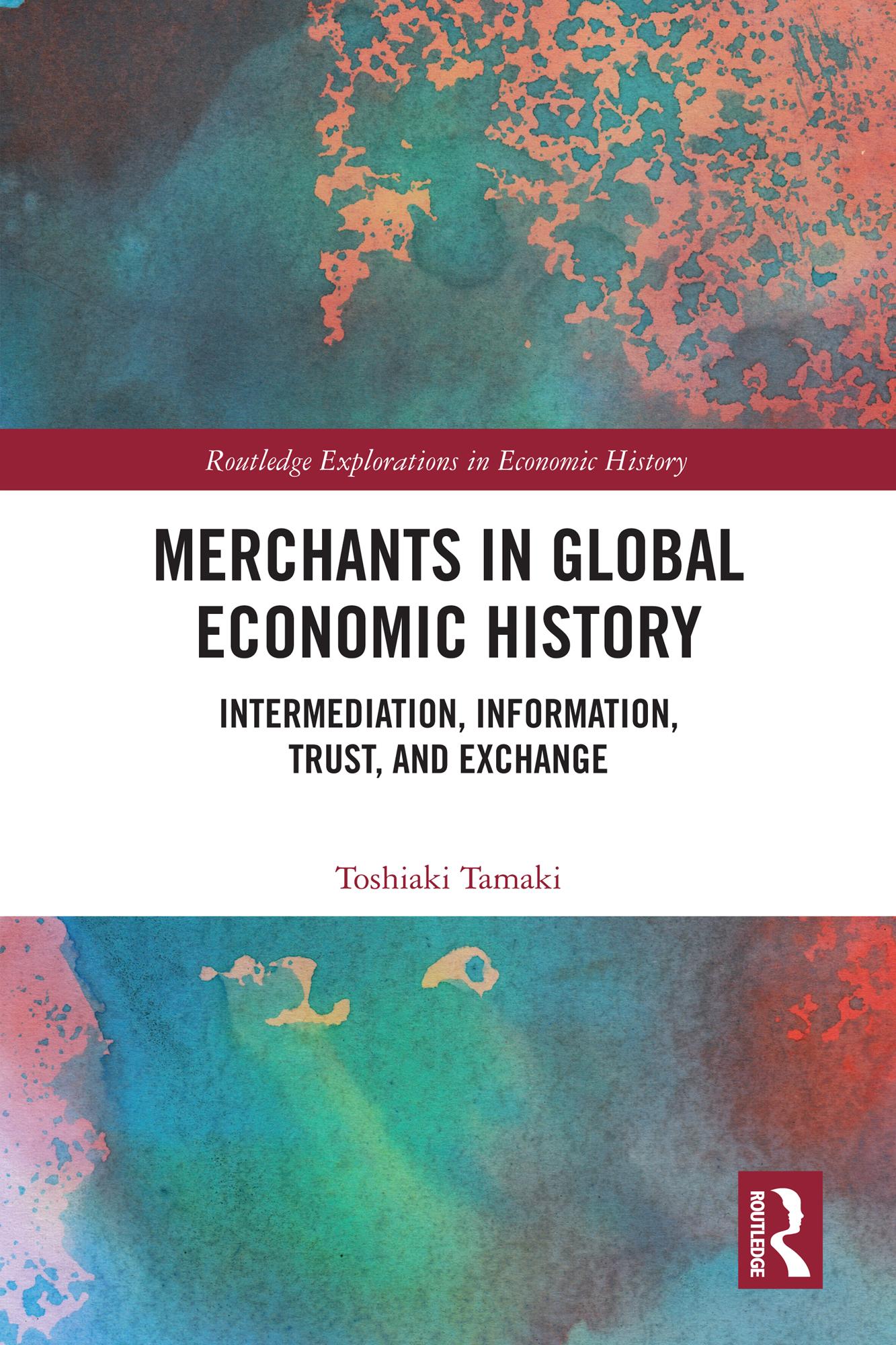
In this book, Toshiaki Tamaki analyses merchant and entrepreneurial activity from ancient times to the twenty-first century, arguing that these intermediaries drive global market expansion and institutional development, as they help to connect distant regions and reduce information asymmetry.
The book begins by framing global economic history through the lens of Homo mobilis (the mobile human) and Homo faber (the fabricating human). It argues that global trade cannot be understood fully without considering how merchants help markets expand through the transmission of information, trust, reputation and commercial knowledge. The book then contextualises this argument through a global survey of trading empires, exploring how merchants and intermediaries profit not through ownership of goods but through the act of exchange. This long-term narrative spans from Mesopotamian traders to Phoenician seafarers to Asian shipping agents and even the global logistics giants of today. Through this survey, readers gain a deeper understanding of how information, trust and circulation – not just production – have shaped the global economy.
Offering a compelling alternative to static economic models and supply-side theories, this book will be of interest to scholars and students of global history, economic history and the history of capitalism.
Betal enkelt med kort, Klarna, Apple Pay eller Google Pay. Ikke fornøyd? Du har alltid 14 dagers angrerett. Les mer i våre vilkår. Har du spørsmål, send oss en e-post på hello@memmo.org.
Memmo gjør det enklere å studere – uansett hvor du er i verden. Hos oss samler du pensumbøker og smarte studieverktøy på ett og samme sted: sammendrag, quizer, podkaster og flashcards. Og så Ted, din studiekompis som svarer på alt du lurer på. Over 50 000 studenter studerer allerede her – bygget for at du skal lære raskere og stresse mindre.