
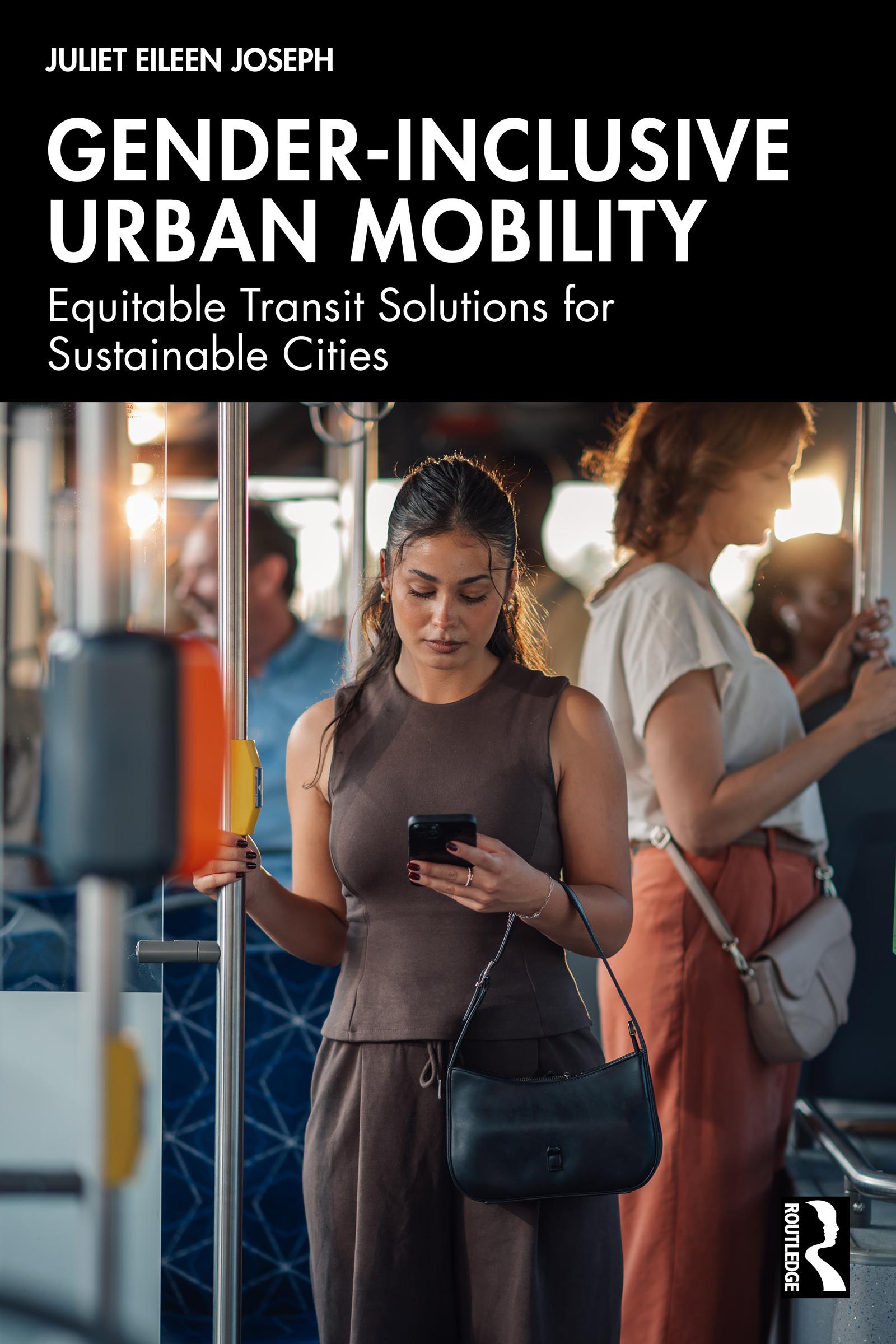
This book critically examines the intersection of gender, governance, and urban mobility through the lens of transit systems in postcolonial and developing countries. Drawing on postcolonial feminist and intersectional theories, it analyses how historical legacies, socio-economic structures, and systemic inequalities have shaped the governance and accessibility of urban transit systems, disproportionately marginalising women. It highlights the compounded challenges women encounter in navigating these systems, including safety, affordability, and representation, whilst also identifying opportunities for their empowerment as stakeholders and decision-makers in governance and shareholding. Through examples from Johannesburg, Lagos, Nairobi, and Dar es Salaam in Africa; Lahore, Jakarta, and Delhi in Asia; and Bogotá, Santiago, and Curitiba in Latin America, the book offers actionable insights for policymakers and urban planners. It will be of interest to researchers, students, and faculty in interdisciplinary fields such as gender studies, public administration, feminist studies, international relations, and urban planning.
Betal enkelt med kort, Klarna, Apple Pay eller Google Pay. Ikke fornøyd? Du har alltid 14 dagers angrerett. Les mer i våre vilkår. Har du spørsmål, send oss en e-post på hello@memmo.org.
Memmo gjør det enklere å studere – uansett hvor du er i verden. Hos oss samler du pensumbøker og smarte studieverktøy på ett og samme sted: sammendrag, quizer, podkaster og flashcards. Og så Ted, din studiekompis som svarer på alt du lurer på. Over 50 000 studenter studerer allerede her – bygget for at du skal lære raskere og stresse mindre.