
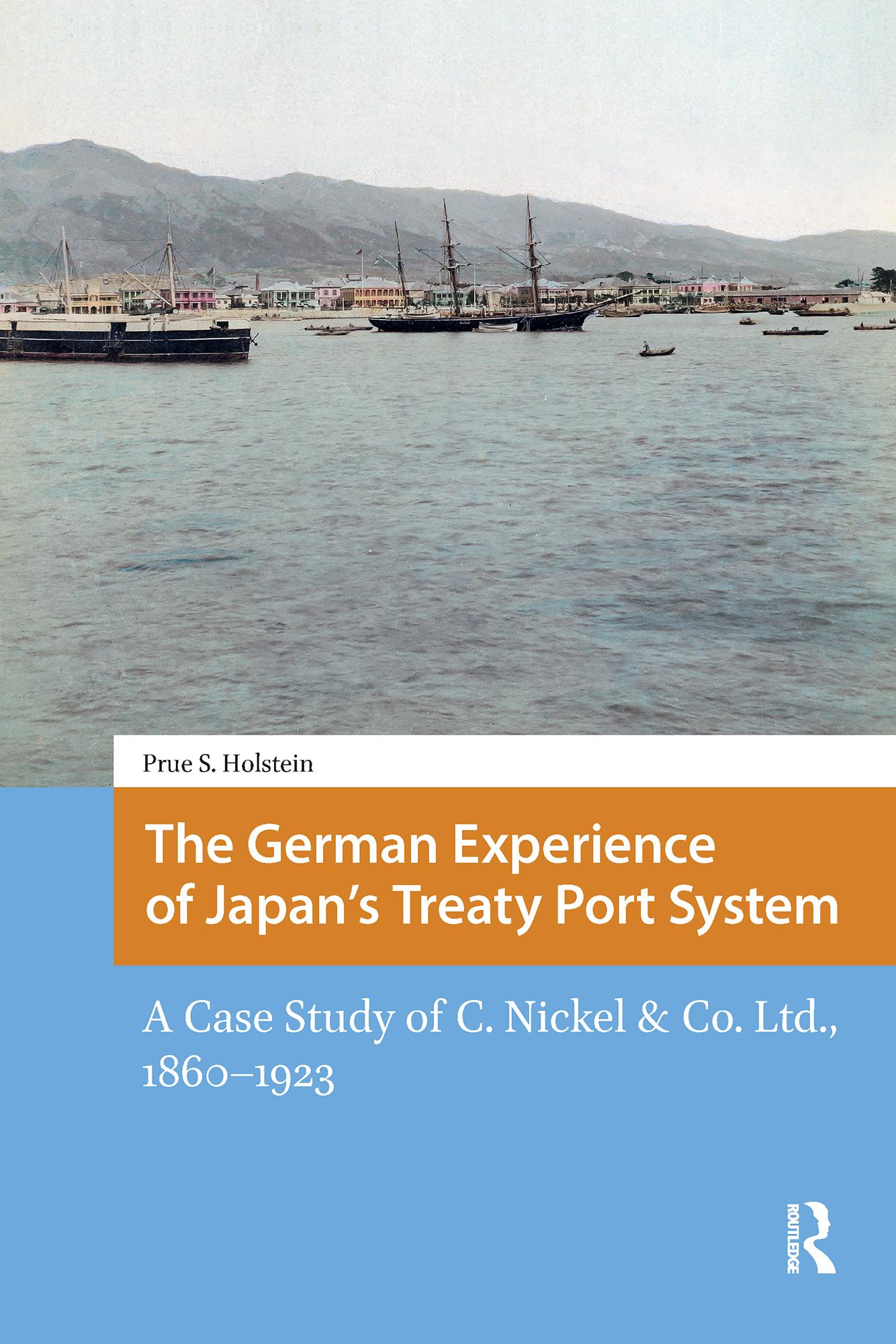
German merchants were attracted to the British Empire’s spheres of influence in northeast Asia from the 1700s. Their numbers increased when Britain established a network of treaty ports in China from 1842 and in Japan from 1858. A latecomer to empire, Germany, unified only in 1871, extended its imperial influence in China in 1898. This is the story of two German merchants, Carl Nickel and his relative and successor Christian Holstein, ancestors of the author’s husband, as they built their company, C. Nickel & Co. Ltd. in Kobe into their own waterfront empire contributing to the growth and modernization of the port. This is the story of how they operated in treaty port Japan where the Japanese government could be anti-foreign and obstructionist, partnering with or in opposition to British colleagues presenting new challenges as Holstein navigated World War One and its aftermath until 1923.
Betal enkelt med kort, Klarna, Apple Pay eller Google Pay. Ikke fornøyd? Du har alltid 14 dagers angrerett. Les mer i våre vilkår. Har du spørsmål, send oss en e-post på hello@memmo.org.
Memmo gjør det enklere å studere – uansett hvor du er i verden. Hos oss samler du pensumbøker og smarte studieverktøy på ett og samme sted: sammendrag, quizer, podkaster og flashcards. Og så Ted, din studiekompis som svarer på alt du lurer på. Over 50 000 studenter studerer allerede her – bygget for at du skal lære raskere og stresse mindre.
Du vil kanskje også like
Kjøp boken0