
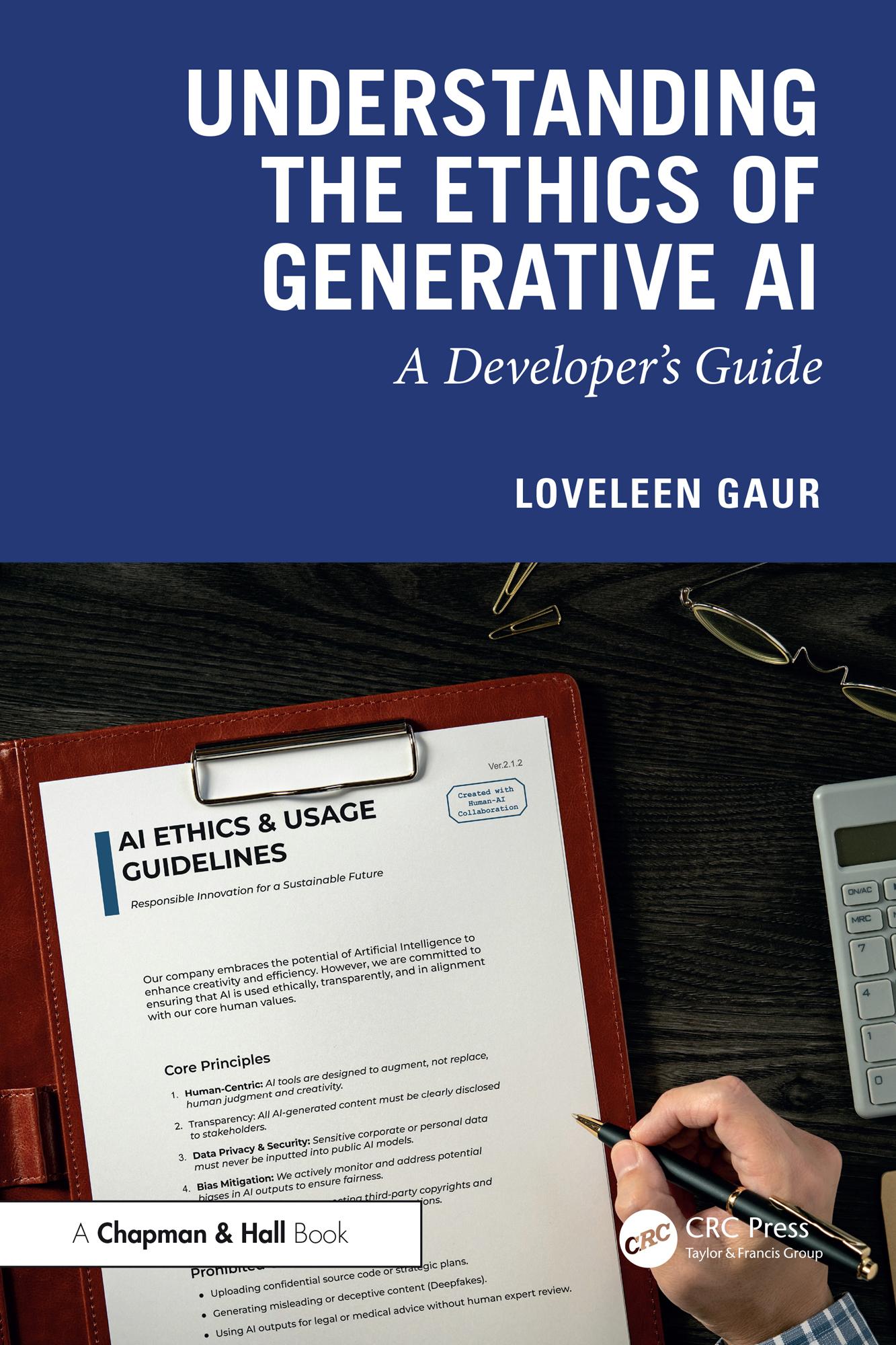
The book discusses the ethical complexities that software developers face as they build AI systems capable of autonomous creation. It explores the ethical decisions developers must make when building generative AI systems, from mitigating bias in training data to protecting user privacy and navigating regulatory compliance. Through real-world case studies and actionable frameworks, it equips technical professionals with both the understanding and tools to build AI systems that are fair, transparent, and worthy of public trust.
This book covers the following topics:
- Identifies and corrects algorithmic bias in training datasets, ensuring AI systems produce equitable outputs that don’t systematize discrimination.
- Designs privacy-first AI architectures and implements transparency practices that comply with data protection regulations while building user trust.
- Navigates evolving legal and regulatory landscapes (GDPR, AI Act, sector-specific rules), helping teams stay ahead of compliance requirements.
- Applies ethical frameworks to real-world decisions: what to do when fairness and accuracy conflict, how to audit AI systems for hidden harms, when to say no to a project.
- Provides a governance model for embedding ethics into development workflows, not as an afterthought but as a core design practice.
Betal enkelt med kort, Klarna, Apple Pay eller Google Pay. Ikke fornøyd? Du har alltid 14 dagers angrerett. Les mer i våre vilkår. Har du spørsmål, send oss en e-post på hello@memmo.org.
Memmo gjør det enklere å studere – uansett hvor du er i verden. Hos oss samler du pensumbøker og smarte studieverktøy på ett og samme sted: sammendrag, quizer, podkaster og flashcards. Og så Ted, din studiekompis som svarer på alt du lurer på. Over 50 000 studenter studerer allerede her – bygget for at du skal lære raskere og stresse mindre.