
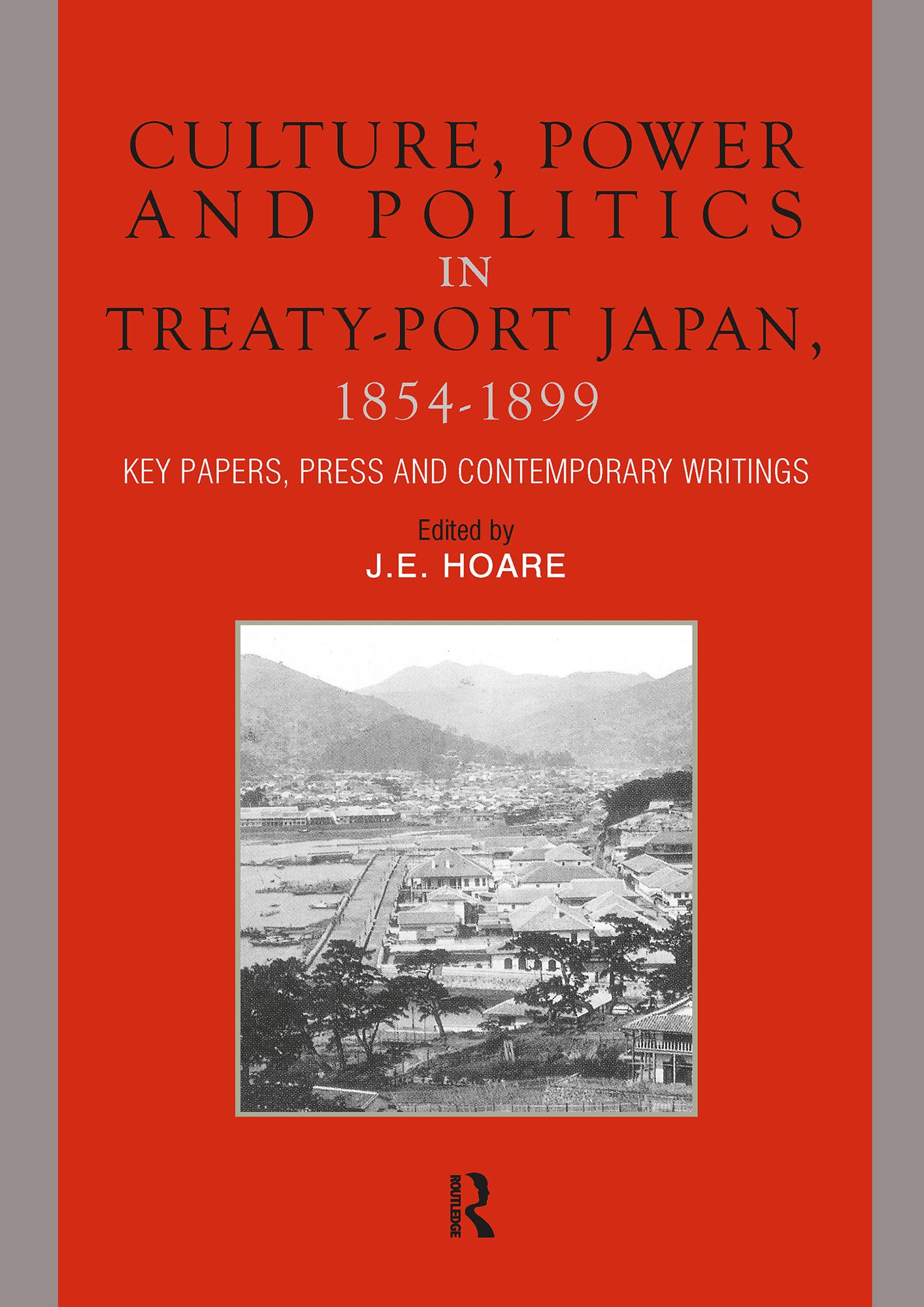
This two–volume collection, supported by an in-depth introduction that addresses origins, actuality, endgame and afterlife, brings together for the first time contemporary documentation and more recent scholarship to give a broad picture of Japan’s Treaty Ports and their inhabitants at work and play in the second half of the nineteenth century. The material selected, shows how the ports’ existence and the Japanese struggle to end their special status, impacted on many aspects of modern Japan beyond their primary role as trading stations. Compared with their counterparts in China, the Japanese treaty ports cast a small shadow. They were far fewer – only four really mattered – and lasted for just under fifty years, while the Chinese ports made their centenary. Yet the Japanese ports were important. The thriving modern cities of Yokohama and Kobe had their origins as treaty ports. Nagasaki, a major centre of foreign trade since at least the sixteenth century, may not have owed so much to its treaty-port status, but it was a factor in its modern development.
Betal enkelt med kort, Klarna, Apple Pay eller Google Pay. Ikke fornøyd? Du har alltid 14 dagers angrerett. Les mer i våre vilkår. Har du spørsmål, send oss en e-post på hello@memmo.org.
Memmo gjør det enklere å studere – uansett hvor du er i verden. Hos oss samler du pensumbøker og smarte studieverktøy på ett og samme sted: sammendrag, quizer, podkaster og flashcards. Og så Ted, din studiekompis som svarer på alt du lurer på. Over 50 000 studenter studerer allerede her – bygget for at du skal lære raskere og stresse mindre.
Du vil kanskje også like
Kjøp boken0