
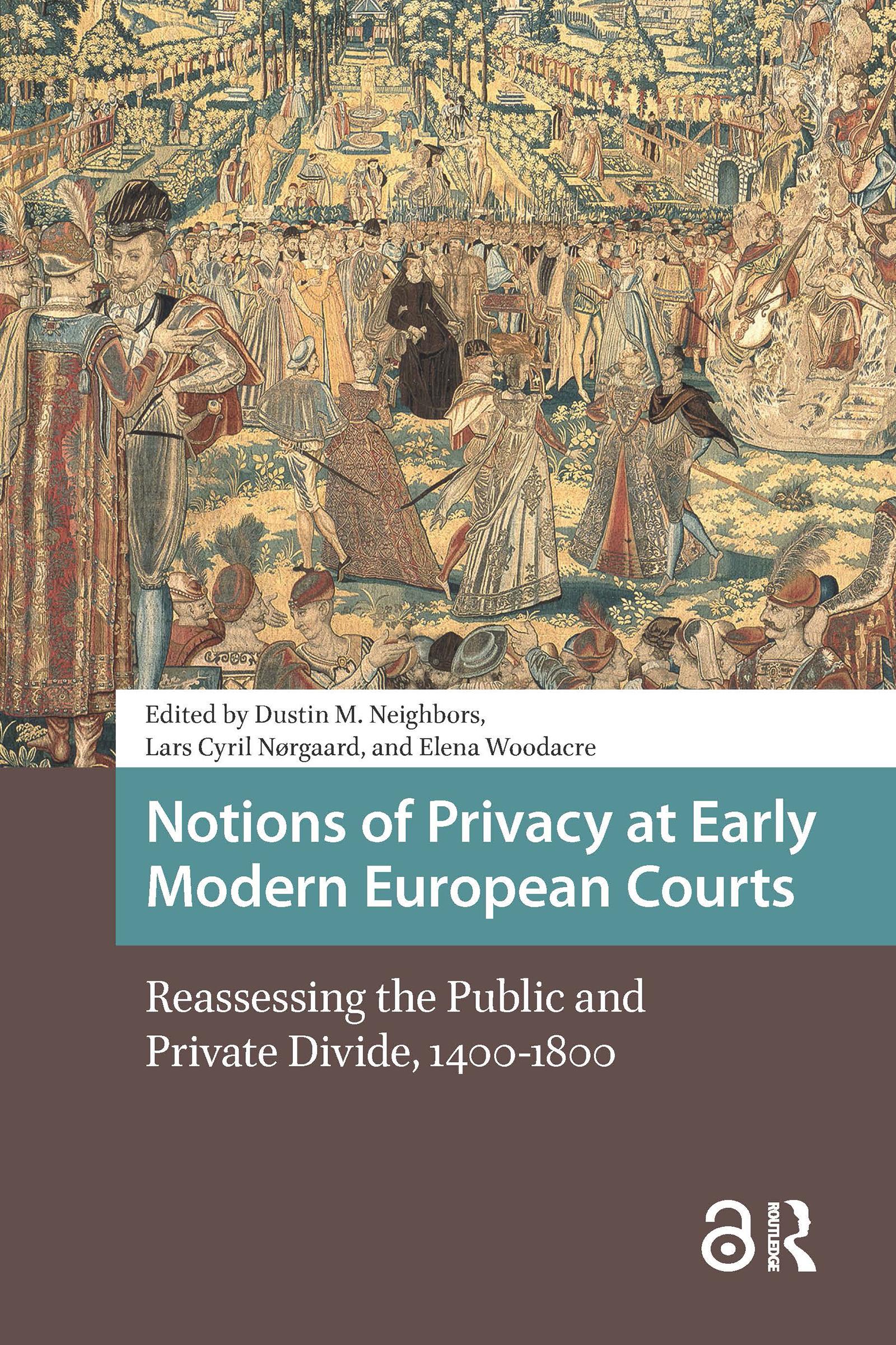
Grand, extravagant, magnificent, scandalous, corrupt, political, personal, fractious; these are terms often associated with the medieval and early modern courts. Moreover, the court constituted a forceful nexus in the social world, which was central to the legitimacy and authority of rulership. As such, courts shaped European politics and culture: architecture, art, fashion, patronage, and cultural exchanges were integral to the spectacle of European courts. Researchers have convincingly emphasised the public nature of courtly events, procedures, and ceremonies. Nevertheless, court life also involved pockets of privacy, which have yet to be systematically addressed. This edited collection addresses this lacuna and offers interpretations that urge us to reassesses the public nature of European courts. Thus, the proposed publication will fertilise the grounds for a discussion of the past and future of court studies. Indeed, the contributions make us reconsider present-day understandings of privacy as a stable and uncontestable notion.
Betal enkelt med kort, Klarna, Apple Pay eller Google Pay. Ikke fornøyd? Du har alltid 14 dagers angrerett. Les mer i våre vilkår. Har du spørsmål, send oss en e-post på hello@memmo.org.
Memmo gjør det enklere å studere – uansett hvor du er i verden. Hos oss samler du pensumbøker og smarte studieverktøy på ett og samme sted: sammendrag, quizer, podkaster og flashcards. Og så Ted, din studiekompis som svarer på alt du lurer på. Over 50 000 studenter studerer allerede her – bygget for at du skal lære raskere og stresse mindre.
Du vil kanskje også like
Kjøp boken0