
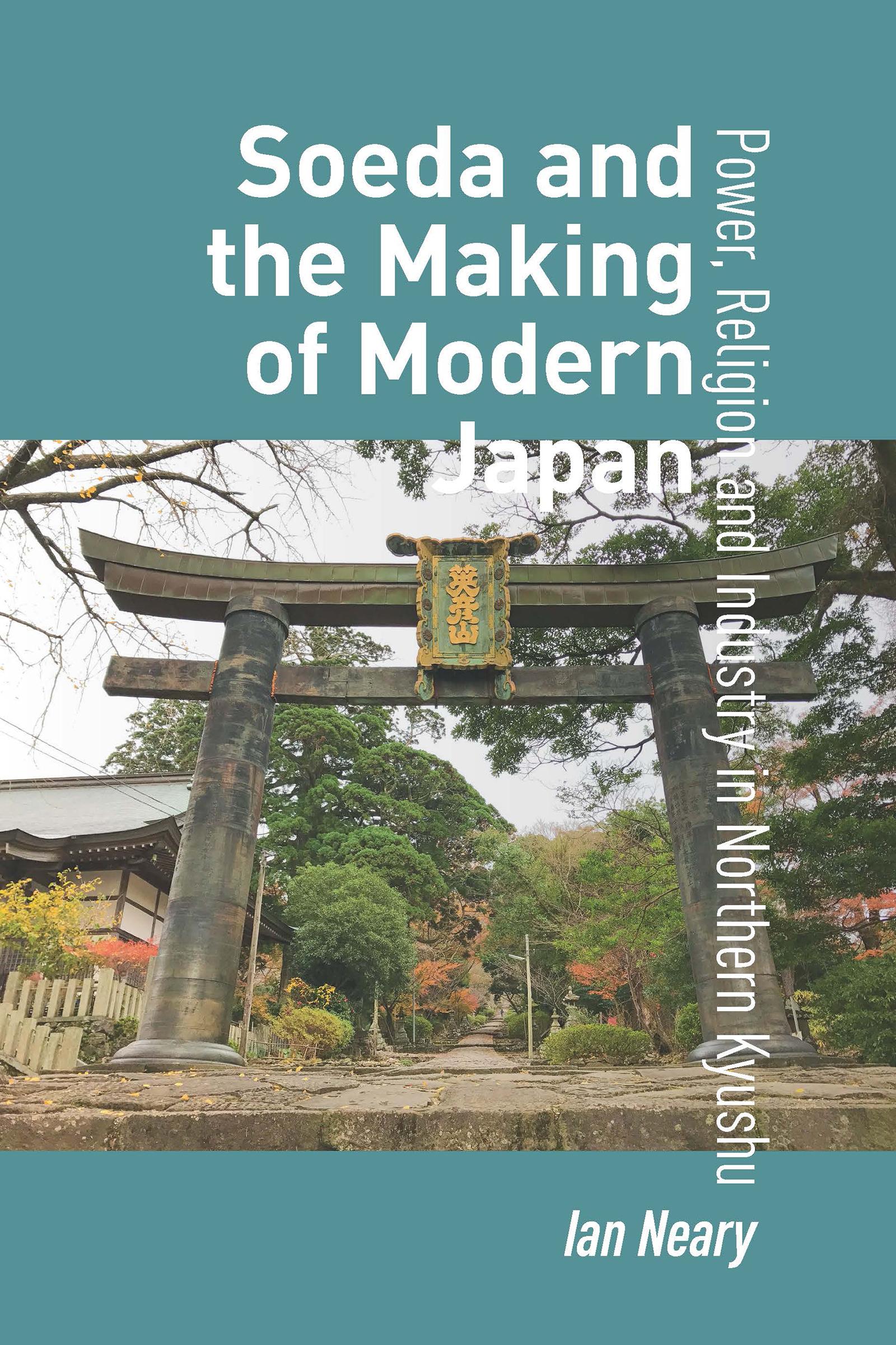
Soeda’s story provides insights into the last thousand years of Japanese history. It was the location of a strategically important castle, Ganjakujo, from the twelfth century until its destruction by Toyotomi Hideyoshi in 1587. Ganjakujo controlled access to Mt Hiko which was the most important Shugend. monastic community in Kyushu until its dissolution in the 1870s. Coal mines in Soeda in the first half of the twentieth century owned by the Kurauchi family drove the modernization of the town and contributed to the industrialization of the country. During the Pacific war, these mines employed Korean labourers and Allied POWs. The town continued to contribute to national economic growth in the 1950s but, following the switch to oil as the main source of energy, its coal mines closed in the 1960s. For forty years between 1971–2010, Mayor Yamamoto Fumio sheltered the town from the worst impact of being ‘left behind’, yet the town continues to seek a new identity in the twenty-first century.
Betal enkelt med kort, Klarna, Apple Pay eller Google Pay. Ikke fornøyd? Du har alltid 14 dagers angrerett. Les mer i våre vilkår. Har du spørsmål, send oss en e-post på hello@memmo.org.
Memmo gjør det enklere å studere – uansett hvor du er i verden. Hos oss samler du pensumbøker og smarte studieverktøy på ett og samme sted: sammendrag, quizer, podkaster og flashcards. Og så Ted, din studiekompis som svarer på alt du lurer på. Over 50 000 studenter studerer allerede her – bygget for at du skal lære raskere og stresse mindre.
Du vil kanskje også like
Kjøp boken0