
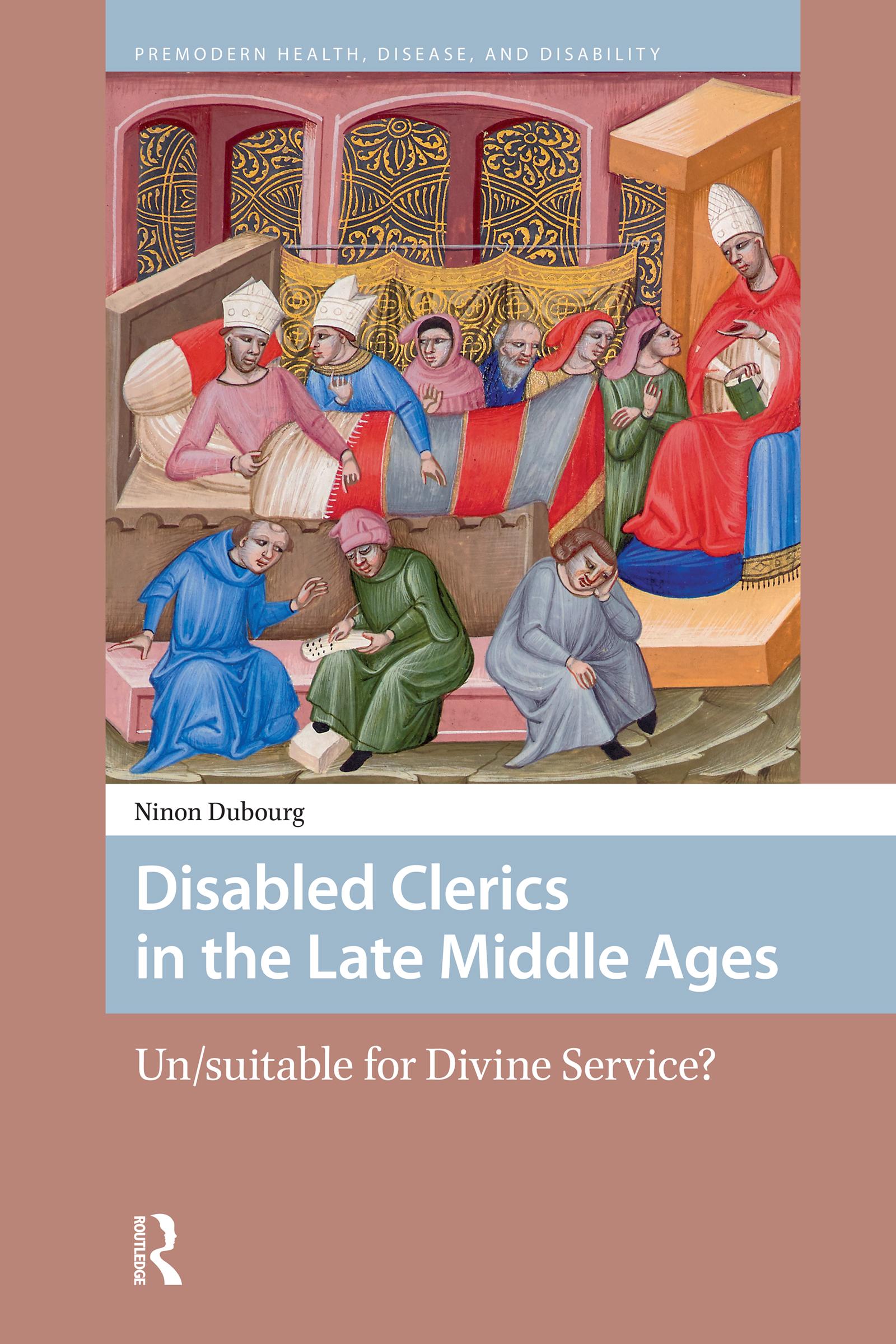
The petitions received and the letters sent by the Papal Chancery during the Late Middle Ages attest to the recognition of disability at the highest levels of the medieval Church. These documents acknowledge the existence of physical and/or mental impairments, with the papacy issuing dispensations allowing some supplicants to adapt their clerical missions according to their abilities. A disease, impairment, or old age could prevent both secular and regular clerics from fulfilling the duties of their divine office. Such conditions can, thus, be understood as forms of disability. In these cases, the Papal Chancery bore the responsibility for determining if disabled people were suitable to serve as clerics, with all the rights and duties of divine services. Whilst some petitioners were allowed to enter the clergy, or – in the case of currently serving churchmen – to stay more or less active in their work, others were compelled to resign their position and leave the clergy entirely. Petitions and papal letters lie at intersection of authorized, institutional policy and practical sources chronicling the lived experiences of disabled people in the Middle Ages. As such, they constitute an excellent analytical laboratory in which to study medieval disability in its relation to the papacy as an institution, alongside the impact of official ecclesiastical judgments on disabled lives.
Betal enkelt med kort, Klarna, Apple Pay eller Google Pay. Ikke fornøyd? Du har alltid 14 dagers angrerett. Les mer i våre vilkår. Har du spørsmål, send oss en e-post på hello@memmo.org.
Memmo gjør det enklere å studere – uansett hvor du er i verden. Hos oss samler du pensumbøker og smarte studieverktøy på ett og samme sted: sammendrag, quizer, podkaster og flashcards. Og så Ted, din studiekompis som svarer på alt du lurer på. Over 50 000 studenter studerer allerede her – bygget for at du skal lære raskere og stresse mindre.
Du vil kanskje også like
Kjøp boken0