
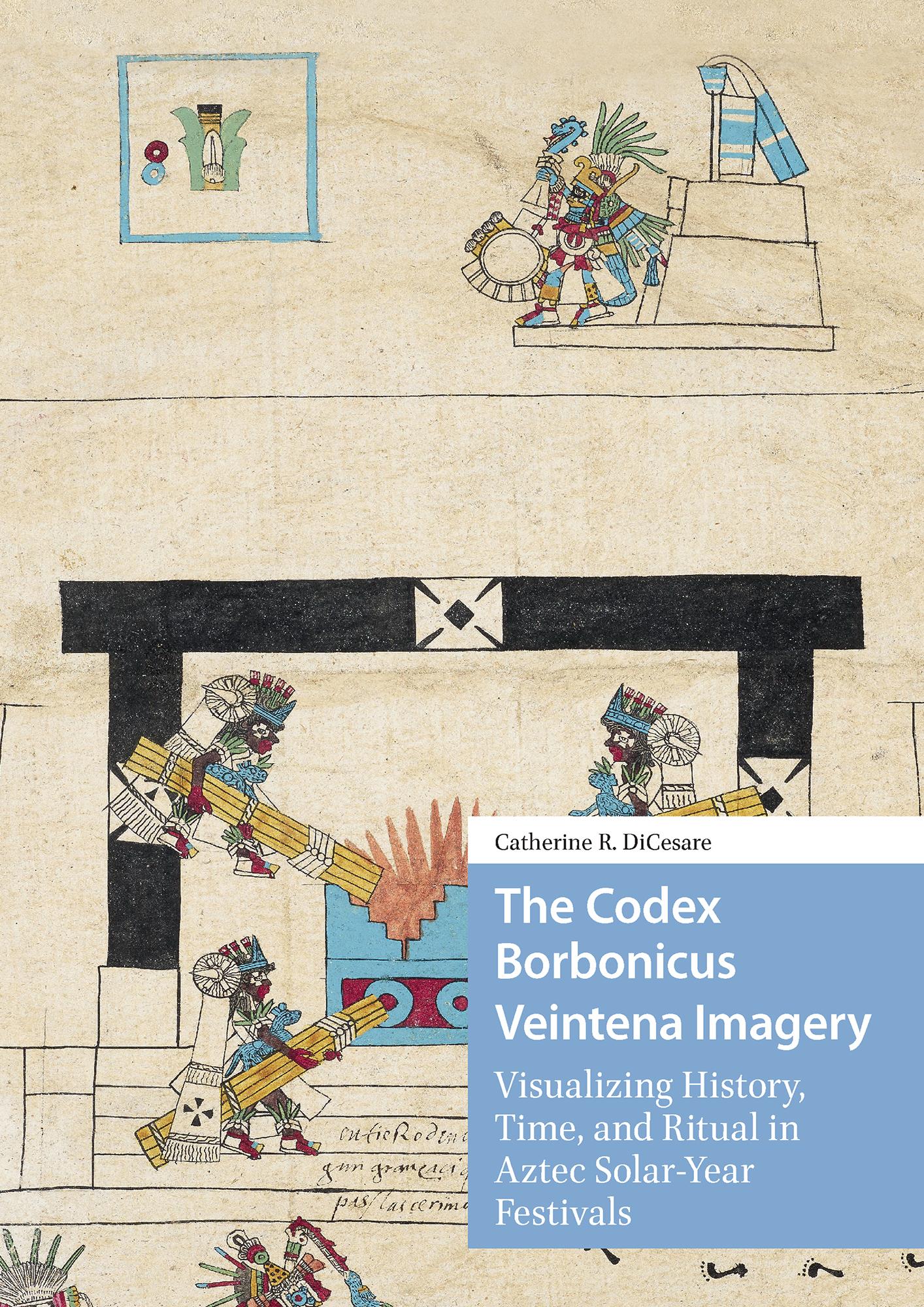
The sixteenth-century pictorial manuscript known as the Codex Borbonicus contains a remarkable record of the eighteen Mexica (or “Aztec”) festival periods of twenty days, known as veintenas, celebrated during the 365-day solar year. Because its indigenous artists framed the Borbonicus veintenas with historical year dates, this volume situates the annually recurring rituals within the march of linear, reckoned time, in the singular year “2 Reed” (1507), during the reign of Moteuczoma II. DiCesare attends to the historical dimensions of several unusual scenes, proposing that the veintenas probably varied significantly from year to year in response to historical concerns. She considers particularly whether the Borbonicus veintenas document the confluence of solar year ceremonies with a second set of ritual feast days, governed by the 260-day cycle known as the tonalpohualli, or “count of days.” In this way, DiCesare analyzes how linear and cyclical conceptions of time intersected in Mexica ritual performance.
Betal enkelt med kort, Klarna, Apple Pay eller Google Pay. Ikke fornøyd? Du har alltid 14 dagers angrerett. Les mer i våre vilkår. Har du spørsmål, send oss en e-post på hello@memmo.org.
Memmo gjør det enklere å studere – uansett hvor du er i verden. Hos oss samler du pensumbøker og smarte studieverktøy på ett og samme sted: sammendrag, quizer, podkaster og flashcards. Og så Ted, din studiekompis som svarer på alt du lurer på. Over 50 000 studenter studerer allerede her – bygget for at du skal lære raskere og stresse mindre.
Du vil kanskje også like
Kjøp boken0