
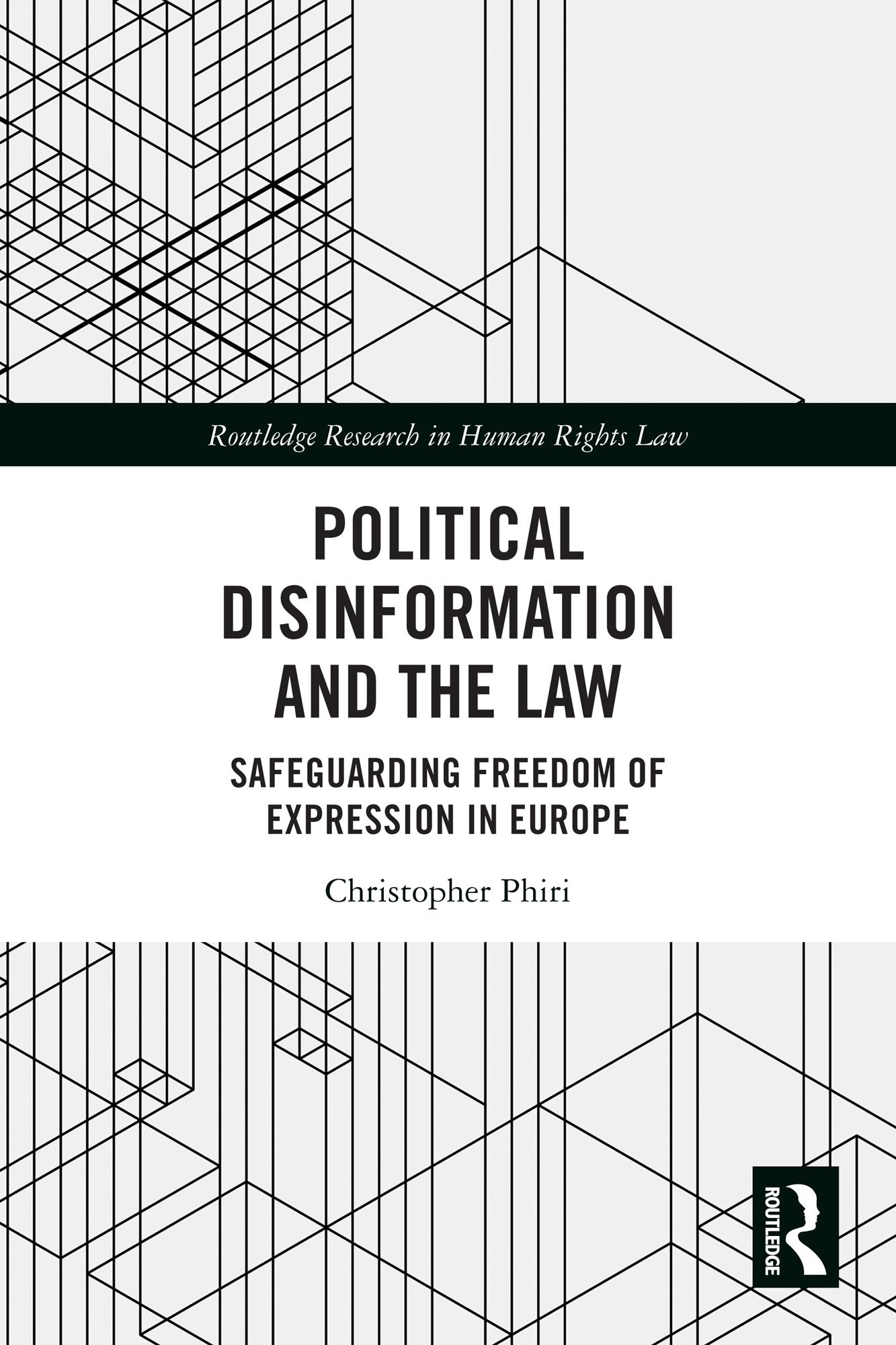
Political disinformation, broadly understood as disinformation relating to matters of public interest, presents a pervasive challenge in today’s information landscape. This book argues that the state can, and indeed has a duty to, regulate the phenomenon of political disinformation in a holistic manner, while both preserving and safeguarding freedom of expression, in particular by providing for a suitable combination of correction and sanction mechanisms. The book builds on relevant analytical and normative insights from the field of political philosophy and uses the legal framework of the Council of Europe as its main point of reference. It begins by dissecting key concepts underpinning the ongoing scholarly and policy discourse on disinformation, clarifying the meaning and scope of ‘freedom’ in general, and ‘freedom of expression’ in particular, as well as ‘disinformation’ in general, and ‘political disinformation’ in particular. This conceptual groundwork in turn helps make out the case for regulating political disinformation and informs the choice of the suggested regulatory strategies. The book promises to be a valuable resource for academics, judges and policymakers, particularly those working in the areas of human rights law, media law, public law, legal philosophy, media studies, communication studies and information science.
Betal enkelt med kort, Klarna, Apple Pay eller Google Pay. Ikke fornøyd? Du har alltid 14 dagers angrerett. Les mer i våre vilkår. Har du spørsmål, send oss en e-post på hello@memmo.org.
Memmo gjør det enklere å studere – uansett hvor du er i verden. Hos oss samler du pensumbøker og smarte studieverktøy på ett og samme sted: sammendrag, quizer, podkaster og flashcards. Og så Ted, din studiekompis som svarer på alt du lurer på. Over 50 000 studenter studerer allerede her – bygget for at du skal lære raskere og stresse mindre.