
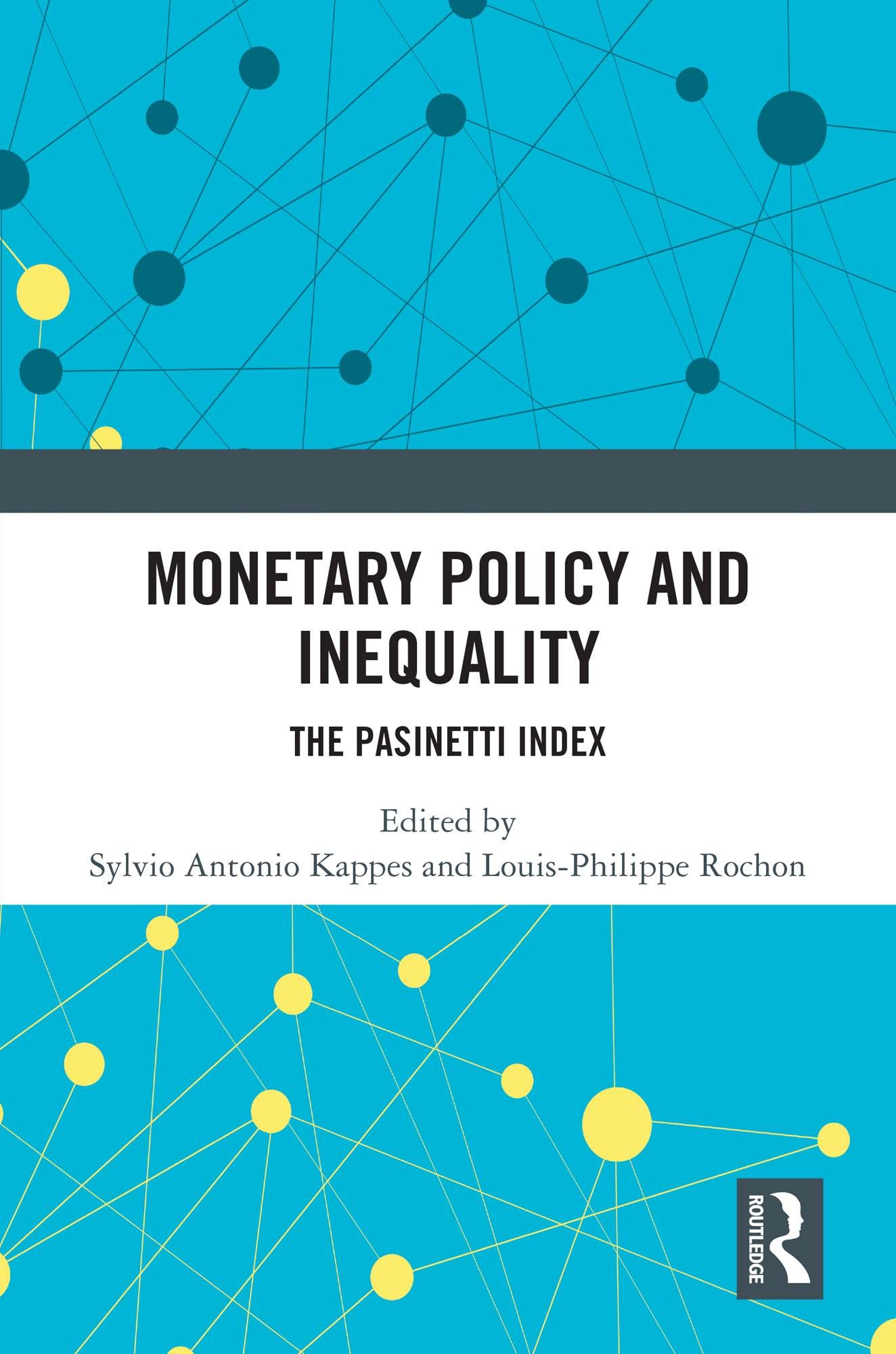
This book explores the relationship between monetary policy and income (and wealth) distribution, a growing area of research in post-Keynesian and heterodox economics today. The interest actually goes back at least to Keynes, who, in his A Tract on Monetary Reform, discusses the effects of interest rates on income distribution—what has been called a ‘rentier-first’ monetary policy. This led Keynes, in the General Theory, to advocate for what he calls ‘the euthanasia of the rentier.’ For Keynes, monetary policy should be set at a low enough rate of interest as to maximize our collective ability to attain full employment. Joan Robinson further developed these ideas in her Accumulation of Capital (1956), examining the distributive nature of interest rates.
Within contemporary heterodox economics, this topic gained renewed attention in the late 1980s through influential papers by prominent post-Keynesians who highlighted concerns about how interest rate changes affect functional income distribution. This perspective places social class dynamics and class conflict at the center of monetary policy debates, challenging mainstream approaches that often overlook distributional consequences.
This book is an invaluable read for economics researchers, graduate students, and policy analysts of monetary theory, macroeconomics, political economy, income inequality, financial economics, and heterodox economic approaches.
The chapters in this book were originally published in Review of Political Economy.
Betal enkelt med kort, Klarna, Apple Pay eller Google Pay. Ikke fornøyd? Du har alltid 14 dagers angrerett. Les mer i våre vilkår. Har du spørsmål, send oss en e-post på hello@memmo.org.
Memmo gjør det enklere å studere – uansett hvor du er i verden. Hos oss samler du pensumbøker og smarte studieverktøy på ett og samme sted: sammendrag, quizer, podkaster og flashcards. Og så Ted, din studiekompis som svarer på alt du lurer på. Over 50 000 studenter studerer allerede her – bygget for at du skal lære raskere og stresse mindre.