
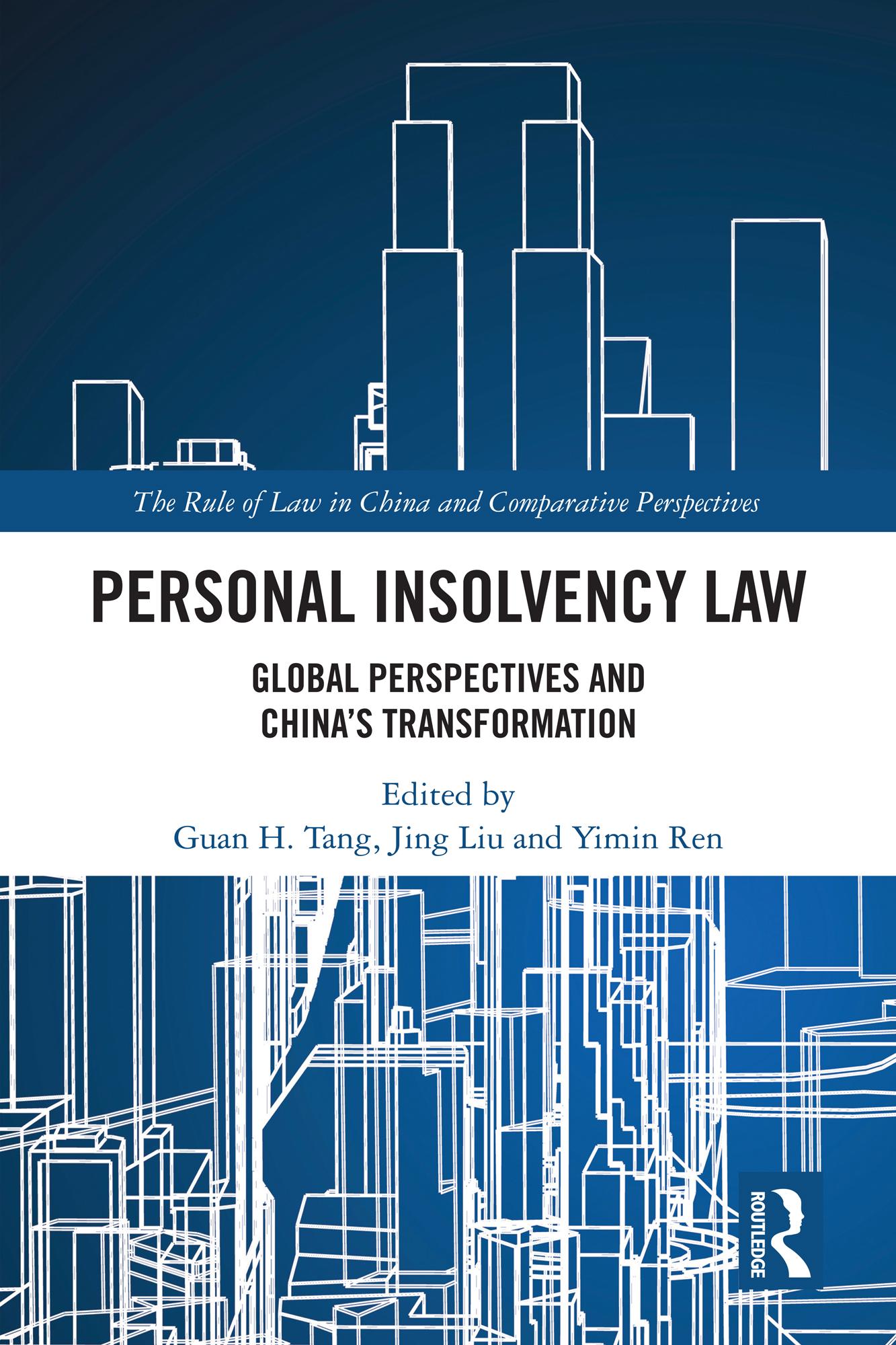
In an era marked by economic uncertainty and rising living costs, the need for compassionate and effective personal insolvency systems has never been more urgent. This edited volume offers a timely and incisive exploration of the complexities of personal insolvency regimes.
Drawing on insights from the UK, the US, Europe, Japan, and China, the book examines how diverse legal systems negotiate the tensions between debt relief and moral hazard, creditor protection and social equity, and market efficiency and human dignity. It compares the effectiveness of neoliberal models, middle-ground approaches, and state-led systems, offering assessments of their respective strengths and limitations.
The analysis moves beyond theory, grounding its arguments in real-world examples while advancing the case for a robust, stand-alone personal insolvency framework in China. By synthesising global experience with local experimentation, the volume demonstrates how such a framework could strengthen economic resilience, uphold human dignity, and bring China’s system into closer alignment with international standards.
Ideal for scholars, policymakers, and practitioners alike, this book bridges academic rigour and practical relevance, inviting readers to reconsider insolvency not merely as a mechanism of last resort but as an instrument of financial rehabilitation and social inclusion.
Betal enkelt med kort, Klarna, Apple Pay eller Google Pay. Ikke fornøyd? Du har alltid 14 dagers angrerett. Les mer i våre vilkår. Har du spørsmål, send oss en e-post på hello@memmo.org.
Memmo gjør det enklere å studere – uansett hvor du er i verden. Hos oss samler du pensumbøker og smarte studieverktøy på ett og samme sted: sammendrag, quizer, podkaster og flashcards. Og så Ted, din studiekompis som svarer på alt du lurer på. Over 50 000 studenter studerer allerede her – bygget for at du skal lære raskere og stresse mindre.