
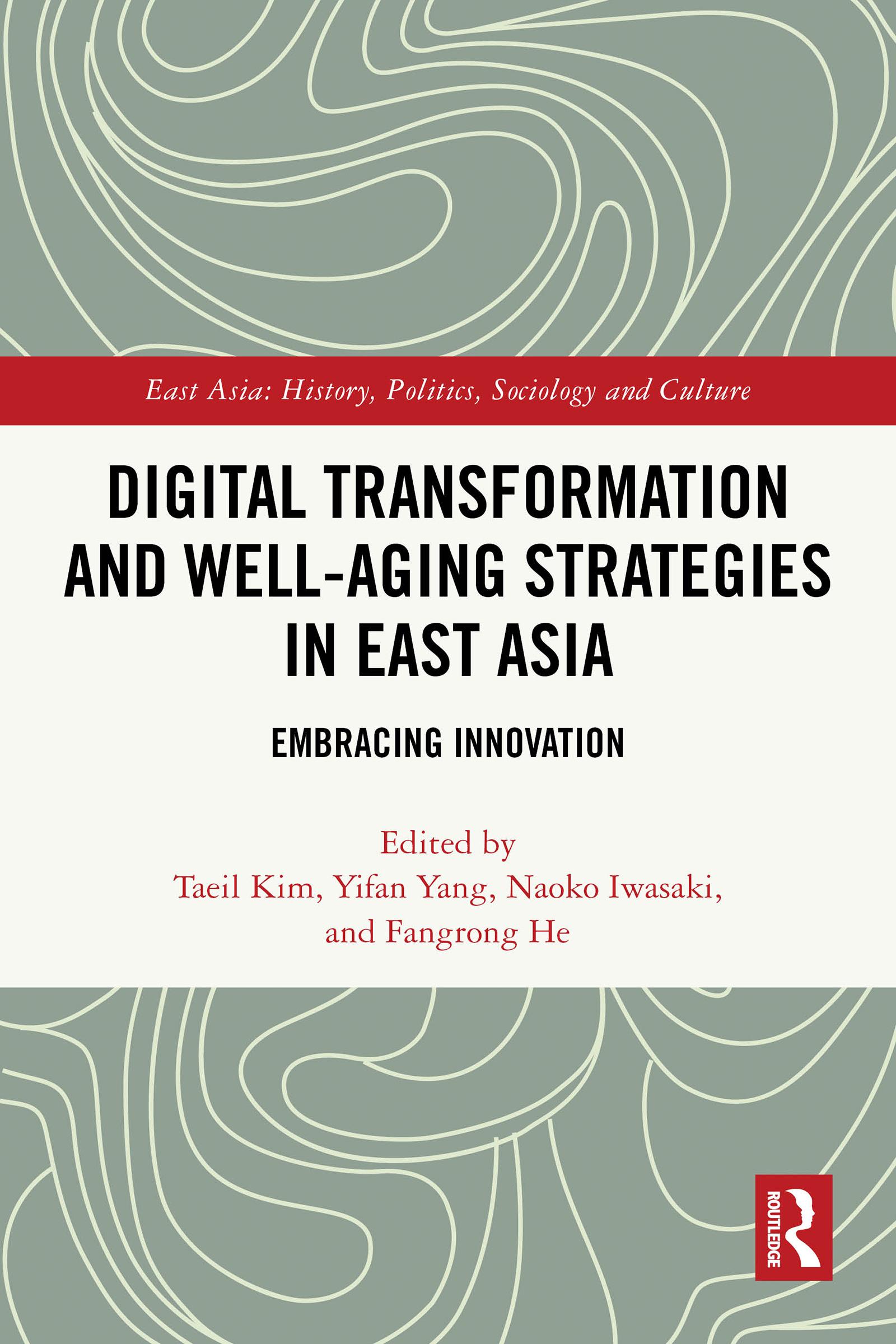
Taeil, Yifan, Naoko, and Fangrong, along with their contributors, examine how China, Korea, and Japan are leveraging digital technologies to address unprecedented demographic shifts in their aging populations.
This book offers a comparative and policy-oriented examination of how digital technologies and artificial intelligence are transforming aging societies in East Asia. Focusing on China, South Korea, and Japan, it brings together interdisciplinary perspectives to analyze how governments are responding to population aging through digital health, long-term care innovation, community-based services, and everyday digital support for older adults. A key feature of the book is its integrated framework, which links technological change with intergenerational relations, welfare institutions, and digital inclusion, rather than treating technology as a purely technical solution. The book combines national policy analysis with local case studies and thematic syntheses, allowing readers to understand both structural differences and shared challenges across countries.
An essential book for academics and researchers of social policy, public administration, gerontology, and digital governance, as well as policymakers and practitioners engaged in aging and welfare reform. Readers will benefit from empirically grounded insights, comparative perspectives, and policy-relevant lessons for designing inclusive, sustainable, and human-centered digital strategies in aging societies.
Betal enkelt med kort, Klarna, Apple Pay eller Google Pay. Ikke fornøyd? Du har alltid 14 dagers angrerett. Les mer i våre vilkår. Har du spørsmål, send oss en e-post på hello@memmo.org.
Memmo gjør det enklere å studere – uansett hvor du er i verden. Hos oss samler du pensumbøker og smarte studieverktøy på ett og samme sted: sammendrag, quizer, podkaster og flashcards. Og så Ted, din studiekompis som svarer på alt du lurer på. Over 50 000 studenter studerer allerede her – bygget for at du skal lære raskere og stresse mindre.