
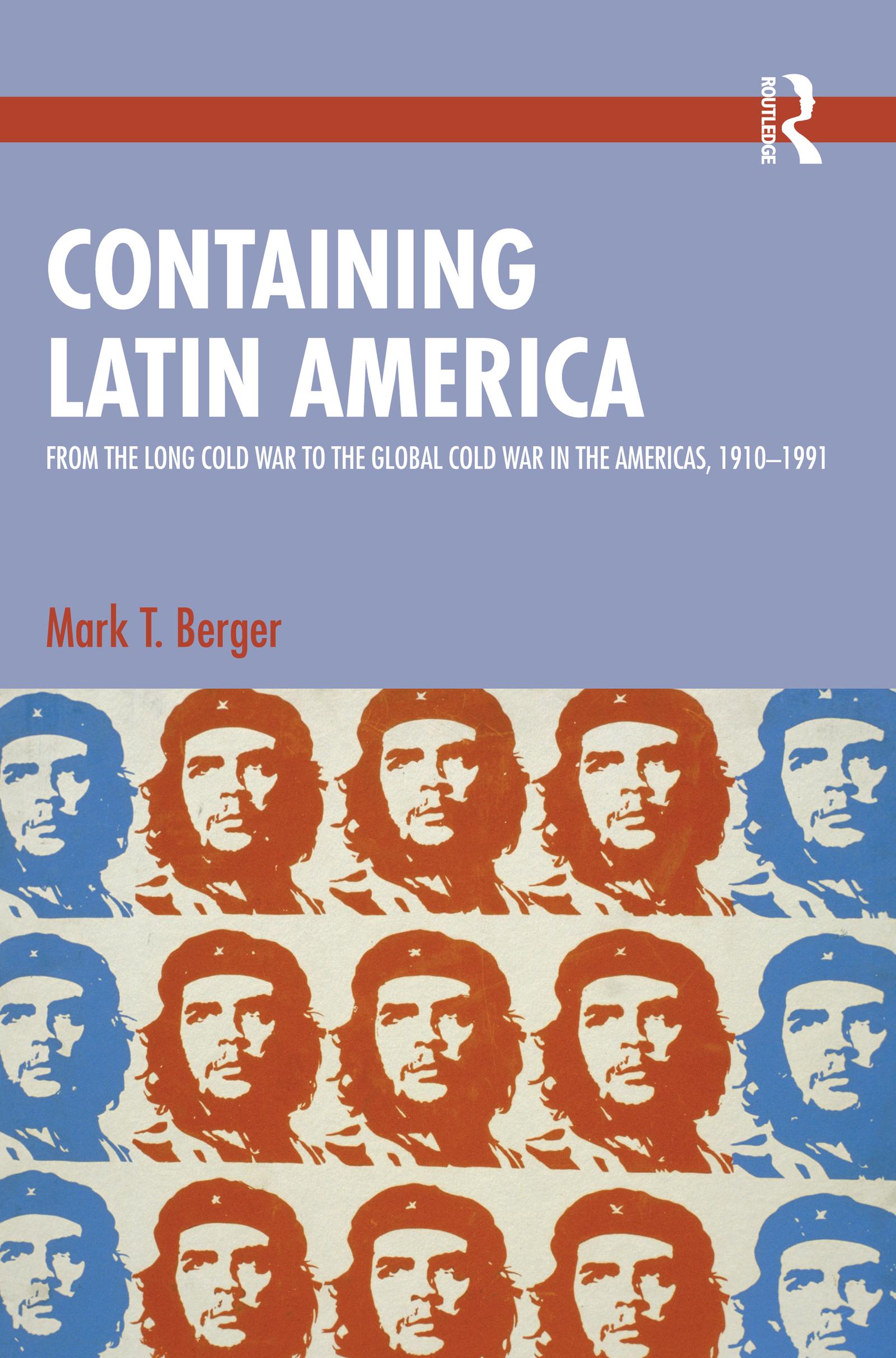
Containing Latin America provides a fresh interpretive history of the making and remaking of Latin America and the United States from the Long Cold War to the Global Cold War (1910–1991), exploring how geopolitics created enduring patterns in inter-American relations.
Berger argues that while each Latin American nation-state followed diverse historical trajectories—contrasting Mexico, Colombia, and Argentina—these differences unfolded within broader Cold War frameworks that shaped the entire hemisphere. Central to this analysis is an examination of how the state was understood during this period as a contested historical institution that provided the major arena for national and international politics, consistently determining which ideological, social, and cultural groups gained political access. The volume discusses pivotal moments including the Guatemalan Revolution, the Alliance for Progress, and the Cuban Revolution, and a compelling epilogue takes readers to the present day, examining the continued tension between visions of a common hemispheric future in a globalized world on the one hand and actual inter-American power relations on the other.
This concise yet informative history provides an invaluable resource for students, scholars, and general readers interested in Latin American history, global history, international relations, and development studies.
Betal enkelt med kort, Klarna, Apple Pay eller Google Pay. Ikke fornøyd? Du har alltid 14 dagers angrerett. Les mer i våre vilkår. Har du spørsmål, send oss en e-post på hello@memmo.org.
Memmo gjør det enklere å studere – uansett hvor du er i verden. Hos oss samler du pensumbøker og smarte studieverktøy på ett og samme sted: sammendrag, quizer, podkaster og flashcards. Og så Ted, din studiekompis som svarer på alt du lurer på. Over 50 000 studenter studerer allerede her – bygget for at du skal lære raskere og stresse mindre.