
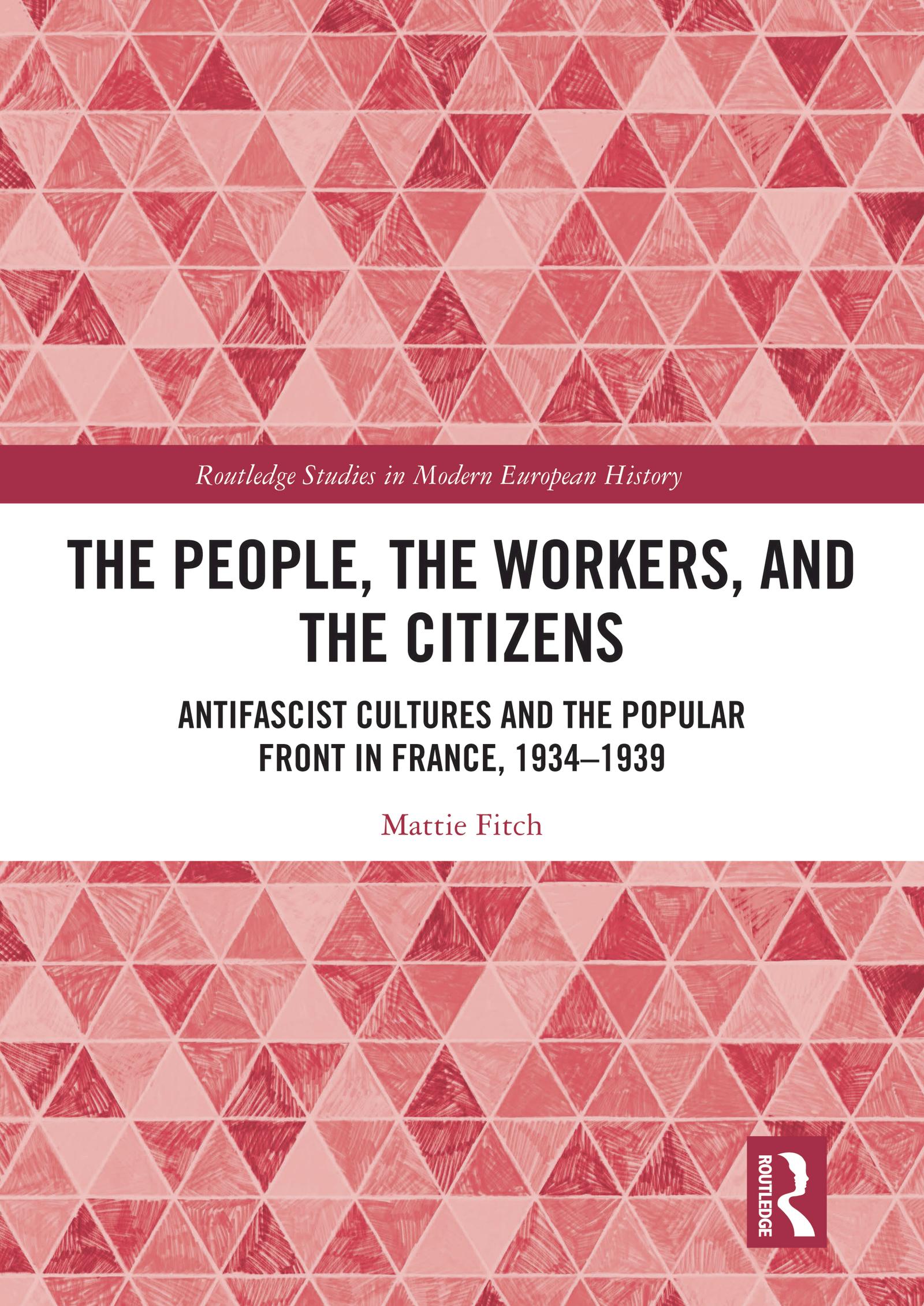
In the 1930s, activists with France’s Popular Front mobilized culture against fascism. Examining music, theater, film, art, and festivals in Paris, Marseille, and Rouen, this book analyses approaches to antifascism and how they varied and interacted across different regions and left-wing traditions.
By combining revolutionary, republican, and working-class heritage, antifascists aimed to foster unifying identities to mobilize the French people. Simultaneously, the distinct outlooks of Communists, Radicals, and Socialists, in addition to the different visions among national figures in Paris and local activists, produced divergent understandings of antifascist culture, ultimately weakening the coalition. This study explains the political, social, and cultural context of the 1930s that generated these movements to break down barriers between ordinary citizens and French culture. It also explores how antifascists constructed the "French people," an ambiguous concept that carried both social and civic connotations.
Aimed at a scholarly audience, this volume engages with historians of modern France and the interwar period in Europe and will interest researchers in antifascist and fascist studies, as well as the fields of cultural politics, republicanism, communism, socialism, and national and regional identity.
Betal enkelt med kort, Klarna, Apple Pay eller Google Pay. Ikke fornøyd? Du har alltid 14 dagers angrerett. Les mer i våre vilkår. Har du spørsmål, send oss en e-post på hello@memmo.org.
Memmo gjør det enklere å studere – uansett hvor du er i verden. Hos oss samler du pensumbøker og smarte studieverktøy på ett og samme sted: sammendrag, quizer, podkaster og flashcards. Og så Ted, din studiekompis som svarer på alt du lurer på. Over 50 000 studenter studerer allerede her – bygget for at du skal lære raskere og stresse mindre.