
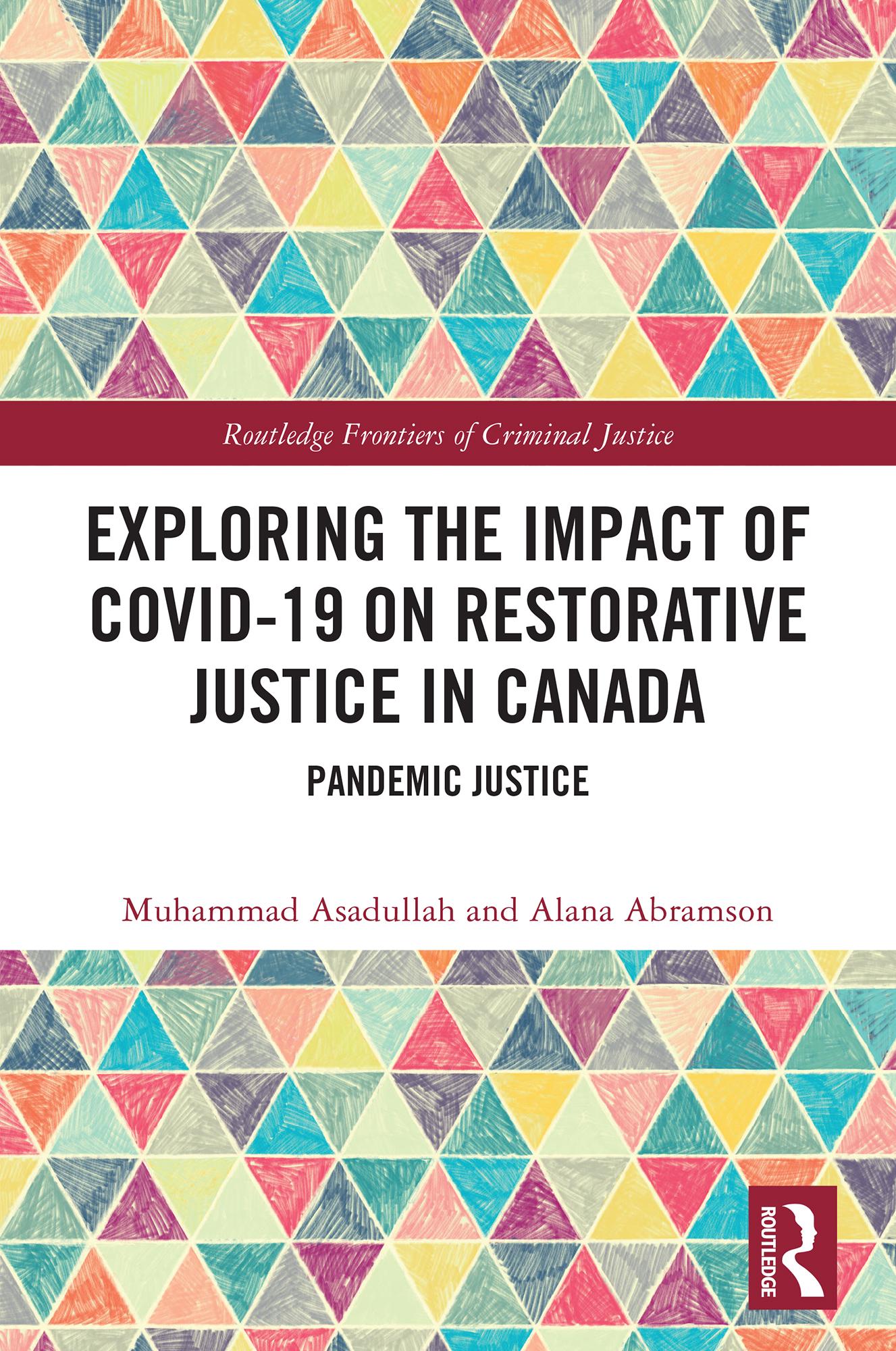
This book examines the impact of COVID-19 on restorative justice programs in several provinces of Canada and the emerging practices that have resulted. The COVID pandemic seems to have influenced Canadians’ perceptions of public safety, with reported changes in the frequency and types of crimes committed, as well as changes in how justice institutions and restorative justice programs operate.
This book explores some of the innovative virtual and blended restorative justice practices that emerged as a result of the pandemic, documenting the impact of COVID-19 on restorative justice from the lenses of resilience and creativity.
This book will be of interest to a wide variety of readers, including government agencies and justice stakeholders who are interested in being responsive to community justice needs; justice practitioners seeking to understand policy implications and formulate policy recommendations; researchers within community-based organizations; and graduate and undergraduate course developers within disciplines such as sociology, criminology, justice studies, law and society, and Indigenous studies; and anyone concerned with emerging restorative justice practices and decolonization efforts in Canada.
Betal enkelt med kort, Klarna, Apple Pay eller Google Pay. Ikke fornøyd? Du har alltid 14 dagers angrerett. Les mer i våre vilkår. Har du spørsmål, send oss en e-post på hello@memmo.org.
Memmo gjør det enklere å studere – uansett hvor du er i verden. Hos oss samler du pensumbøker og smarte studieverktøy på ett og samme sted: sammendrag, quizer, podkaster og flashcards. Og så Ted, din studiekompis som svarer på alt du lurer på. Over 50 000 studenter studerer allerede her – bygget for at du skal lære raskere og stresse mindre.