
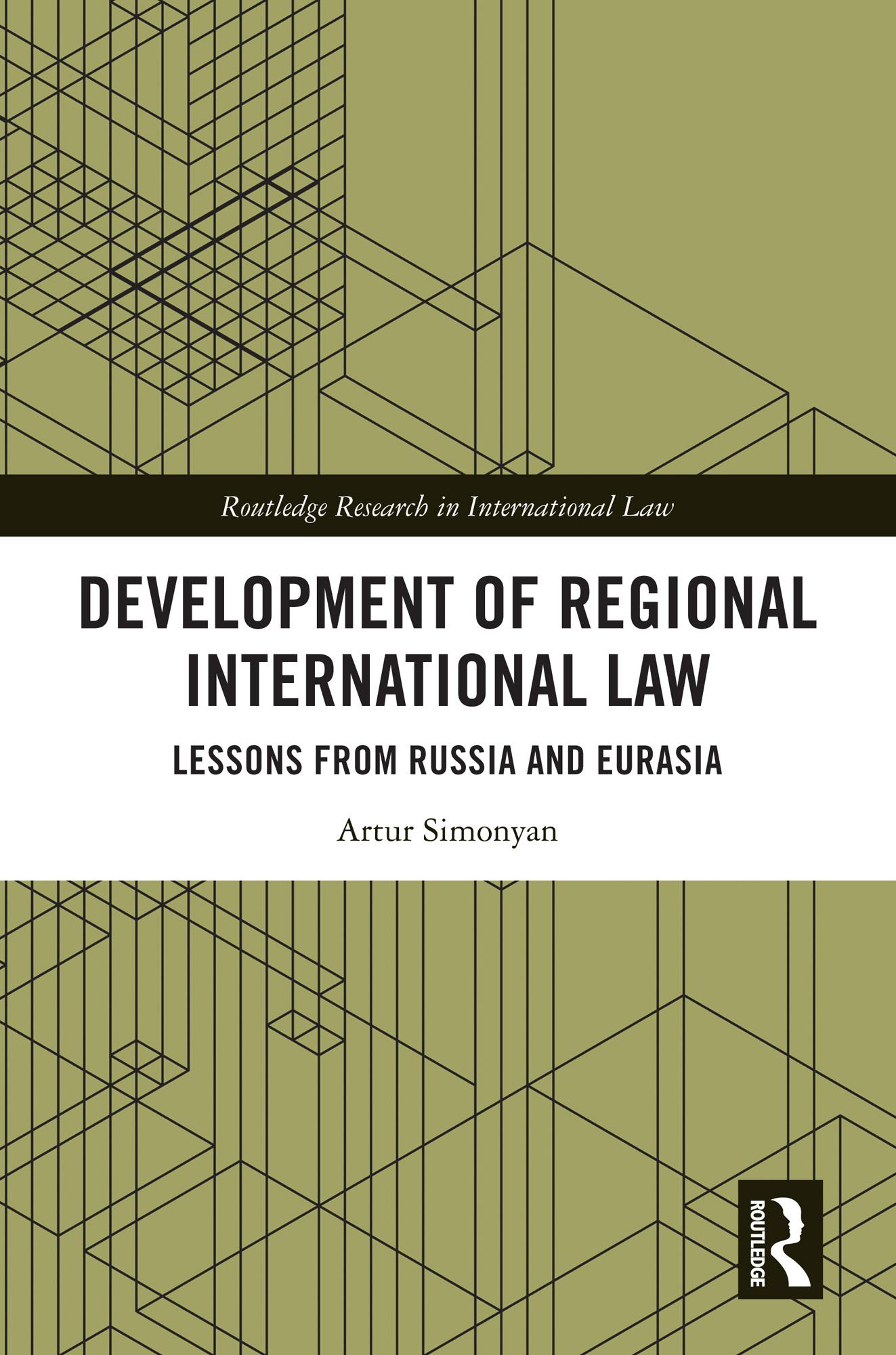
This book explores the evolution and internalisation of regional international law in the Eurasian Russian context, covering historical, contemporary, and future perspectives. Providing a forward-looking analysis, the book makes predictions as to how emerging geopolitical and geoeconomic trends will influence the development of regional international law and the balance of power within the Eurasian region.
Analysing perceptions of universalism and regionalism across various historical periods in Eurasia, the book focuses on what now encompasses the post-Soviet states, with wider lessons for the international legal community. The book discusses Russia's use of international law to sustain its geopolitical objectives and the subsequent responses from neighbouring states. Evaluating Soviet international law and its relationship with regionalism and universality, the book also explores post-Soviet Russia's efforts to redefine international law by creating its own vision of regional (Eurasian) international law through regional organizations such as the CIS, CSTO, and EAEU in the post-Soviet Eurasian space. Within the current context of Russia's 2022 invasion of Ukraine, it explores how the post-Soviet Eurasian states have navigated their legal and political landscapes amidst competing pressures from both regional and global actors.
The book will be of interest to researchers in the field of international law, alongside Eurasian Russian politics.
Betal enkelt med kort, Klarna, Apple Pay eller Google Pay. Ikke fornøyd? Du har alltid 14 dagers angrerett. Les mer i våre vilkår. Har du spørsmål, send oss en e-post på hello@memmo.org.
Memmo gjør det enklere å studere – uansett hvor du er i verden. Hos oss samler du pensumbøker og smarte studieverktøy på ett og samme sted: sammendrag, quizer, podkaster og flashcards. Og så Ted, din studiekompis som svarer på alt du lurer på. Over 50 000 studenter studerer allerede her – bygget for at du skal lære raskere og stresse mindre.