
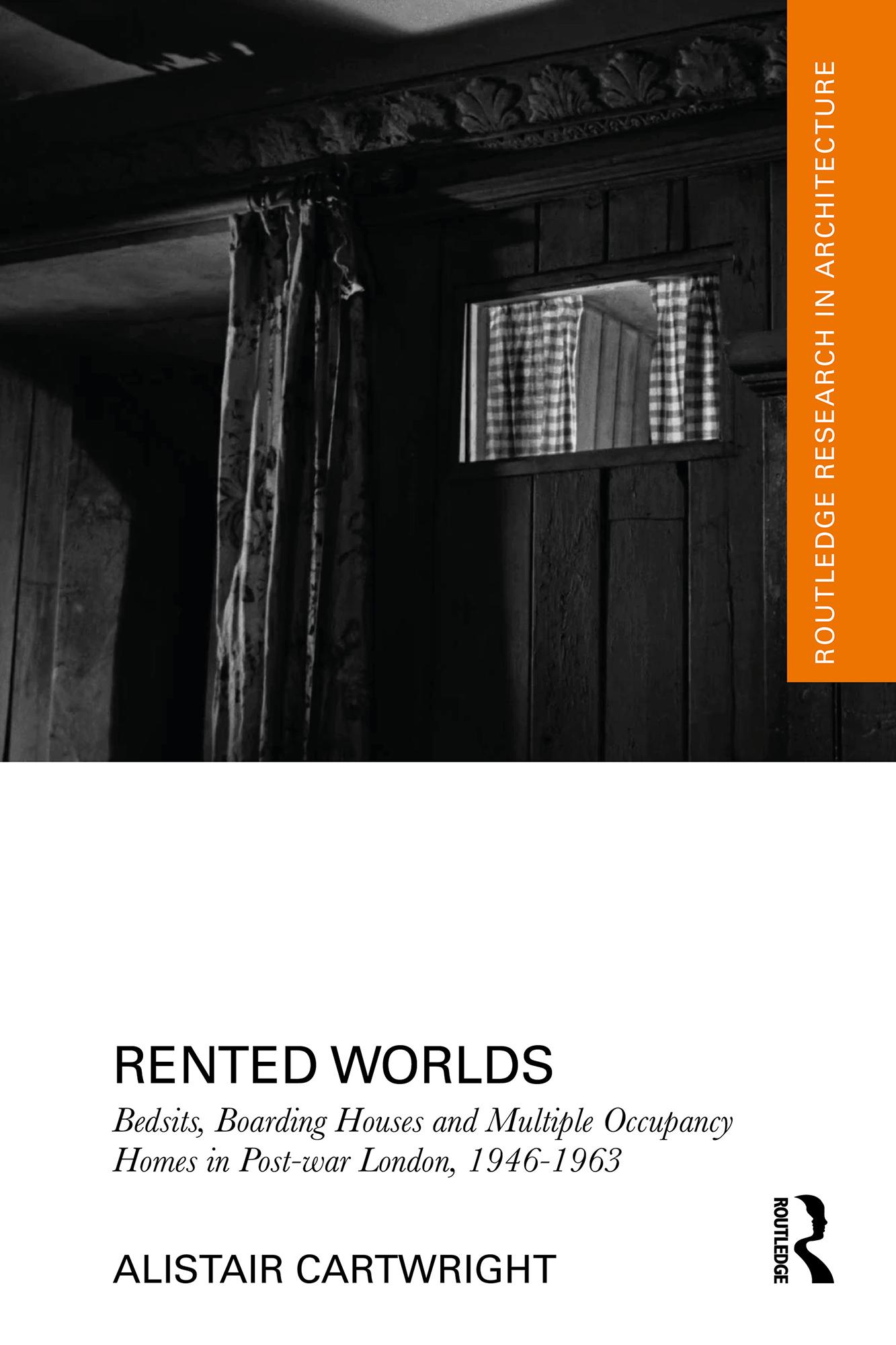
Rented Worlds examines the hidden yet ubiquitous world of bedsits, boarding houses, service flats, subdivided terraces, and other forms of private rented housing that continued to dominate post-war London, numerically as well as culturally, well into the 1960s.
While the rise of council housing and suburban homeownership have both been thoroughly documented, it was this other kind of housing – declining yet highly contested – that formed the ideological substrate of many key debates about the post-war politics of welfare, ‘race,’ class, and gender. Covering from the end of the Second World War to the end of the first post-war Conservative government, and drawing on a range of untapped archival sources, including rent tribunals, valuation lists, exhibitions, and photography, the book traces a sequence of specific ‘problems’ as they coincided with key moments in post-war British history: from the 1946 squatting movement and the problem of displacement after the Blitz; to the question of social isolation and new policies around mental health; to the chronic issue of overcrowding and a growing fire safety crisis in inner London.
Told through the experience of tenants and proprietors, this new history of post-war London challenges architectural history’s ability to account for the unexpected after-lives of built spaces; spaces that were re-made from the inside out through processes of speculation, regulation, and grassroots spatial practices.
Betal enkelt med kort, Klarna, Apple Pay eller Google Pay. Ikke fornøyd? Du har alltid 14 dagers angrerett. Les mer i våre vilkår. Har du spørsmål, send oss en e-post på hello@memmo.org.
Memmo gjør det enklere å studere – uansett hvor du er i verden. Hos oss samler du pensumbøker og smarte studieverktøy på ett og samme sted: sammendrag, quizer, podkaster og flashcards. Og så Ted, din studiekompis som svarer på alt du lurer på. Over 50 000 studenter studerer allerede her – bygget for at du skal lære raskere og stresse mindre.