
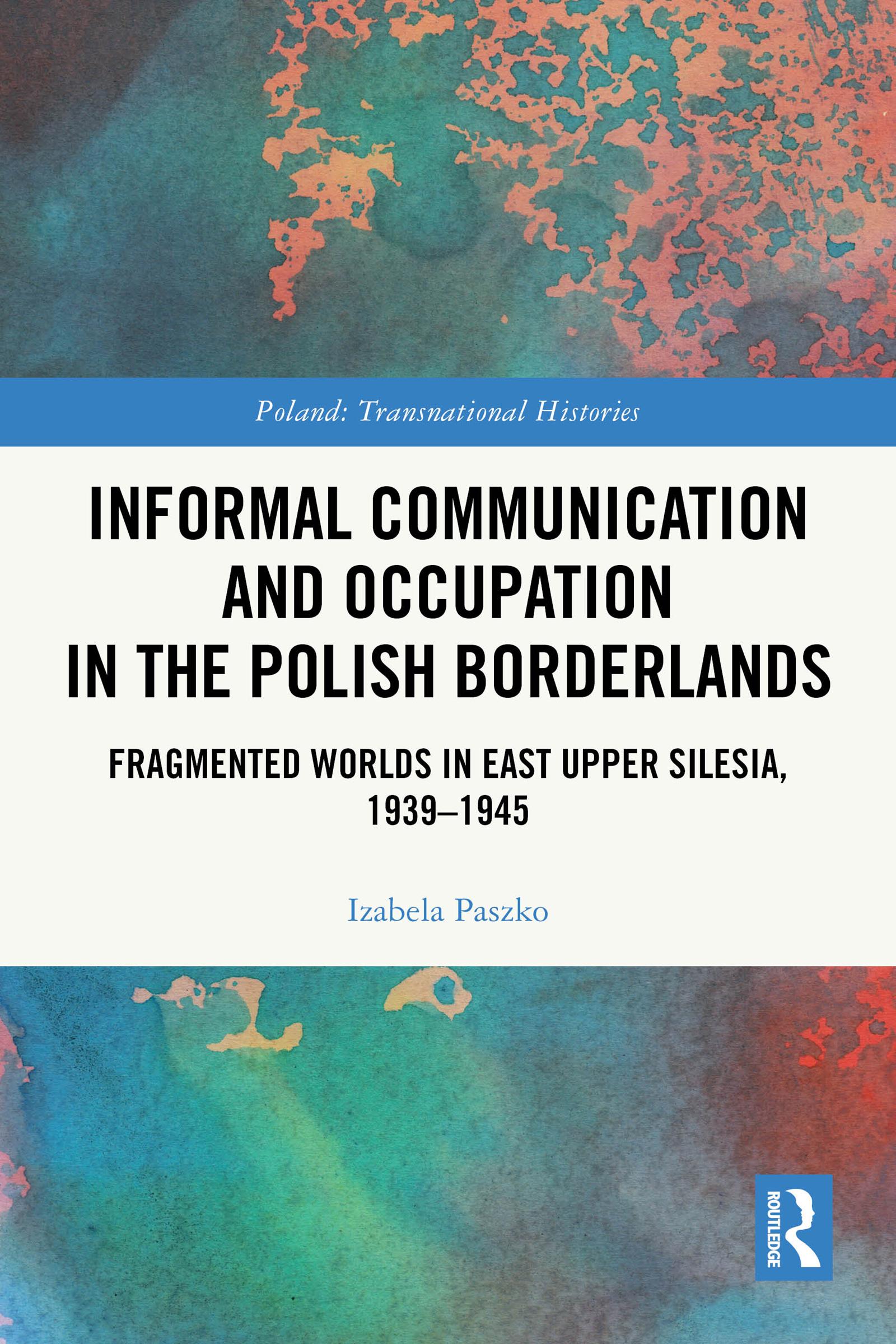
The book explores the neglected role and social dynamics of informal communication – interpersonal channels not controlled ‘from above’ – in the region of Upper Silesia under the German occupation during the Second World War (1939–1945).
Whereas the classic dichotomies, such as private-public and formal-informal, have been widely explored and discussed in the humanities, the main focus of this volume lies in the reconstruction of the information landscape of wartime and its deployment by families, co-workers, neighbours, and other social groups. Through the prism of personal stories, the book analyses functions and forms of informal communication that existed in a contextual and ephemeral way such as gossip, rumours, and workers’ conversations, offering an interdisciplinary perspective on everyday life during this period.
Informal Communication and Occupation in the Polish Borderlands is primarily aimed at scholars of contemporary history, social history, and Eastern European history, while its important lens as a study of fake news and misinformation in modern times will also be engaging to undergraduate classrooms and general readers.
Betal enkelt med kort, Klarna, Apple Pay eller Google Pay. Ikke fornøyd? Du har alltid 14 dagers angrerett. Les mer i våre vilkår. Har du spørsmål, send oss en e-post på hello@memmo.org.
Memmo gjør det enklere å studere – uansett hvor du er i verden. Hos oss samler du pensumbøker og smarte studieverktøy på ett og samme sted: sammendrag, quizer, podkaster og flashcards. Og så Ted, din studiekompis som svarer på alt du lurer på. Over 50 000 studenter studerer allerede her – bygget for at du skal lære raskere og stresse mindre.