
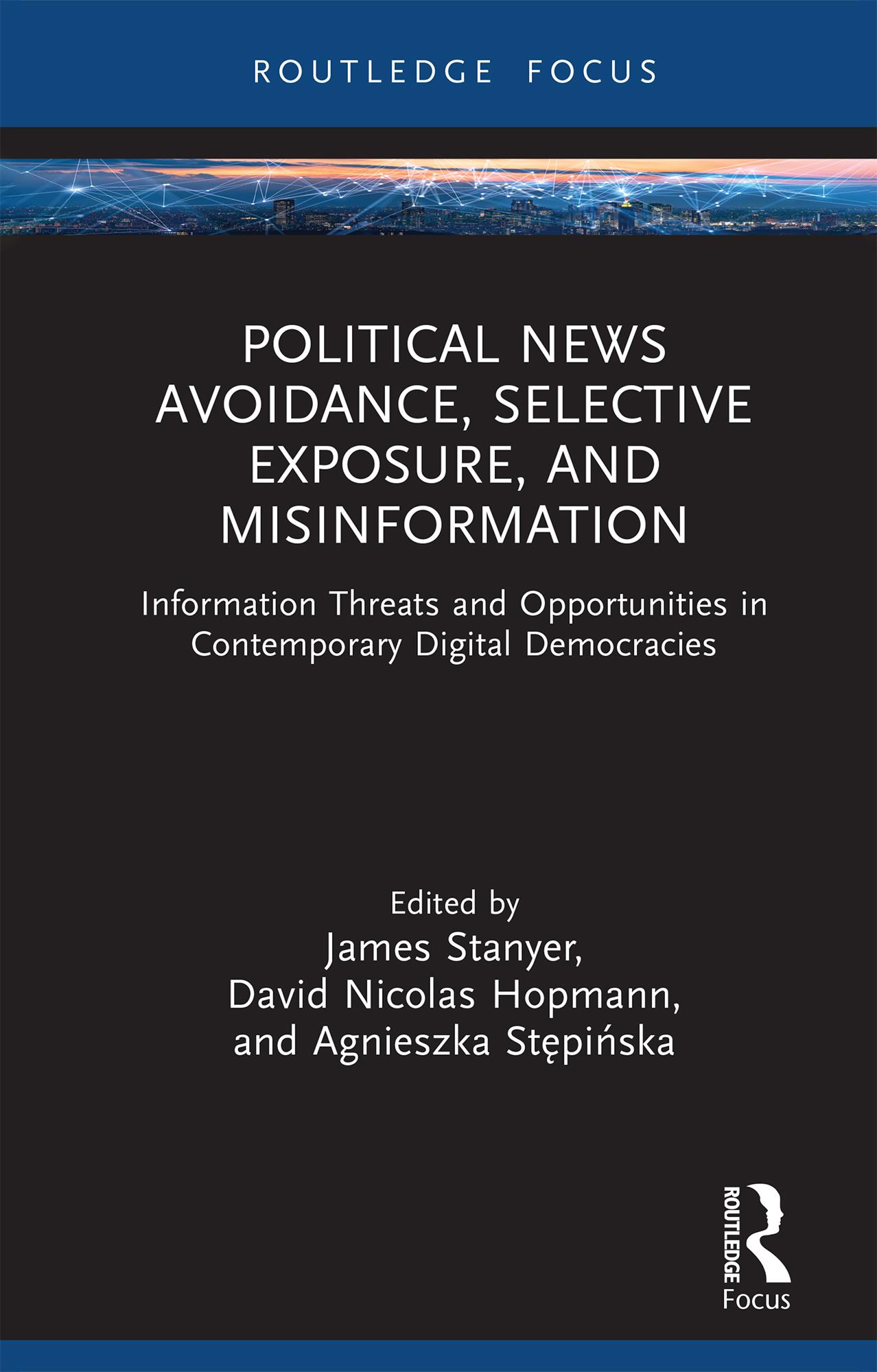
Drawing on primary empirical research, this book considers the democratic outcomes of political news avoidance, selective news exposure, and misinformation.
Political information environments across democracies are in flux, fundamentally changing the way citizens gain political information and leading to widespread concerns about consequences for democracy. From selective media use leading to increased attitudinal polarisation, to declining trust in legacy media and journalists compounding political disengagement, the need for a detailed, comparative account of what these changes in the supply of, and demand for, political information mean for democracies is evident. This book focuses on three developments that are seen as particularly concerning for democracies: news avoidance, selective news exposure, and misinformation. Using in-depth interviews, web-tracking, panel surveys, and experiments, it investigates the extent of these threats, their causes, consequences, and remedies. Further, it shines a critical empirical light, for the first time, on these developments across four different types of democracies found in countries around Europe as well as Israel and the US. The results of the study are nuanced and contex- specific, with the authors finding generally that the prevalence of these three developments may be less than previously anticipated.
This is a critical study for researchers and advanced students of journalism and political communication, and bears global implications.
Betal enkelt med kort, Klarna, Apple Pay eller Google Pay. Ikke fornøyd? Du har alltid 14 dagers angrerett. Les mer i våre vilkår. Har du spørsmål, send oss en e-post på hello@memmo.org.
Memmo gjør det enklere å studere – uansett hvor du er i verden. Hos oss samler du pensumbøker og smarte studieverktøy på ett og samme sted: sammendrag, quizer, podkaster og flashcards. Og så Ted, din studiekompis som svarer på alt du lurer på. Over 50 000 studenter studerer allerede her – bygget for at du skal lære raskere og stresse mindre.