
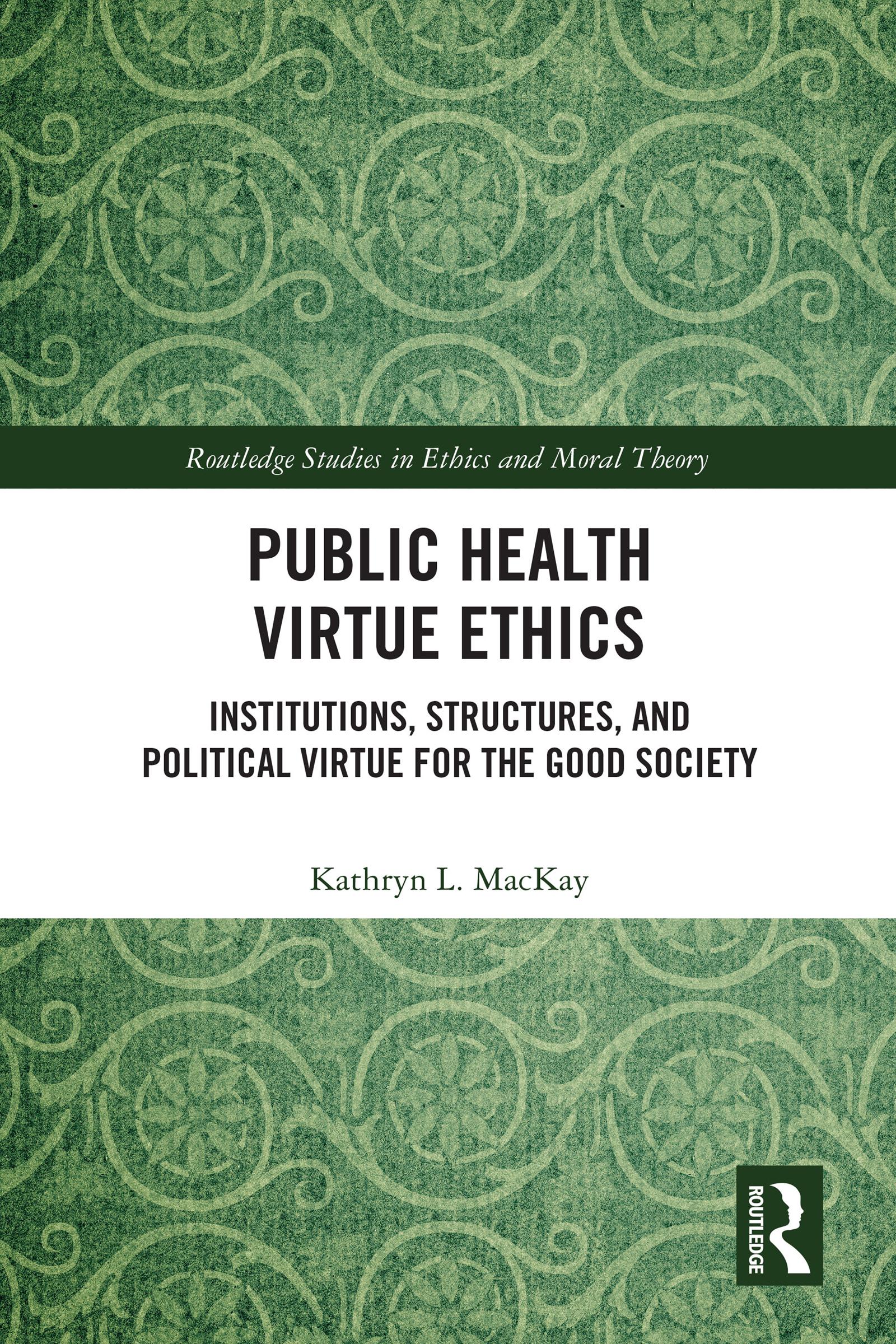
This book argues that virtue ethics should be incorporated into public health ethics. It provides the theoretical foundations for a virtue ethics that is applicable to public health, as well as political institutions more broadly.
Ethical analyses of public health policies and practices have been mostly conducted in terms of examining the best consequences or weighing outcomes against liberty, autonomy, justice, and harm. While these debates are important, analyses conducted only in these terms leave a huge range of moral issues under-examined. This book contends that a virtue ethics developed for political institutions such as public health provides the tools for a more robust moral analysis of institutional structures, actions, and responsibilities. First, it presents theoretical arguments for political virtues, explaining how institutions like public health have moral agency and how these institutional agents can, in turn, have (or lack) virtues. It then presents three political virtues that are particularly relevant to public health: justice, civic friendship, and epistemic humility. Each of these virtues is important to what it means for public health to do its work excellently, and each sheds light upon the moral justifiability of past or current public health practice.
Public Health Virtue Ethics will appeal to researchers and graduate students working in virtue ethics, bioethics, and public health ethics.
Betal enkelt med kort, Klarna, Apple Pay eller Google Pay. Ikke fornøyd? Du har alltid 14 dagers angrerett. Les mer i våre vilkår. Har du spørsmål, send oss en e-post på hello@memmo.org.
Memmo gjør det enklere å studere – uansett hvor du er i verden. Hos oss samler du pensumbøker og smarte studieverktøy på ett og samme sted: sammendrag, quizer, podkaster og flashcards. Og så Ted, din studiekompis som svarer på alt du lurer på. Over 50 000 studenter studerer allerede her – bygget for at du skal lære raskere og stresse mindre.