
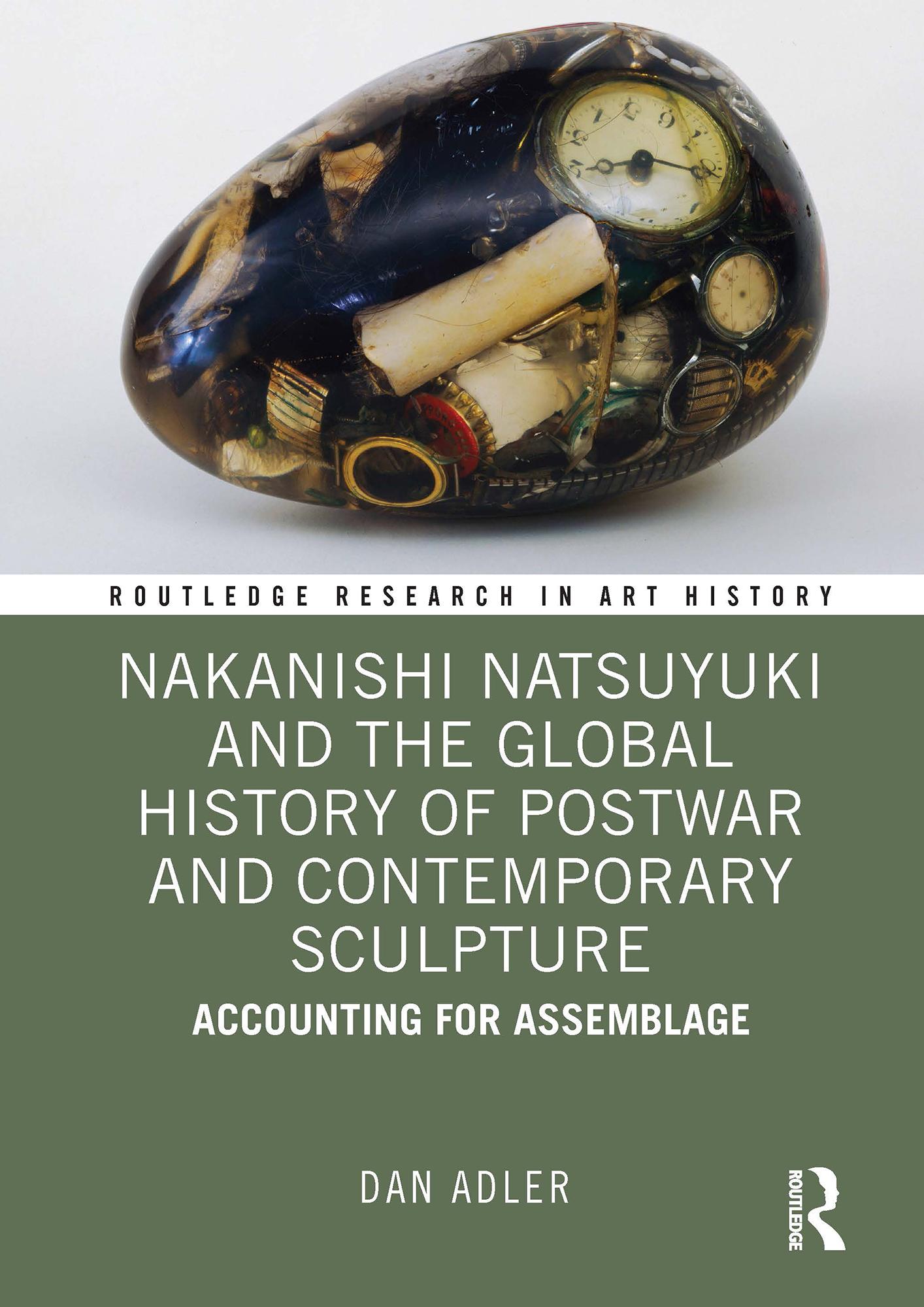
As the first book-length study of Nakanishi Natsuyuki’s sculptural practice, this volume explores his assemblages in dialogue with the postwar history of sculpture as a global phenomenon in the 1960s and beyond.
Nakanishi’s series of Compact Objects (produced from 1962 to 1968) allow for a reconsideration of the role of assemblage within cultural tendencies of the postwar and contemporary periods, both within and without Japan. This role forefronts the concepts of intimacy and interactivity—as well as ritual and process—within the context of sculptural experience. Nakanishi’s critique of consumerism and conformity within these works—along with his experimentation with new plastic technologies—allows for a comparative treatment that includes a variety of movements and tendencies in Japan, Europe, and the US, including Minimalism, Fluxus, Neo-Dada, and Nouveau réalisme, among others. The final portions of the book offer a wider and global context of postwar and contemporary tendencies towards assemblage, including an in-depth study of a multisensory exhibition by Yuko Mohri, held at the Venice Biennale in 2024.
The book will be of interest to scholars working in art history, contemporary art, and Japanese studies.
Betal enkelt med kort, Klarna, Apple Pay eller Google Pay. Ikke fornøyd? Du har alltid 14 dagers angrerett. Les mer i våre vilkår. Har du spørsmål, send oss en e-post på hello@memmo.org.
Memmo gjør det enklere å studere – uansett hvor du er i verden. Hos oss samler du pensumbøker og smarte studieverktøy på ett og samme sted: sammendrag, quizer, podkaster og flashcards. Og så Ted, din studiekompis som svarer på alt du lurer på. Over 50 000 studenter studerer allerede her – bygget for at du skal lære raskere og stresse mindre.