
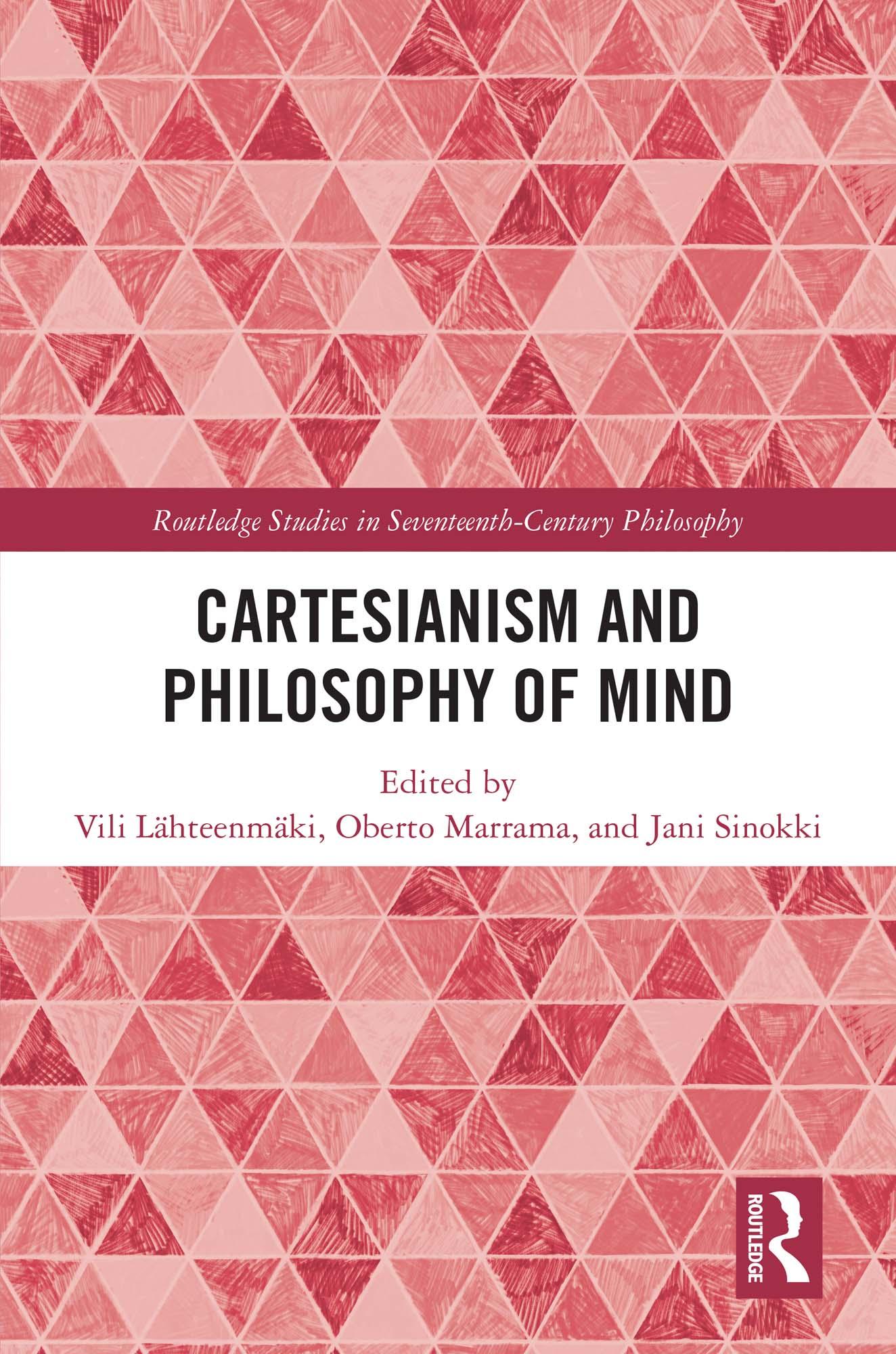
This book explores themes in the philosophy of mind as they emerge within the early modern Cartesian tradition. It brings together 13 contributions from international scholars to provide a fine‑grained account of how 17th‑century thinkers scrutinized and re‑interpreted Descartes’ doctrines about the nature and functions of the mind.
Although it is well known that many of the challenges that philosophers confront today were already discussed by the Cartesians, historical Cartesianism remains underexplored and warrants deeper, careful study. There is much to be learned about how the Cartesian tradition understood phenomena such as consciousness, intentionality, embodiment, and moral agency—and the puzzles they raise. The chapters are divided into three thematic sections. Part 1 focuses on fundamental features of cognition, such as the nature of ideas and intentionality, as they were debated by early interlocutors of Descartes. Part 2 analyzes how Cartesian philosophers conceived of the relation between sensation and material objects, including the human body. Part 3 investigates the moral and social dimensions of the Cartesian mind, such as love and virtue.
Cartesianism and Philosophy of Mind will be of interest to scholars and advanced students working on early modern philosophy and philosophy of mind.
Betal enkelt med kort, Klarna, Apple Pay eller Google Pay. Ikke fornøyd? Du har alltid 14 dagers angrerett. Les mer i våre vilkår. Har du spørsmål, send oss en e-post på hello@memmo.org.
Memmo gjør det enklere å studere – uansett hvor du er i verden. Hos oss samler du pensumbøker og smarte studieverktøy på ett og samme sted: sammendrag, quizer, podkaster og flashcards. Og så Ted, din studiekompis som svarer på alt du lurer på. Over 50 000 studenter studerer allerede her – bygget for at du skal lære raskere og stresse mindre.