
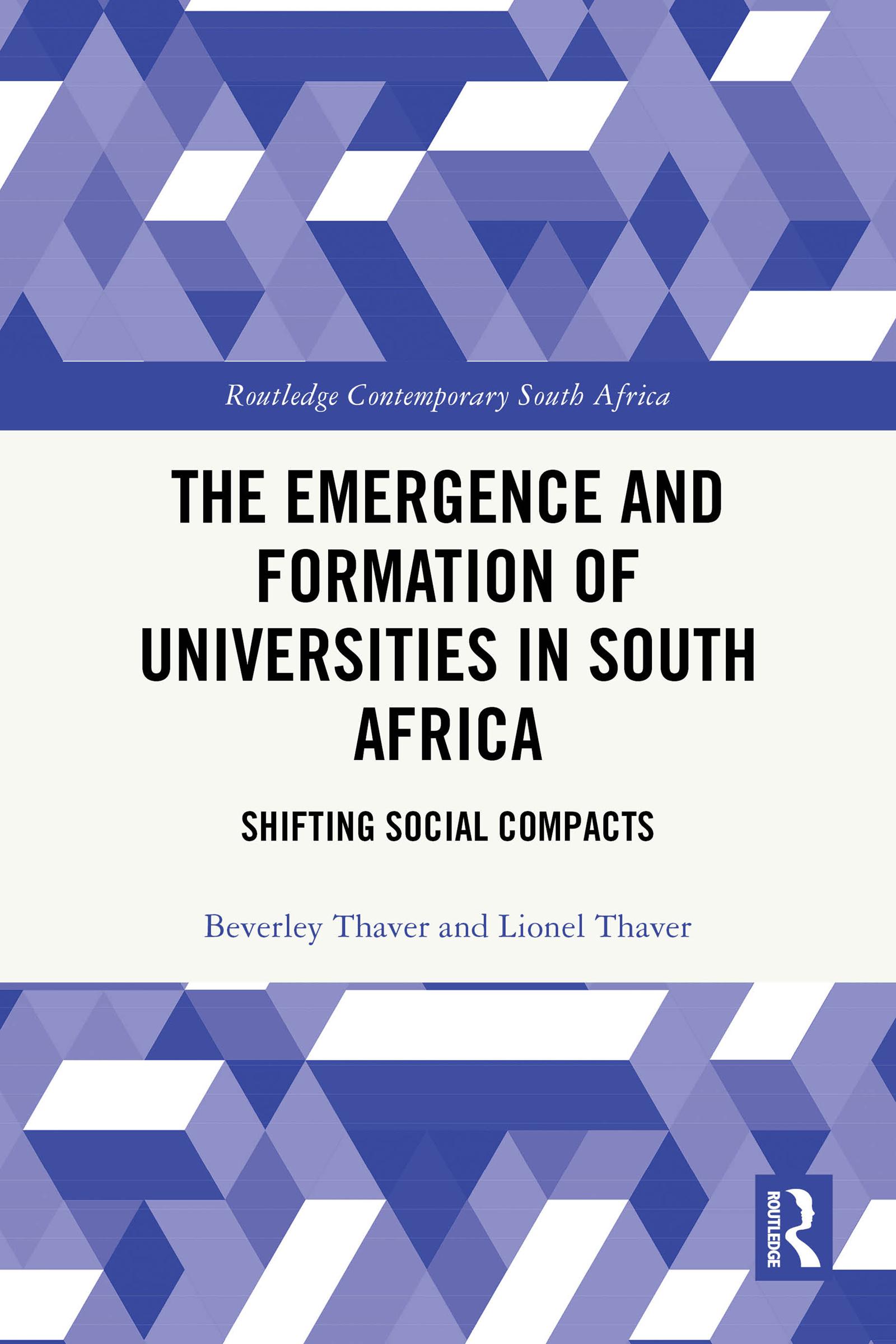
This book considers the formation of South Africa’s universities, more specifically those that evolved as colleges, taking a panoramic view over two centuries, from colonialism to democracy.
The book traces their development from incipient hubs of learning to fully fledged universities, and currently into a reconfigured landscape, as the social compacts between community, church, state, capital, and university have shifted. The university is analysed in situ, as an organisational structure, along two dimensions. First, state regulation, institutional autonomy, academic governance and individual-corporate agency. Second, at the epistemic and cultural levels, selected knowledge vignettes are identified, which is then followed by an engagement with different notions of religion, language and approaches to humanity. The book sheds some light on the imprint this has had on university types and the institutional, epistemic and cultural questions confronting the democratic state and contemporary society.
Contextualising the South African case in relation to other countries with a British colonial footprint, this book will be of interest to a range of scholars across the fields of higher education, political studies, sociology, anthropology, history, decolonisation, and African Studies.
Betal enkelt med kort, Klarna, Apple Pay eller Google Pay. Ikke fornøyd? Du har alltid 14 dagers angrerett. Les mer i våre vilkår. Har du spørsmål, send oss en e-post på hello@memmo.org.
Memmo gjør det enklere å studere – uansett hvor du er i verden. Hos oss samler du pensumbøker og smarte studieverktøy på ett og samme sted: sammendrag, quizer, podkaster og flashcards. Og så Ted, din studiekompis som svarer på alt du lurer på. Over 50 000 studenter studerer allerede her – bygget for at du skal lære raskere og stresse mindre.