
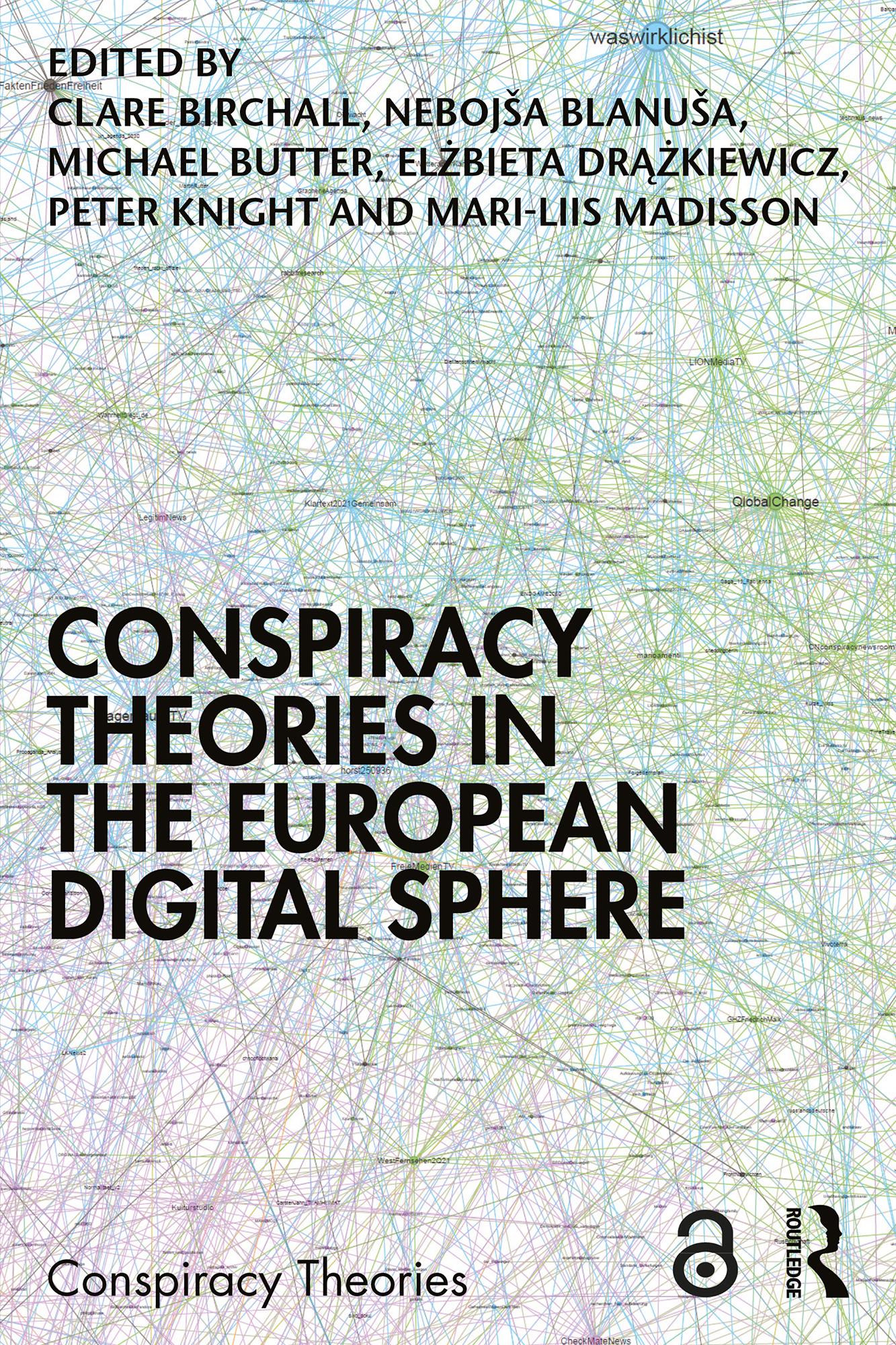
Conspiracy Theories in the European Digital Sphere offers a comparative account of online conspiracism, considered in terms of platform preferences, ideological content, aesthetic choices, political context, flow of travel and the role online conspiracism plays in the formation of community and identity.
The book examines the assumptions that inform current ways of framing and combatting online conspiracy theories. Rather than approach online conspiracy theories as merely a symptom of post-truth social media, or as simply a problem of either too little or false information and, therefore, as the same as other forms of mis- and disinformation that can be more easily corrected, the book proposes that online conspiracy theories need to be understood as a distinctive mode of digital disinformation because they are a vernacular knowledge and interpretation rooted in, engaged with and defined by regional and supra-regional political histories. The book is concerned with how experiences with freedom of speech, the role of the press, democratic and epistemological norms, levels of state control, conflict, authoritarianism and propaganda shape online conspiracy theories and the response to them.
This book is methodologically ambitious, combining quantitative and qualitative approaches, and will appeal to anyone interested in conspiracy theories, misinformation, culture wars, social media and contemporary society.
Betal enkelt med kort, Klarna, Apple Pay eller Google Pay. Ikke fornøyd? Du har alltid 14 dagers angrerett. Les mer i våre vilkår. Har du spørsmål, send oss en e-post på hello@memmo.org.
Memmo gjør det enklere å studere – uansett hvor du er i verden. Hos oss samler du pensumbøker og smarte studieverktøy på ett og samme sted: sammendrag, quizer, podkaster og flashcards. Og så Ted, din studiekompis som svarer på alt du lurer på. Over 50 000 studenter studerer allerede her – bygget for at du skal lære raskere og stresse mindre.