
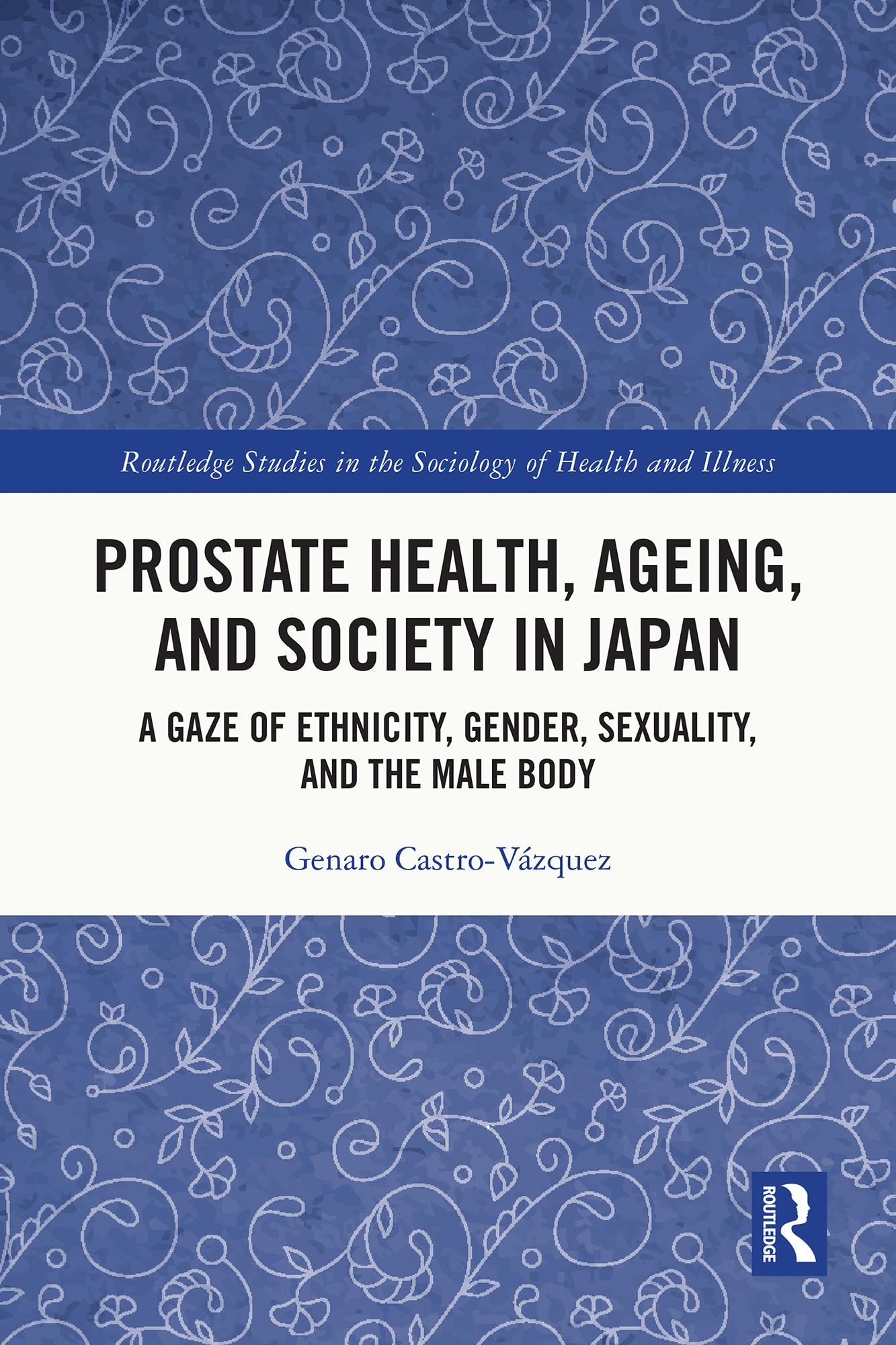
This ethnographic investigation of prostate health in the super-aged, Japanese society analyses prostate cancer and benign prostate hyperplasia. Castro-Vázquez examines how biomedical perspectives link prostate health to ethnicity and lifestyle choices, where a clinical issue renders a social matter, and early detection and prevention become an individual responsibility.
Grounded in symbolic interactionism, the book presents the viewpoints of Japanese urologists, and men who navigate prostate conditions from an eclectic and multidimensional perspective. It explores the impact of ‘Westernised’ eating habits, ethnicity, gender and sexuality on prostate health, while critically analysing health economics, through medical, pharmaceutical, and insurance industries that commodify men’s health. The research introduces the concept of ‘prostate-self’ to fathom how Japanese men journey prostate health, highlighting how their embodied experiences connect. It contributes significant insights to global debates on benign prostate hyperplasia and prostate cancer prevention, detection, and treatment.
An essential resource for scholars, researchers and students in medical sociology, gender and sexuality studies, medical anthropology, Japanese studies as well as those interested in gender, sexuality, sociology of health, and the body and society.
Betal enkelt med kort, Klarna, Apple Pay eller Google Pay. Ikke fornøyd? Du har alltid 14 dagers angrerett. Les mer i våre vilkår. Har du spørsmål, send oss en e-post på hello@memmo.org.
Memmo gjør det enklere å studere – uansett hvor du er i verden. Hos oss samler du pensumbøker og smarte studieverktøy på ett og samme sted: sammendrag, quizer, podkaster og flashcards. Og så Ted, din studiekompis som svarer på alt du lurer på. Over 50 000 studenter studerer allerede her – bygget for at du skal lære raskere og stresse mindre.