
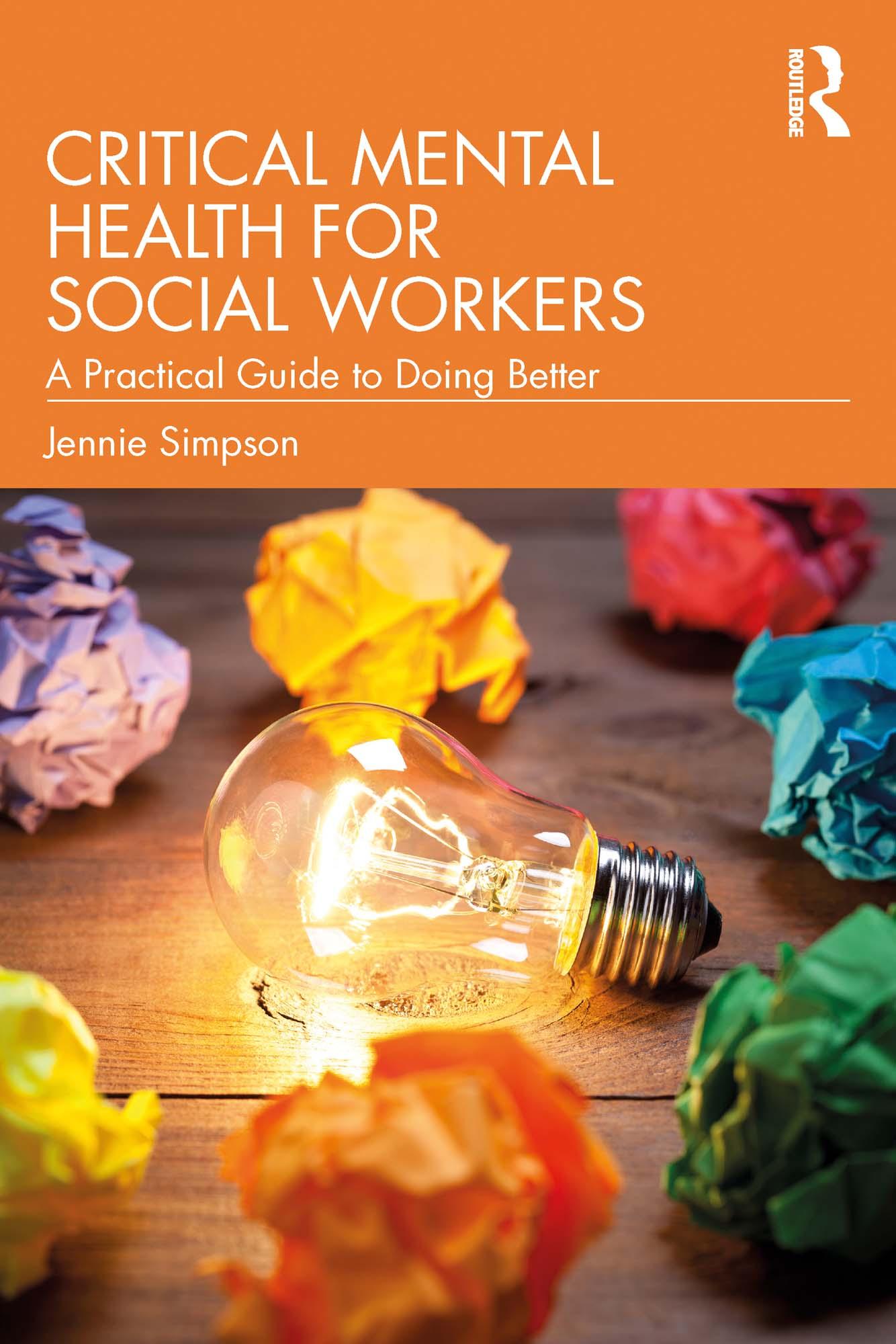
This book provides an alternative viewpoint on mental health, an issue that touches so many of the families and individuals we work with. Whether that be a parent or school seeking an ‘ADHD’ diagnosis for a child, a teenager struggling with self-harm, or a parent with ‘bipolar’, it is a topic of ever-increasing relevance.
Too many social workers accept the dominant medical model and therefore can unwittingly collude with issues of helplessness, thus maintaining harmful systems or experiences by positioning the individual as the ‘problem’. This goes against a truly systemic way of thinking and can take away from a more helpful narrative and exploration. Providing critical thought around the concepts of mental health ‘disorders’ themselves, the damage they can cause and questioning the progress being made, this book covers how mental health ‘diagnosis’ works, its origins, and its shockingly unscientific and highly subjective basis. It urges us to recognise that when we talk of mental health diagnosis, we are often talking about social constructs.
Social workers should challenge oppression, empower people, and uphold their human rights, and this book helps to prevent the perpetuation of harm to the very people we wish to support.
Betal enkelt med kort, Klarna, Apple Pay eller Google Pay. Ikke fornøyd? Du har alltid 14 dagers angrerett. Les mer i våre vilkår. Har du spørsmål, send oss en e-post på hello@memmo.org.
Memmo gjør det enklere å studere – uansett hvor du er i verden. Hos oss samler du pensumbøker og smarte studieverktøy på ett og samme sted: sammendrag, quizer, podkaster og flashcards. Og så Ted, din studiekompis som svarer på alt du lurer på. Over 50 000 studenter studerer allerede her – bygget for at du skal lære raskere og stresse mindre.