
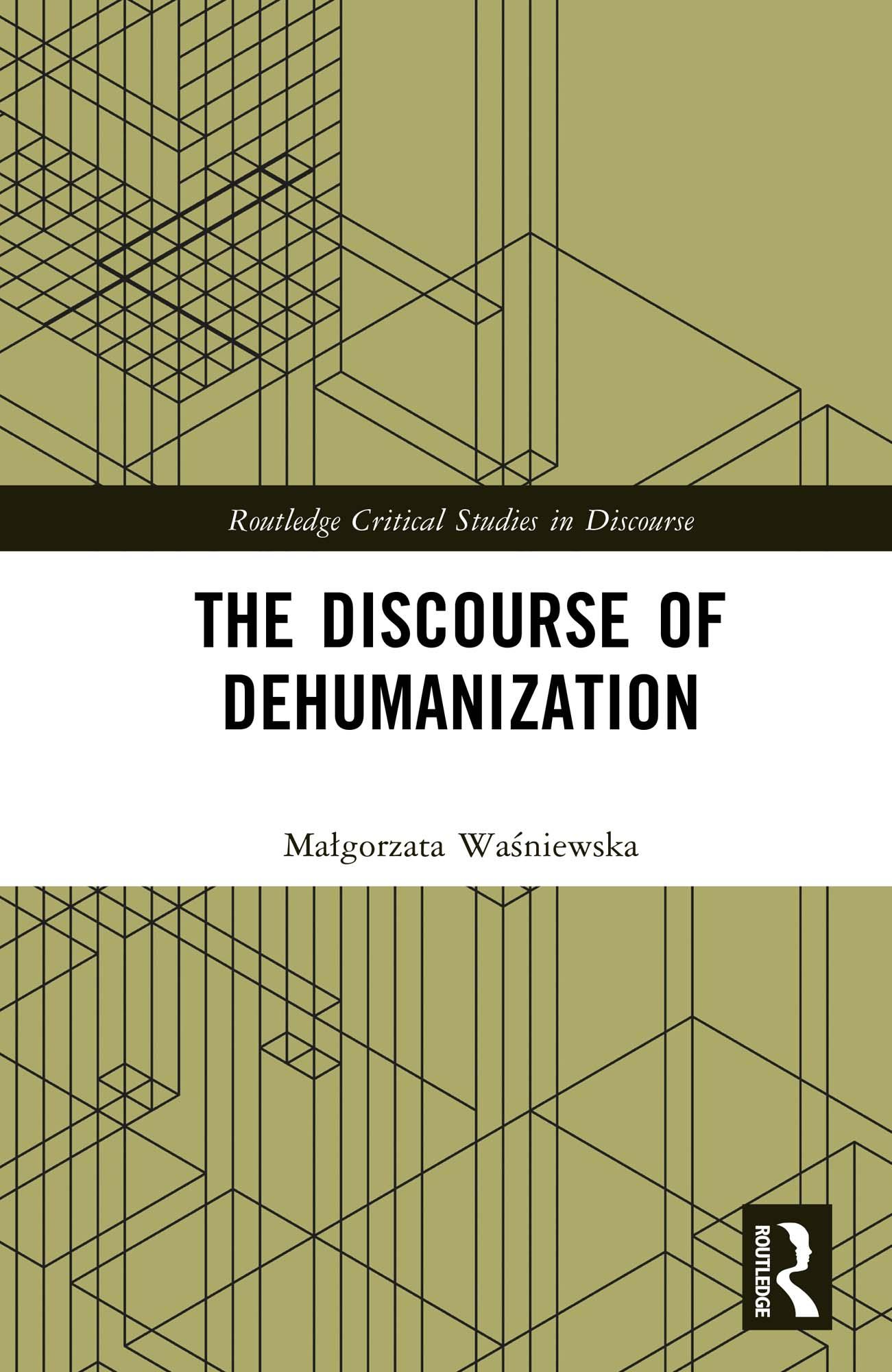
This book revisits social-psychological theories of dehumanization and Albert Bandura’s theory of moral disengagement through the lens of discourse analysis, offering a new framework for the linguistic analysis of dehumanization.
The volume foregrounds the importance of integrating insights into the psychological and social mechanisms of moral disengagement with analyses of linguistic strategies and techniques to achieve a more comprehensive understanding of dehumanization across various discourses. Through six case studies from varied English-language discursive contexts, Waśniewska charts how language operates at different stages of moral disengagement across news media, new media, and medical, legal, and political discourse. In so doing, the volume presents ways forward for bridging the gap between psychological discourse and linguistic perspectives, and for crossing wider disciplinary boundaries in deepening our understanding of dehumanization, linguistic manipulation, and hate speech.
This book will appeal to students and scholars interested in critical discourse analysis, sociolinguistics, social psychology, media studies, and sociology.
Betal enkelt med kort, Klarna, Apple Pay eller Google Pay. Ikke fornøyd? Du har alltid 14 dagers angrerett. Les mer i våre vilkår. Har du spørsmål, send oss en e-post på hello@memmo.org.
Memmo gjør det enklere å studere – uansett hvor du er i verden. Hos oss samler du pensumbøker og smarte studieverktøy på ett og samme sted: sammendrag, quizer, podkaster og flashcards. Og så Ted, din studiekompis som svarer på alt du lurer på. Over 50 000 studenter studerer allerede her – bygget for at du skal lære raskere og stresse mindre.