
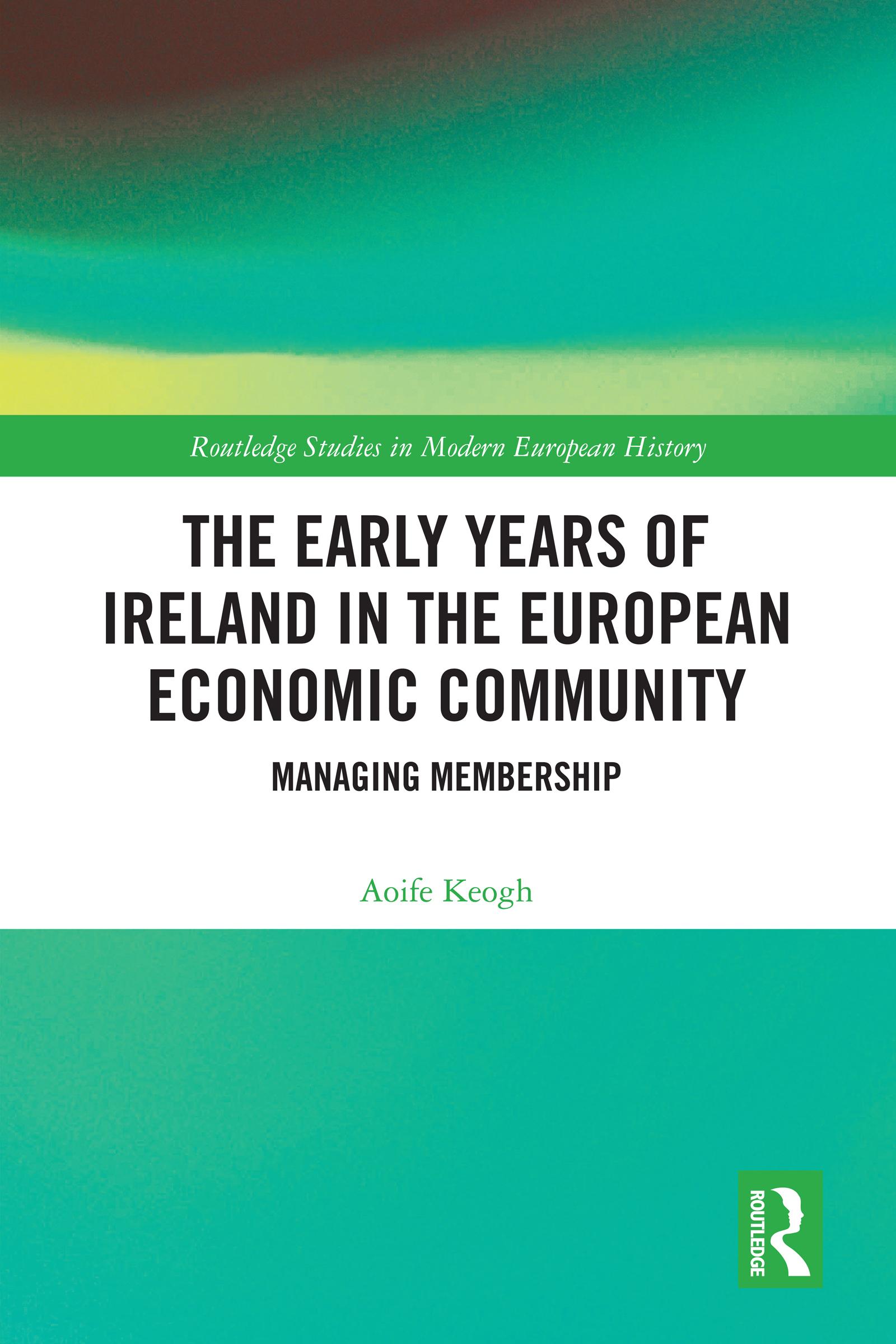
Ireland’s accession to the European Economic Community (EEC) in 1973 provided great opportunities, as well as significant challenges to its relatively small civil service. This book traces Ireland’s internal adaptation to managing membership.
The long wait for accession to the EEC had instigated administrative and management patterns during negotiations which were difficult for Ireland to untangle and alter afterwards. There was friction between departments on how to approach relations with the EEC in some policy areas after membership. At times, this effectively slowed and even hampered Ireland’s adaptation to membership. At the same time, the EEC provided an important new frame of reference for Irish society. Discussions on social progress drew from that wider context and challenged Ireland in new ways. This volume explores this development through an analysis of empirical files from the National Archives of Ireland and the Historical Archives of the European Union, newspapers, and secondary sources.
This book is intended for scholars and students of Irish history, European Studies, political science, diplomatic studies, and administrative history.
Betal enkelt med kort, Klarna, Apple Pay eller Google Pay. Ikke fornøyd? Du har alltid 14 dagers angrerett. Les mer i våre vilkår. Har du spørsmål, send oss en e-post på hello@memmo.org.
Memmo gjør det enklere å studere – uansett hvor du er i verden. Hos oss samler du pensumbøker og smarte studieverktøy på ett og samme sted: sammendrag, quizer, podkaster og flashcards. Og så Ted, din studiekompis som svarer på alt du lurer på. Over 50 000 studenter studerer allerede her – bygget for at du skal lære raskere og stresse mindre.