
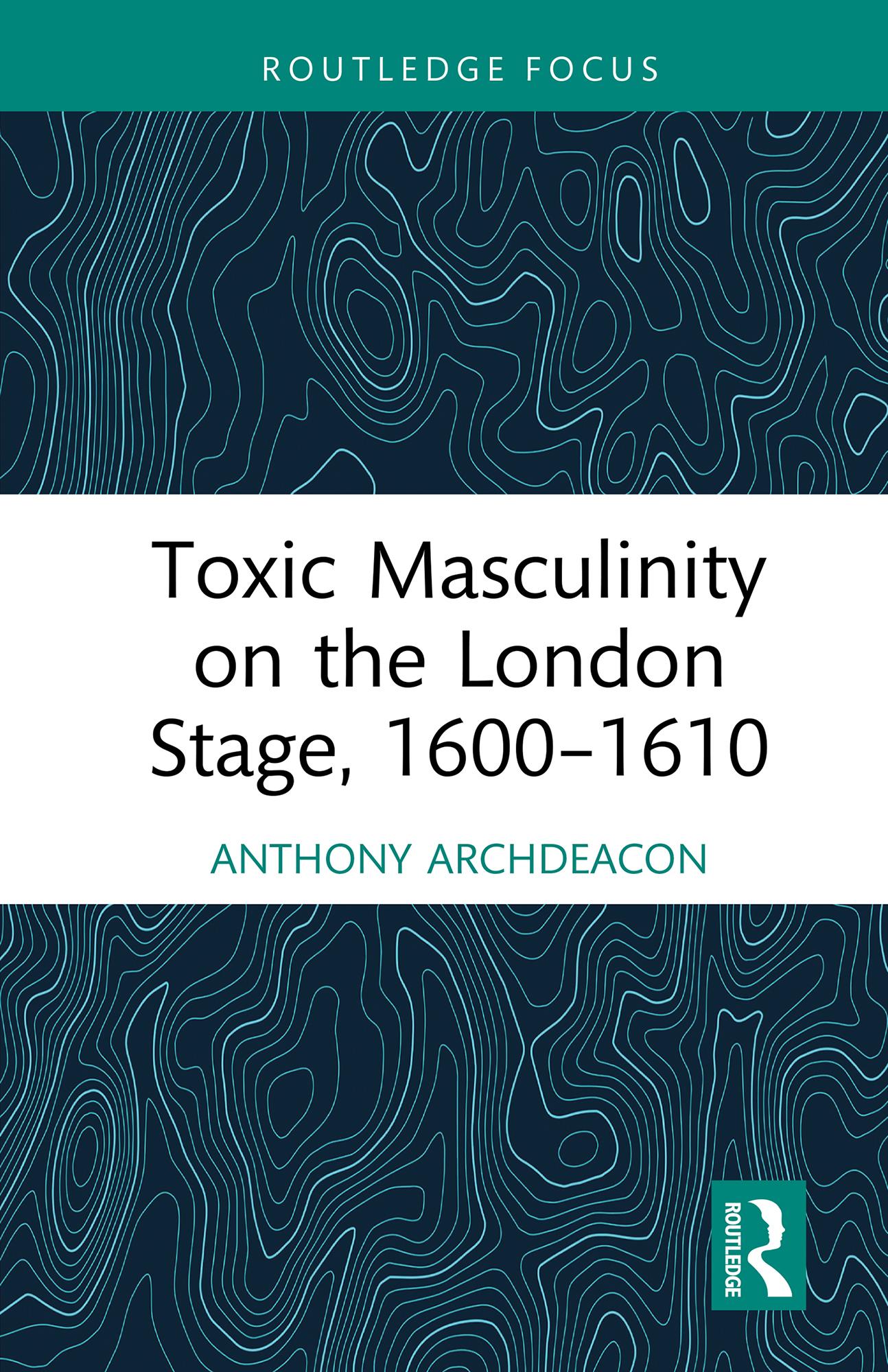
The idea of toxic masculinity might feel like a very modern, even twenty-first century notion, but similar concerns about male behaviour, also often characterised in terms of poisons and poisoning, can be identified in the literature of 400 hundred years ago, not only in Shakespeare’s Othello and The Winter’s Tale but also lesser-known plays that were popular on the London stage in the 1600s. Poison-related tropes, and the recurrent plot device of a man trying to poison a woman, expressed complex and sometimes contradictory attitudes towards socially unacceptable male behaviour. These plays depict the early modern male as both poisoned and poisoner – poisoned by inherited misogynistic ideas and attitudes, and poisoner of women, both literally and metaphorically. Seeing them as enacting problematic situations and raising difficult questions rather than simply offering the moral certitudes of Christianity or the prescriptions of contemporary conduct book, the book points to these plays as evidence of disquiet and anxieties to which we can still easily relate today. The fact that some plays responded to real-life events such as familicide is an indicator of this socially responsible role of the theatre, engaging its audience in current issues and controversies. The use of the poison theme in relation to male violence and misogyny shows that the early modern theatre was raising awareness of the same problems that are identified as toxic masculinity today.
Betal enkelt med kort, Klarna, Apple Pay eller Google Pay. Ikke fornøyd? Du har alltid 14 dagers angrerett. Les mer i våre vilkår. Har du spørsmål, send oss en e-post på hello@memmo.org.
Memmo gjør det enklere å studere – uansett hvor du er i verden. Hos oss samler du pensumbøker og smarte studieverktøy på ett og samme sted: sammendrag, quizer, podkaster og flashcards. Og så Ted, din studiekompis som svarer på alt du lurer på. Over 50 000 studenter studerer allerede her – bygget for at du skal lære raskere og stresse mindre.