
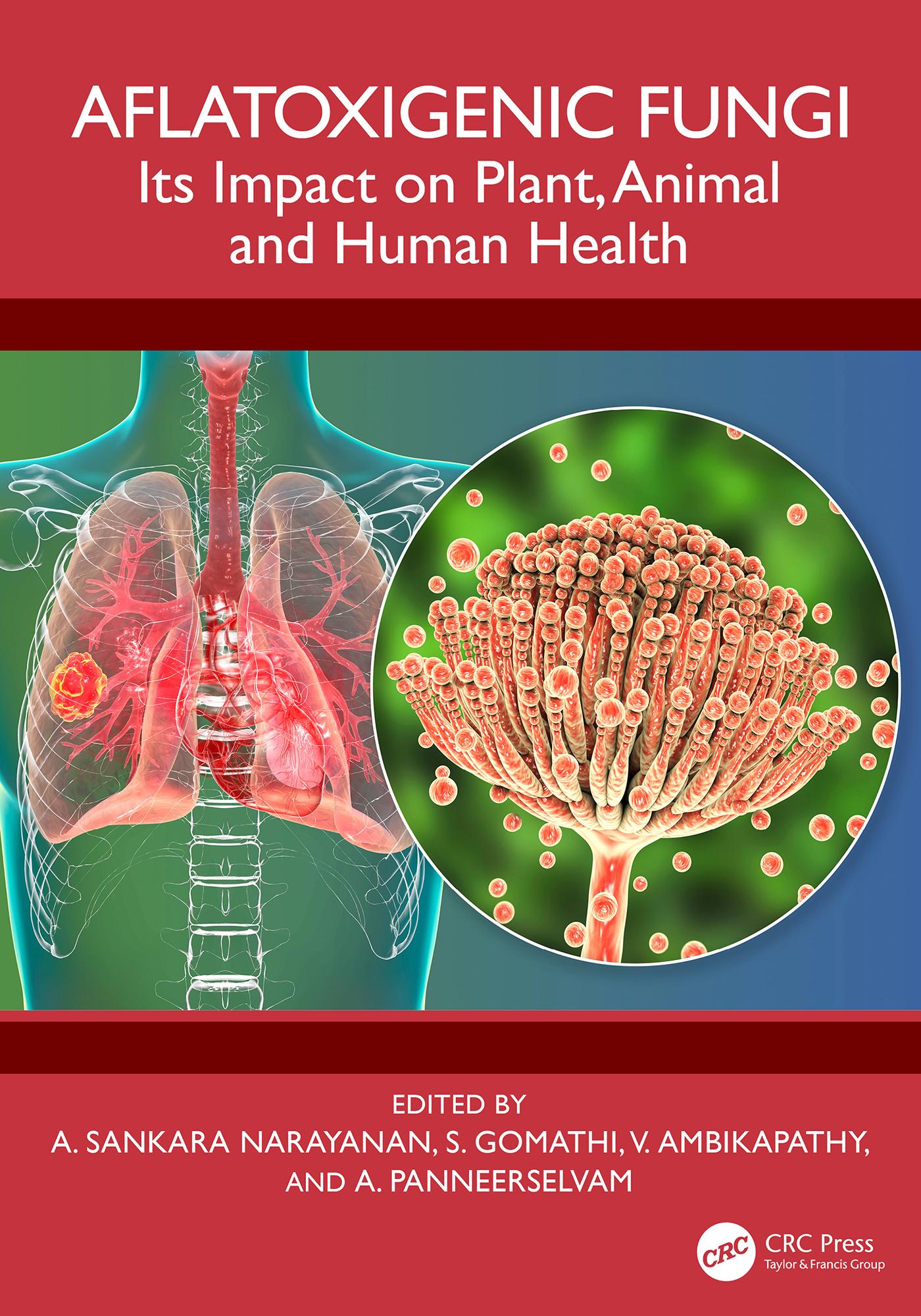
Aflatoxigenic fungi, primarily belonging to the Aspergillus genus (A. flavus, A. parasiticus), are responsible for producing aflatoxins—highly toxic and carcinogenic secondary metabolites. These fungi pose significant risks to plant health, animal health, and human well-being due to their widespread contamination of food and feed. Aflatoxigenic fungi impact plants by causing diseases, and yield loss leads to economic loss and contamination. In connection with animals, aflatoxigenic fungi create toxicity in livestock, contamination of animal products, mortality, and economic loss. Finally, concerning humans, aflatoxigenic fungi lead to acute toxicity, carcinogenic effects, immune suppression, and nutritional risk.
Features:
- Provides a systemic review of the recent developments in aflatoxigenic fungi on various biotic organisms
- Includes an overview of the impact of aflatoxins on various plants and on the agricultural economy
- Describes the role of aflatoxins in human health, including infants and in cancer
- Contains special emphasis on the control of aflatoxigenic fungi by nanomaterials and plant bioactive components
- Discusses the detection of aflatoxigenic fungi by surface-enhanced Raman spectroscopy (SERS)
Betal enkelt med kort, Klarna, Apple Pay eller Google Pay. Ikke fornøyd? Du har alltid 14 dagers angrerett. Les mer i våre vilkår. Har du spørsmål, send oss en e-post på hello@memmo.org.
Memmo gjør det enklere å studere – uansett hvor du er i verden. Hos oss samler du pensumbøker og smarte studieverktøy på ett og samme sted: sammendrag, quizer, podkaster og flashcards. Og så Ted, din studiekompis som svarer på alt du lurer på. Over 50 000 studenter studerer allerede her – bygget for at du skal lære raskere og stresse mindre.