
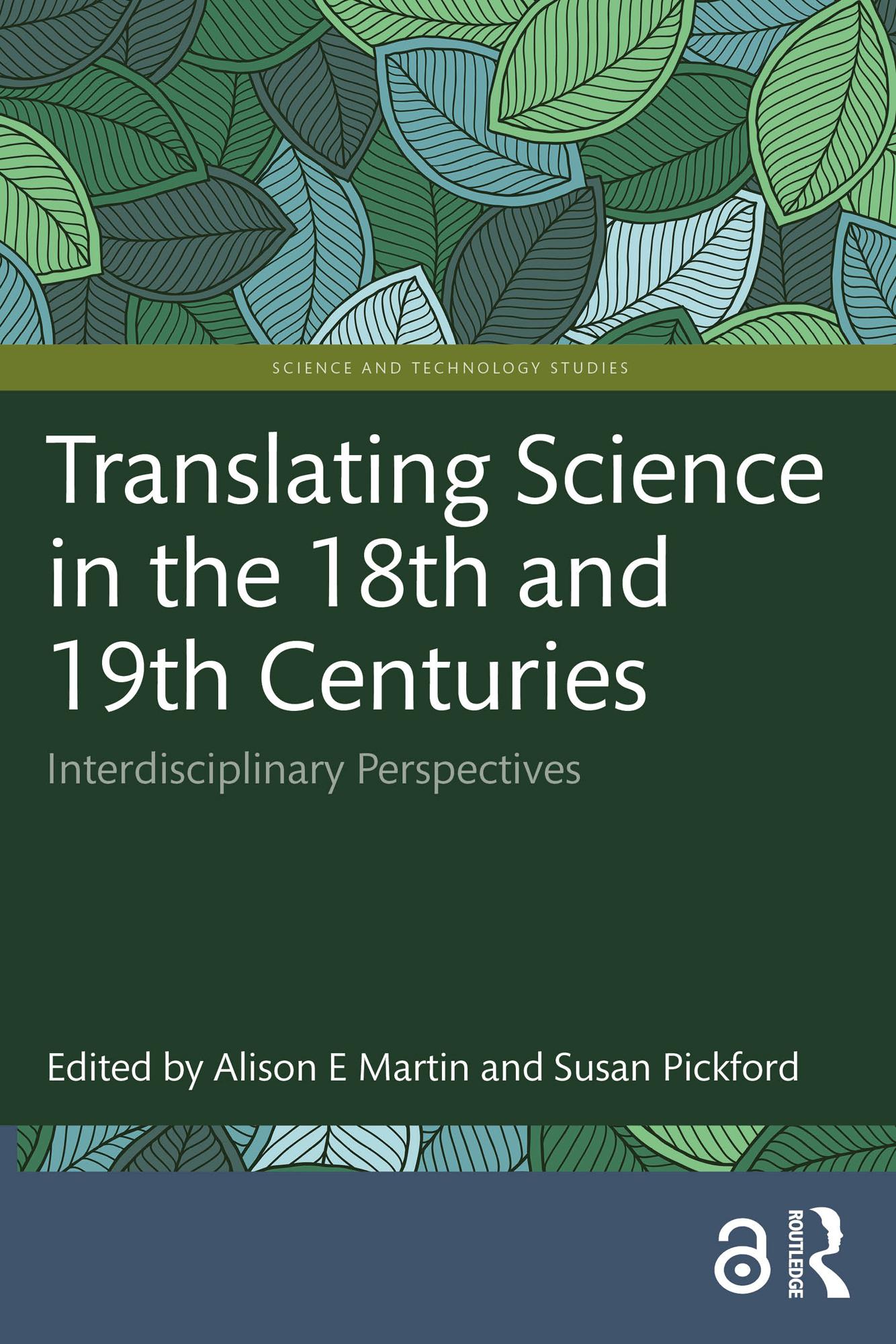
This book explores the role of translation in shaping the knowledge-sharing processes that were and are seminal to scientific endeavour. It considers the mechanisms by which eighteenth- and nineteenth-century European science writing travelled within and beyond its home continent and non- European science was taken up in a colonial context. Using insights from fields of research including book history and textual studies to investigate the paratextual framing, stylistic choices, rhetorical devices, and modes of expression deployed by scientific writers – key to shaping a work’s credibility and its author’s integrity –it argues that translators are central, yet largely overlooked, mediators in this creative process.
Encompassing West Africa, China, the Middle East, India, South America, Europe, and the Ottoman Empire, this volume comprises case studies working with around a dozen different languages to gain a sense of how scientific narratives were evolving both within and across an increasingly global intellectual commons in a key period in the development of the natural sciences, medicine, and technology.
Part of the Science and Technology Studies series, the volume will be indispensable for scholars and researchers of science and technology studies, philosophy of science, translation studies, gender studies, English literature, and philosophy in general.
Betal enkelt med kort, Klarna, Apple Pay eller Google Pay. Ikke fornøyd? Du har alltid 14 dagers angrerett. Les mer i våre vilkår. Har du spørsmål, send oss en e-post på hello@memmo.org.
Memmo gjør det enklere å studere – uansett hvor du er i verden. Hos oss samler du pensumbøker og smarte studieverktøy på ett og samme sted: sammendrag, quizer, podkaster og flashcards. Og så Ted, din studiekompis som svarer på alt du lurer på. Over 50 000 studenter studerer allerede her – bygget for at du skal lære raskere og stresse mindre.