
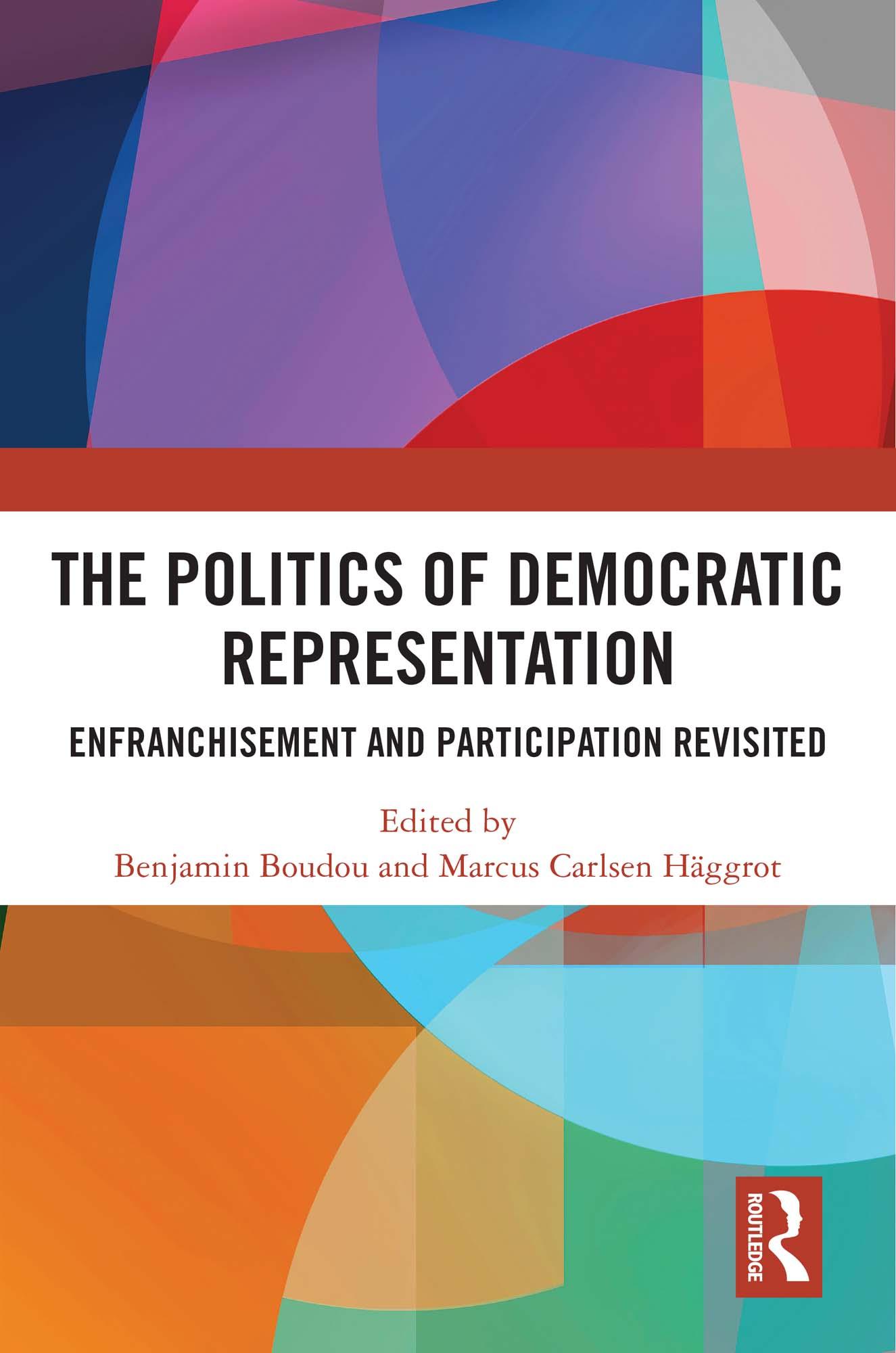
The book discusses boundaries of electoral inclusion and mechanisms of electoral representation in contemporary democracies.
While the ancient Athenians took the idea of rule by the people to require direct popular participation in public decision-making and the appointment of officials by lottery mechanisms, democracy is nowadays interpreted electorally. We partake in government mostly by electing the legislative, and sometimes executive, officials who in turn make the substantive decisions. Yet, who “we” is and how electoral representation should function remains hotly contested. Controversies abound about the proper configuration of the demos – the body of persons who are enfranchised – the ways it is to exercise electoral choice and agency. This book takes up several carefully selected questions from these theoretical and political debates. Looking at the (dis)enfranchisement of children, cognitively disabled persons, and refugees, and discussing the forms of representation that might be afforded to external voters, future generations, and non-citizens, the contributions develop innovative arguments applying the basic principles of electoral democracy to the complexities of specific, real-world cases. Doing so, the contributions offer timely, yet unorthodox, perspectives on the theory and practice of electoral democracy.
This book was originally published as a special issue of Critical Review of International Social and Political Philosophy.
Betal enkelt med kort, Klarna, Apple Pay eller Google Pay. Ikke fornøyd? Du har alltid 14 dagers angrerett. Les mer i våre vilkår. Har du spørsmål, send oss en e-post på hello@memmo.org.
Memmo gjør det enklere å studere – uansett hvor du er i verden. Hos oss samler du pensumbøker og smarte studieverktøy på ett og samme sted: sammendrag, quizer, podkaster og flashcards. Og så Ted, din studiekompis som svarer på alt du lurer på. Over 50 000 studenter studerer allerede her – bygget for at du skal lære raskere og stresse mindre.