
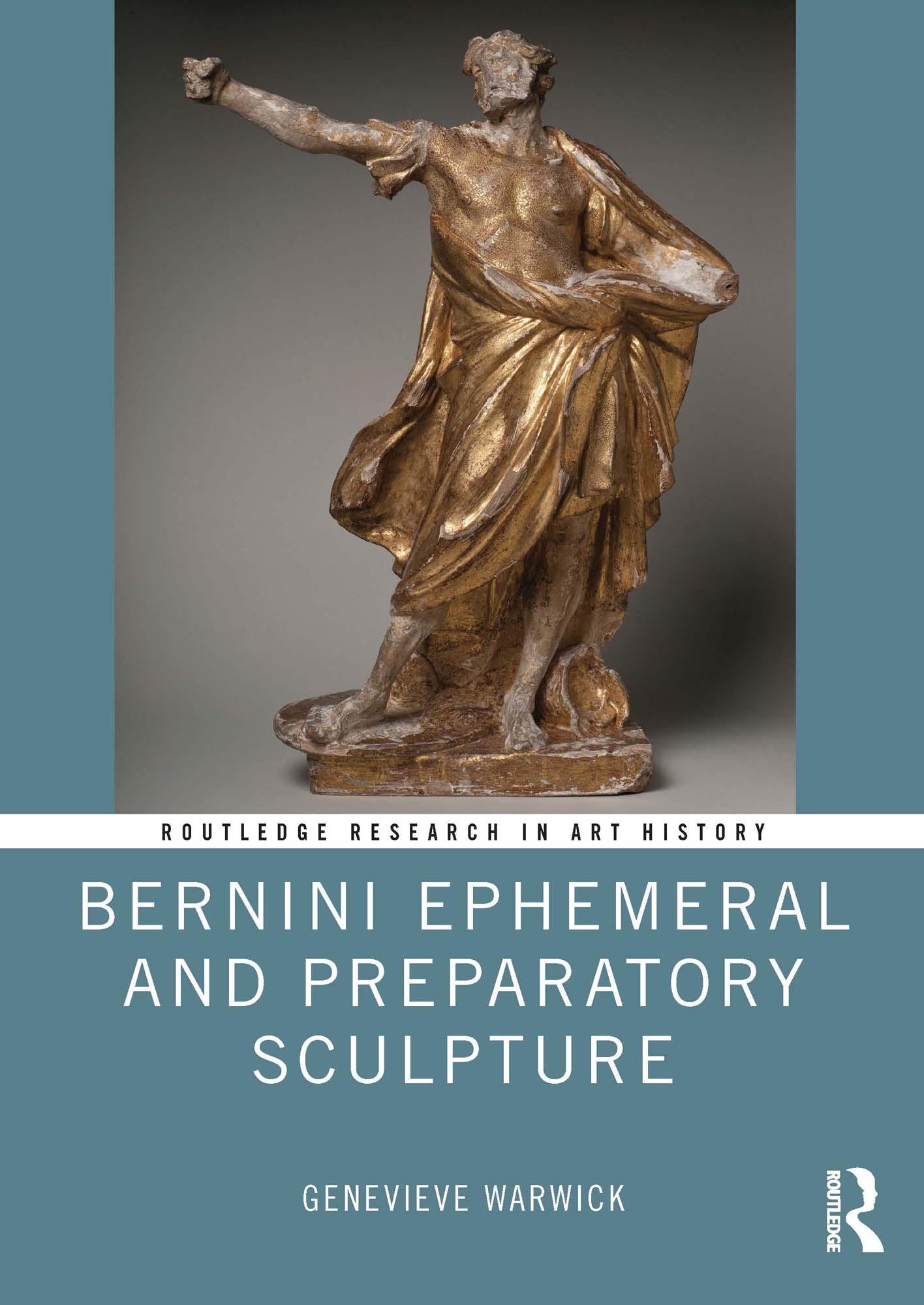
Taking up questions of artists’ materials and technical processes currently at the vanguard of art-historical scholarship, this book studies the contiguity and interchange of workshop methods in the linked fabrication of both ephemeral and preparatory works by Bernini.
Genevieve Warwick argues that the ephemeral arts of ritual occasion acted as a locus of artistic experiment for the artist in many respects similar to his use of preparatory models, to suggest that Bernini’s artistry sprang from the fabric of ritual in both material and cultural terms. From processional floats to court stage sets for the ritual occasions of church and state, such ephemeral arts were largely made of wax, clay, papier mâché, wood, stucco and plaster, assembled into scenographic ensembles with textiles, canvas and paint. Similarly, Bernini’s preparatory models for marble or bronze sculpture were of plaster and clay, even mud and straw, or wax and painted wood, as plentiful and affordable materials that were readily available for use and reuse as required.
This book will be of interest to scholars working in art history and Renaissance studies.
Betal enkelt med kort, Klarna, Apple Pay eller Google Pay. Ikke fornøyd? Du har alltid 14 dagers angrerett. Les mer i våre vilkår. Har du spørsmål, send oss en e-post på hello@memmo.org.
Memmo gjør det enklere å studere – uansett hvor du er i verden. Hos oss samler du pensumbøker og smarte studieverktøy på ett og samme sted: sammendrag, quizer, podkaster og flashcards. Og så Ted, din studiekompis som svarer på alt du lurer på. Over 50 000 studenter studerer allerede her – bygget for at du skal lære raskere og stresse mindre.