
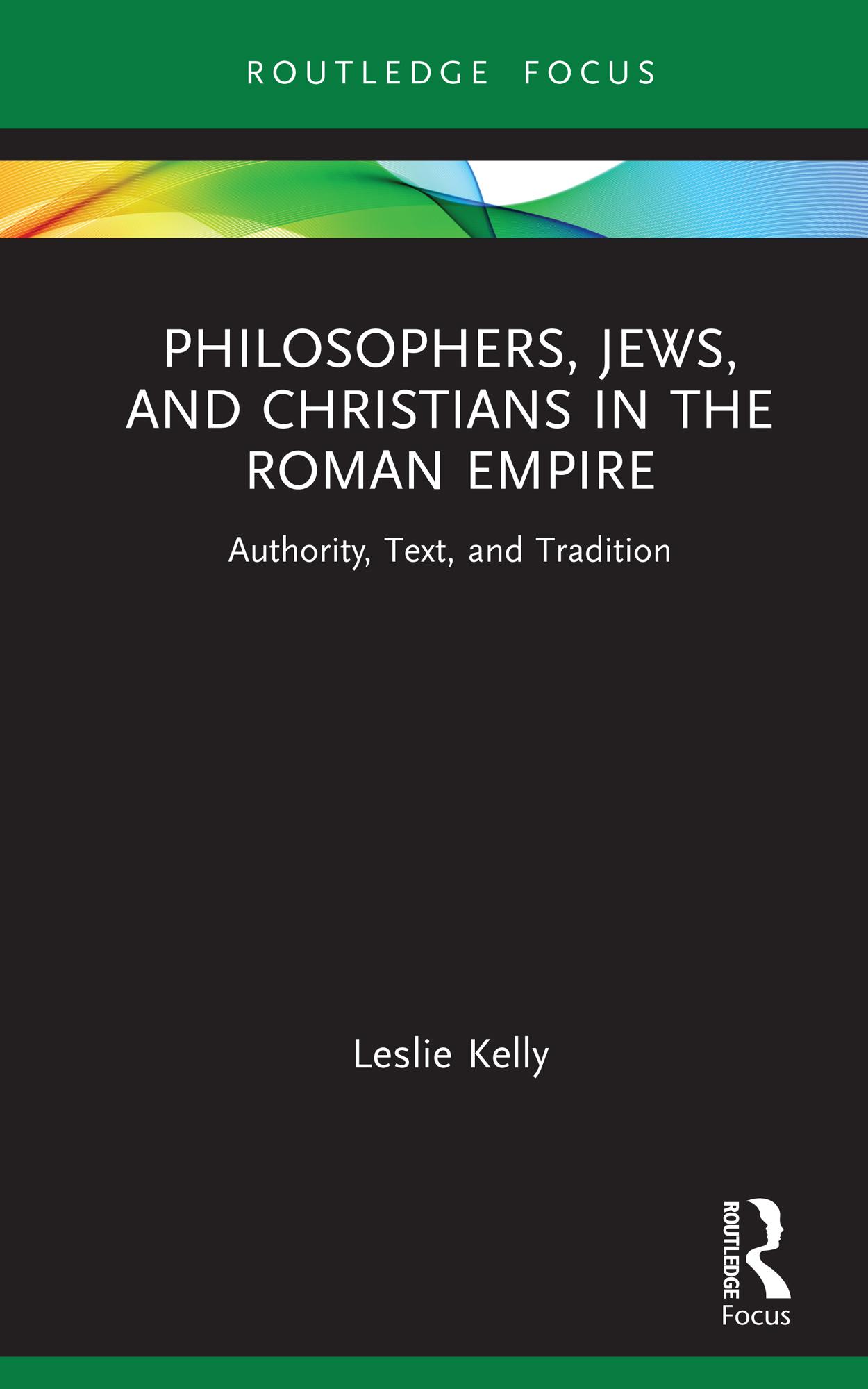
This book explores how philosophical and religious communities in the Roman Empire of the first and second centuries CE engaged with, and were shaped by, their relationship to texts and tradition in their quest for true religious knowledge or ultimate truth.
This era was a dynamic transition period for philosophers, Jews, and Christians in the Roman Empire: it was the stage between Hellenistic philosophy and the Neoplatonism of Late Antiquity; the end of Second Temple Judaism and the start of the rabbinic period; Christianity’s rapid growth and transformation into an institutional and uniform church. Philosophers, Jews, and Christians utilized similar strategies for communal identity and boundarymarking and reinterpreted ancient traditions in creative ways to create new centers of authority. An intellectual literary culture fostered a focus on texts as a locus of contention, conversion, and exchange within and between groups. The book surveys and compares these groups as three distinct textual or reading communities, analyzing their practices of textual engagement and parallel attitudes towards textual authority in this period.
This book is suitable for students and scholars working on ancient philosophy in the Roman Empire, classicists, and scholars of early Christianity and Judaism in this period.
Betal enkelt med kort, Klarna, Apple Pay eller Google Pay. Ikke fornøyd? Du har alltid 14 dagers angrerett. Les mer i våre vilkår. Har du spørsmål, send oss en e-post på hello@memmo.org.
Memmo gjør det enklere å studere – uansett hvor du er i verden. Hos oss samler du pensumbøker og smarte studieverktøy på ett og samme sted: sammendrag, quizer, podkaster og flashcards. Og så Ted, din studiekompis som svarer på alt du lurer på. Over 50 000 studenter studerer allerede her – bygget for at du skal lære raskere og stresse mindre.