
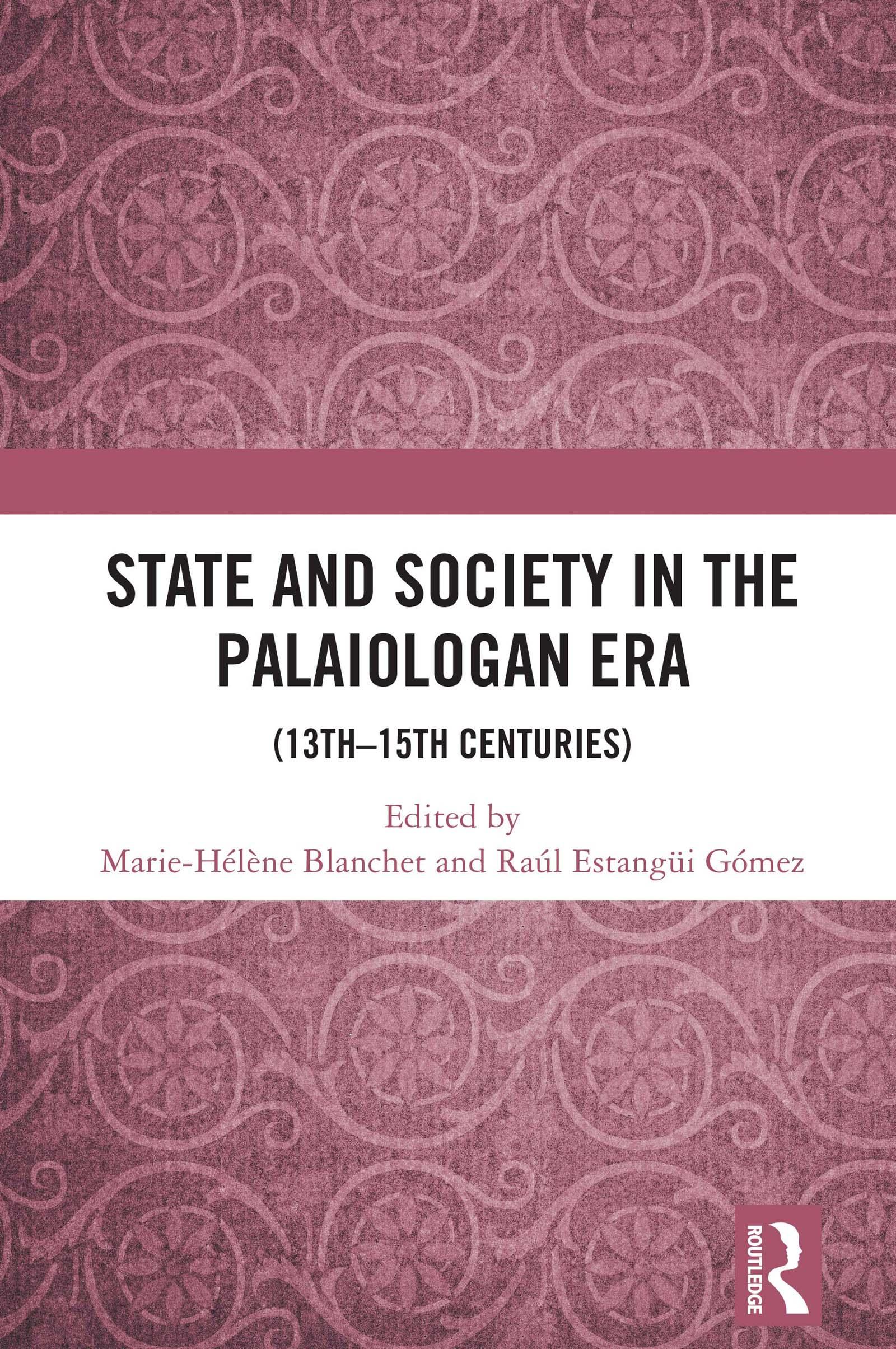
Often described as a period of decline and decadence, the history of the Byzantine Empire under the emperors of the Palaiologan dynasty (1261–1453) has undergone a considerable historiographical revival that has allowed this deeply negative image to be nuanced.
State and Society in the Palaiologan Era brings together articles by some of the best specialists in the field and addresses various aspects of the functioning of the Byzantine state and society in the Palaiologan period. These contributions reflect not only the dynamism of the Byzantine society, but also the divisions and challenges created by the deep transformations in the socioeconomic conditions of the time, and by the Ottoman conquest of the Byzantine territory. They show the capacity of the Byzantine state and institutions to adapt to a new political context, one of territorial shrinkage and instability, as well as the consequences of this instability for the society of the time, for its economic and charitable activities, for its spirituality and beliefs, and for the splits and conflicts opposing different categories of social actors.
This book aims to provide researchers with a series of studies whose methodology and results offer new insights into the complex, often contradictory phenomena that ran through the Byzantine world during the Palaiologan period. This collection of chapters will thus prove useful to all those interested in the Byzantine Empire at the end of the Middle Ages.
Betal enkelt med kort, Klarna, Apple Pay eller Google Pay. Ikke fornøyd? Du har alltid 14 dagers angrerett. Les mer i våre vilkår. Har du spørsmål, send oss en e-post på hello@memmo.org.
Memmo gjør det enklere å studere – uansett hvor du er i verden. Hos oss samler du pensumbøker og smarte studieverktøy på ett og samme sted: sammendrag, quizer, podkaster og flashcards. Og så Ted, din studiekompis som svarer på alt du lurer på. Over 50 000 studenter studerer allerede her – bygget for at du skal lære raskere og stresse mindre.