
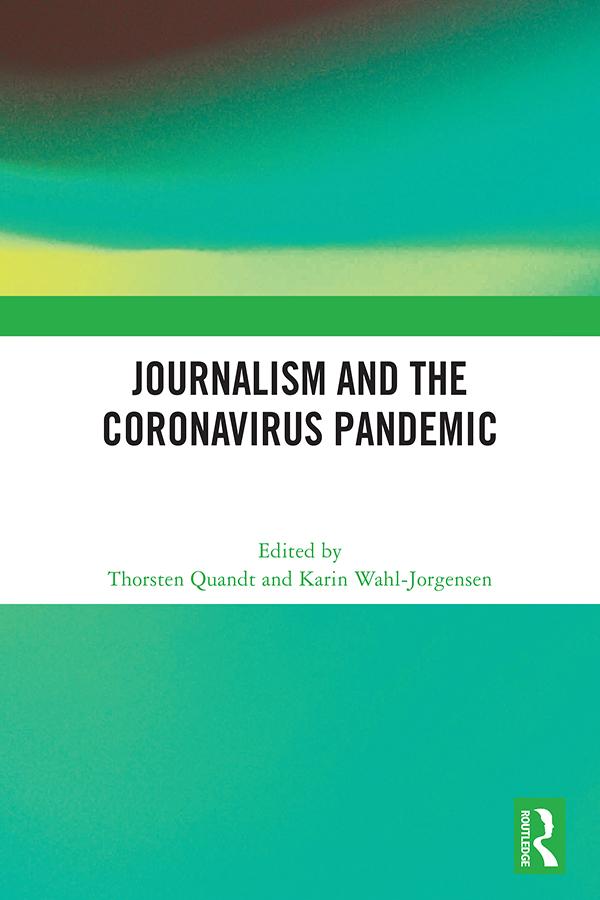
This book explores how the Covid-19 pandemic triggered profound changes in the practice and consumption of digital journalism.
Featuring original research from around the globe, the volume examines key challenges of covering the pandemic from Zimbabwe to China and the UK. The research shows that the pandemic amplified threats to press freedom. At the same time, it took an emotional toll on journalists, who worried about their exposure to Covid-19 and dealt with challenges associated with a growing reliance on digital tools, as well as difficulties accessing sources and hostile reactions from audiences.
Charting the consequences of an increasingly complex media ecosystem, the volume addresses the rise of distrust in mainstream media, the influence of “alternative” news outlets, and the surge of misinformation and conspiracy theories. The volume also examines the polarized reactions of audiences and the complex relationship between public trust, government actions, and journalistic organisations. Despite the challenges, there are signs of increased audience engagement with news, pointing to a potential positive shift in journalism’s societal role.
This volume is essential reading for scholars and students in media and journalism studies seeking a comprehensive understanding of how the pandemic reshaped digital journalism.
The chapters in this book were originally published as a special issue of Digital Journalism.
Betal enkelt med kort, Klarna, Apple Pay eller Google Pay. Ikke fornøyd? Du har alltid 14 dagers angrerett. Les mer i våre vilkår. Har du spørsmål, send oss en e-post på hello@memmo.org.
Memmo gjør det enklere å studere – uansett hvor du er i verden. Hos oss samler du pensumbøker og smarte studieverktøy på ett og samme sted: sammendrag, quizer, podkaster og flashcards. Og så Ted, din studiekompis som svarer på alt du lurer på. Over 50 000 studenter studerer allerede her – bygget for at du skal lære raskere og stresse mindre.