
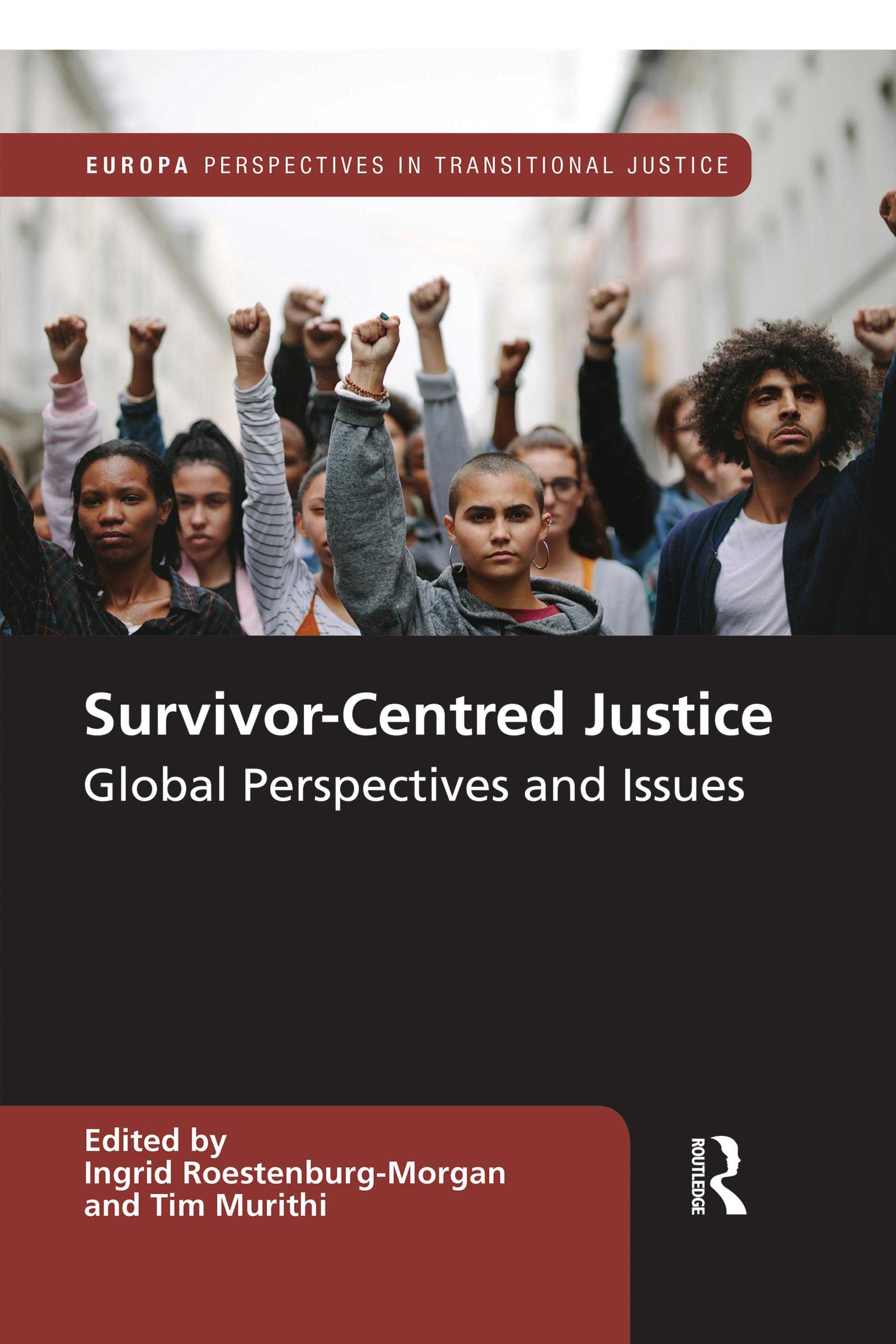
This volume interrogates global perspectives and issues that constitute and characterize survivor-centred justice, exploring both conceptual and theoretical issues surrounding the definition of a ‘survivor’, practical considerations of what constitutes a survivor-centred approach to justice and available avenues of justice for survivors of mass atrocities.
In the first part of the book, survivor-centred justice is explored at the level of the International Criminal Court (ICC). The second part evaluates developments taking place at the local and domestic levels where traditional, customary or local justice mechanisms find affinity with survivors in their quest for justice. The third part focuses on advocacy-based approaches being utilized specifically by non-governmental organizations (NGOs), multilateral and regional institutions such as the United Nations and African Union, in support of survivors. In the final part of the book future prospects for survivors in the promotion of peacebuilding and atrocity prevention are discussed.
The discussions in this volume will be of particular value and importance to international and transitional justice scholars, including legal and development practitioners interested in survivor-centred approaches to mass atrocity crimes Most importantly it aims to be of value to survivors, survivor communities and survivor-centred networks.
Betal enkelt med kort, Klarna, Apple Pay eller Google Pay. Ikke fornøyd? Du har alltid 14 dagers angrerett. Les mer i våre vilkår. Har du spørsmål, send oss en e-post på hello@memmo.org.
Memmo gjør det enklere å studere – uansett hvor du er i verden. Hos oss samler du pensumbøker og smarte studieverktøy på ett og samme sted: sammendrag, quizer, podkaster og flashcards. Og så Ted, din studiekompis som svarer på alt du lurer på. Over 50 000 studenter studerer allerede her – bygget for at du skal lære raskere og stresse mindre.