
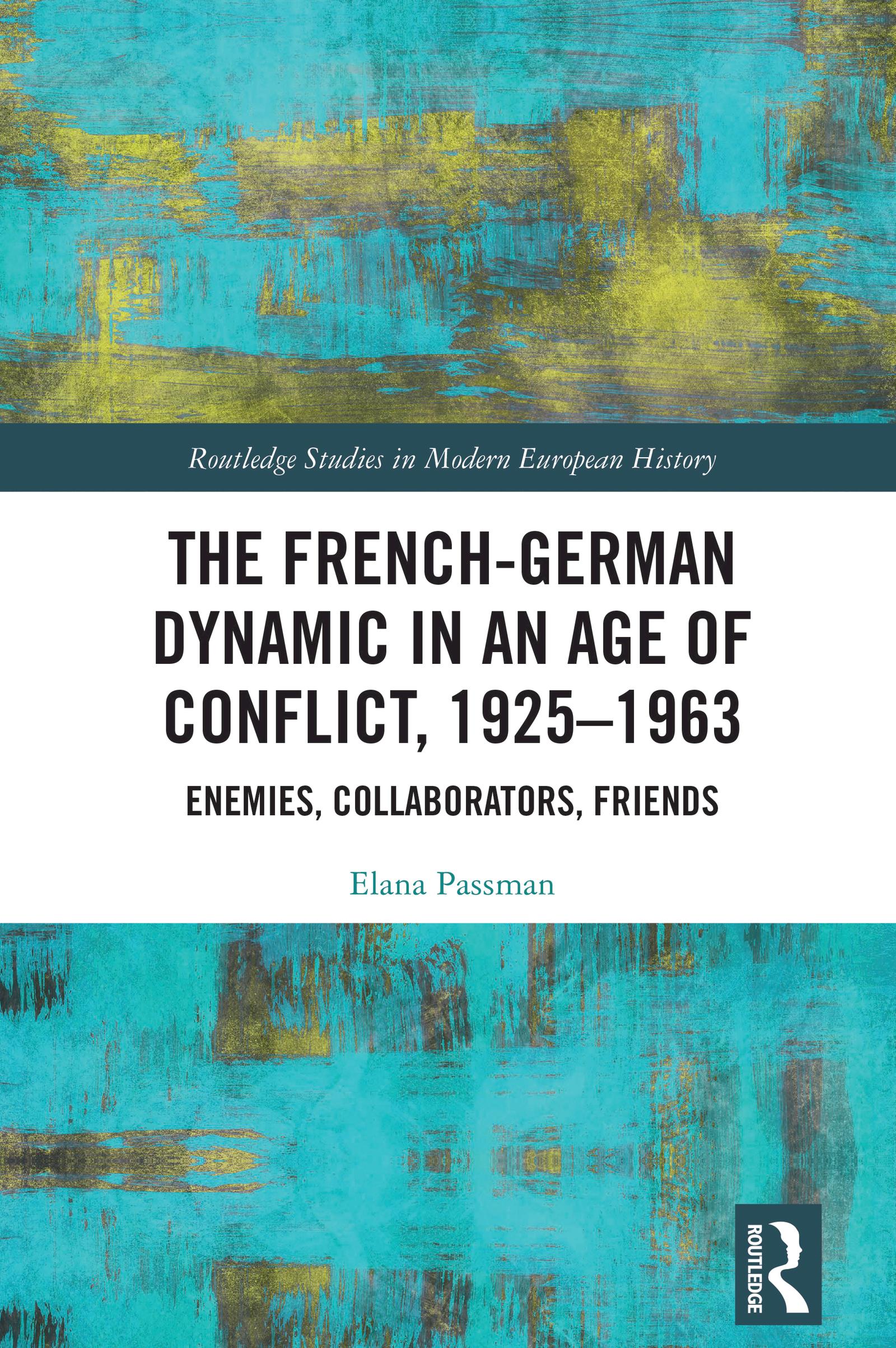
This book investigates the radical transformation of the relationship between Germany and France, neighbors whose border constituted one of the deepest fault lines of European history.
For generations, the French and the Germans believed they were “eternal enemies,” and this myth of primordial hatred was the lens through which they interpreted each other’s every move. Yet today, a Franco-German war is unimaginable. Passman locates the reshaping of the French-German dynamic in the civic organizations that made the very notion of cooperation credible. After World War I, and in the decades to follow, Franco-German associations kept calling for an end to their animus. Through journals, cultural exchanges, events, and charitable ventures, activists opened up the possibility of imagining friendship with the enemy. The pursuit of French-German cooperation did not begin with politicians after World War II. It took flight in the 1920s and persisted through decades of turmoil. In anchoring the history of collaboration in a longer arc of French-German cooperation, Passman illuminates how entangled were the histories of 1920s rapprochement, Nazi-era collaborationism, and postwar reconciliation.
This volume will appeal to scholars, students, and general readers interested in the histories of modern France and modern Germany, European integration, and peace studies.
Betal enkelt med kort, Klarna, Apple Pay eller Google Pay. Ikke fornøyd? Du har alltid 14 dagers angrerett. Les mer i våre vilkår. Har du spørsmål, send oss en e-post på hello@memmo.org.
Memmo gjør det enklere å studere – uansett hvor du er i verden. Hos oss samler du pensumbøker og smarte studieverktøy på ett og samme sted: sammendrag, quizer, podkaster og flashcards. Og så Ted, din studiekompis som svarer på alt du lurer på. Over 50 000 studenter studerer allerede her – bygget for at du skal lære raskere og stresse mindre.