
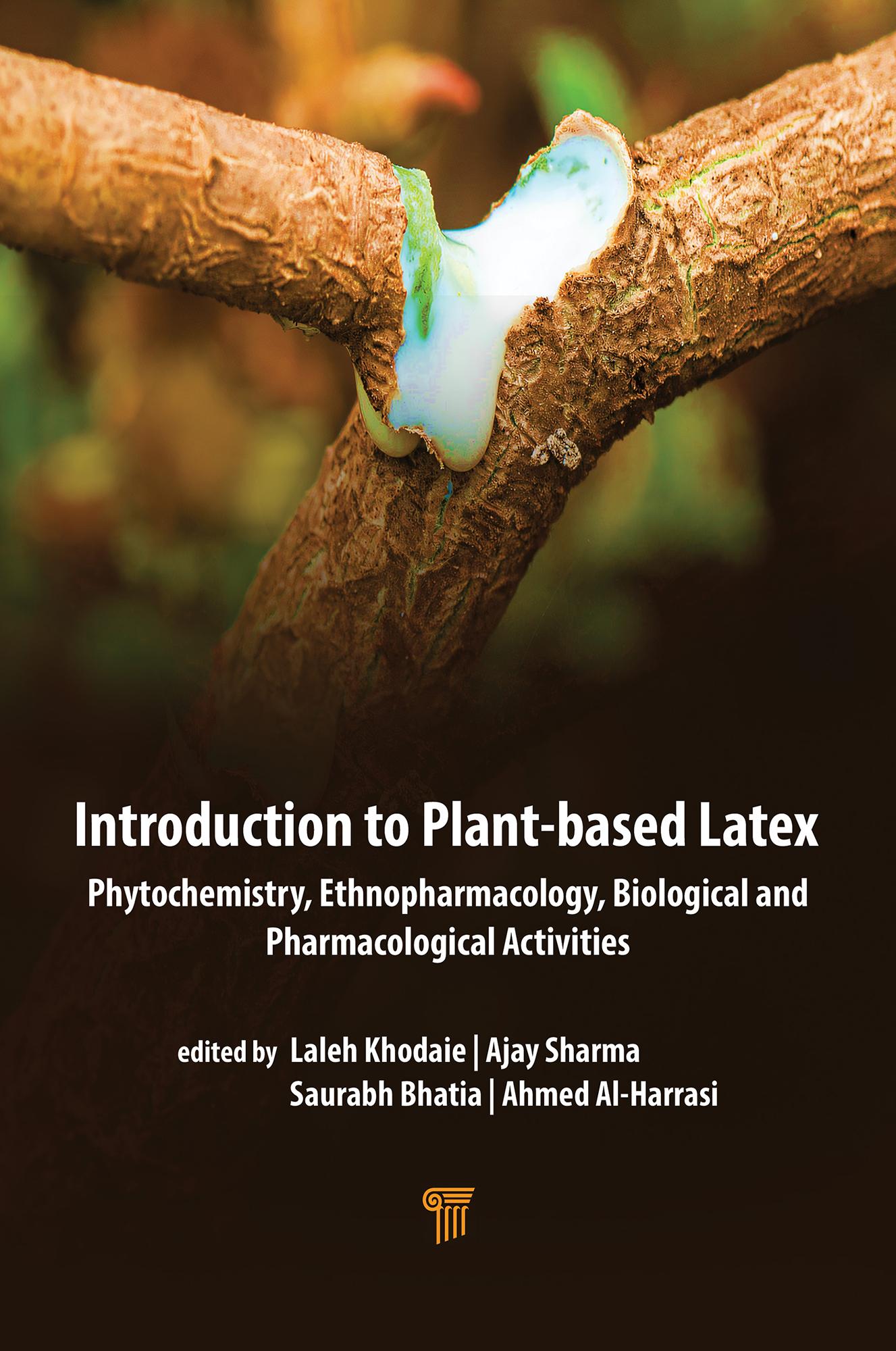
Latex-bearing plants have been known for their contribution to human health. Latex, a complex mixture produced in some plants, acts as a reservoir of secondary metabolites with high medicinal value. This semisolid exudation from plants contains several chemical components that are synthesized via different biosynthetic pathways and acts as their first line of defense. Recently, chemical components derived from natural plant latex and their synthetic analogs have been used in medicine as analgesics, antimicrobial agents, antiproliferatives, and anticancer drugs. Several ethnobotanical studies of latex plants have revealed the pharmacological potential of latex. However, the continuous exploitation of laticiferous plants for industrial and medicinal use has placed them at risk of extinction. Thus, several researchers have developed potential cultivation methods to conserve these plants.
This book presents the uses of latex and discusses prospects for its potential utilization in the pharmaceutical sector, agriculture, and industry. The recent advancement in plant-based latex has accelerated the development in all areas of natural products. This book illustrates cutting-edge advances in the field of plant-based latex and is a useful reference for teachers, undergraduate and postgraduate students, research scholars, and general readers.
Betal enkelt med kort, Klarna, Apple Pay eller Google Pay. Ikke fornøyd? Du har alltid 14 dagers angrerett. Les mer i våre vilkår. Har du spørsmål, send oss en e-post på hello@memmo.org.
Memmo gjør det enklere å studere – uansett hvor du er i verden. Hos oss samler du pensumbøker og smarte studieverktøy på ett og samme sted: sammendrag, quizer, podkaster og flashcards. Og så Ted, din studiekompis som svarer på alt du lurer på. Over 50 000 studenter studerer allerede her – bygget for at du skal lære raskere og stresse mindre.